en
en
 عربى
عربى

Content
Fire hoses do not carry a fixed expiration date stamped at manufacture, but they have a well-defined service life determined by NFPA 1962 standards: annual inspection, hydrostatic pressure testing every 5 years, and replacement when any test fails or visible damage is confirmed. Most fire hoses in active service last 10–20 years with proper care; industrial and municipal hoses used under harsh conditions are typically retired at 10 years regardless of condition.
How Do Fire Hoses Work?
A fire hose is a high-pressure flexible conduit that transfers water or firefighting agents from a pressurized source — a fire engine pump, hydrant, or standpipe — to the point of application. Understanding its mechanics explains why material choice, construction, and maintenance all directly affect performance under emergency conditions.
Pressure and Flow Mechanics
Fire hoses operate on the principles of pressurized fluid dynamics. A standard municipal fire engine delivers water at operating pressures of 100–250 psi (690–1,725 kPa), while attack lines directly fighting a blaze typically operate at 100–175 psi. Supply lines from hydrant to pump can carry 150–200 psi. The hose must contain this pressure across its entire length — which can reach 50 to 100 feet per section — without ballooning, kinking, or bursting.
Flow rate is equally critical. A 2.5-inch (65mm) attack hose delivers approximately 250 gallons per minute (GPM) at standard pressure. A 5-inch (125mm) large-diameter supply hose can carry 1,000–1,500 GPM, enough to supply multiple attack lines simultaneously from a single hydrant connection.
Structural Anatomy of a Fire Hose
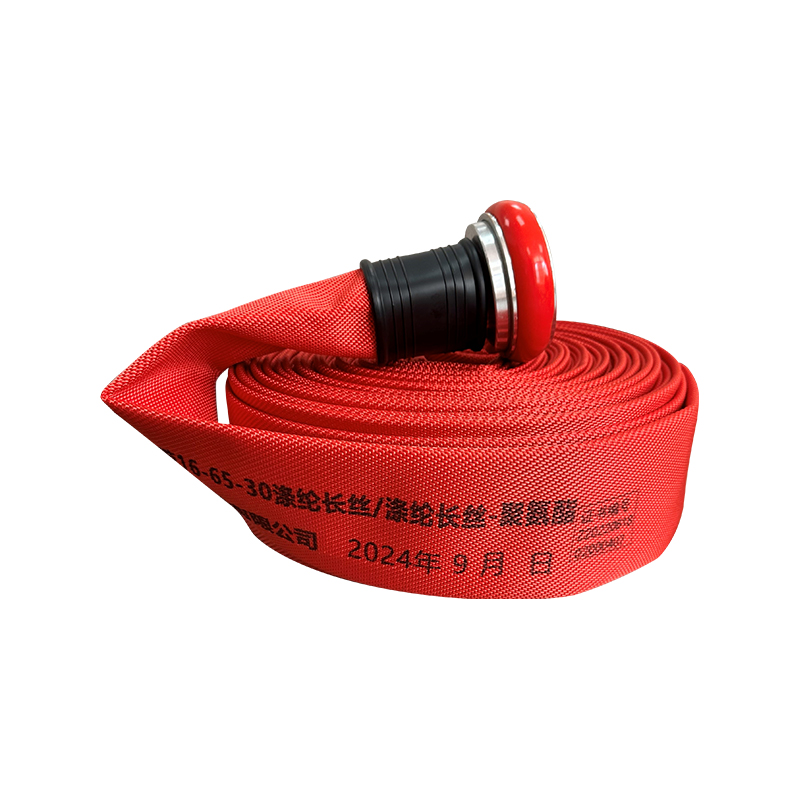
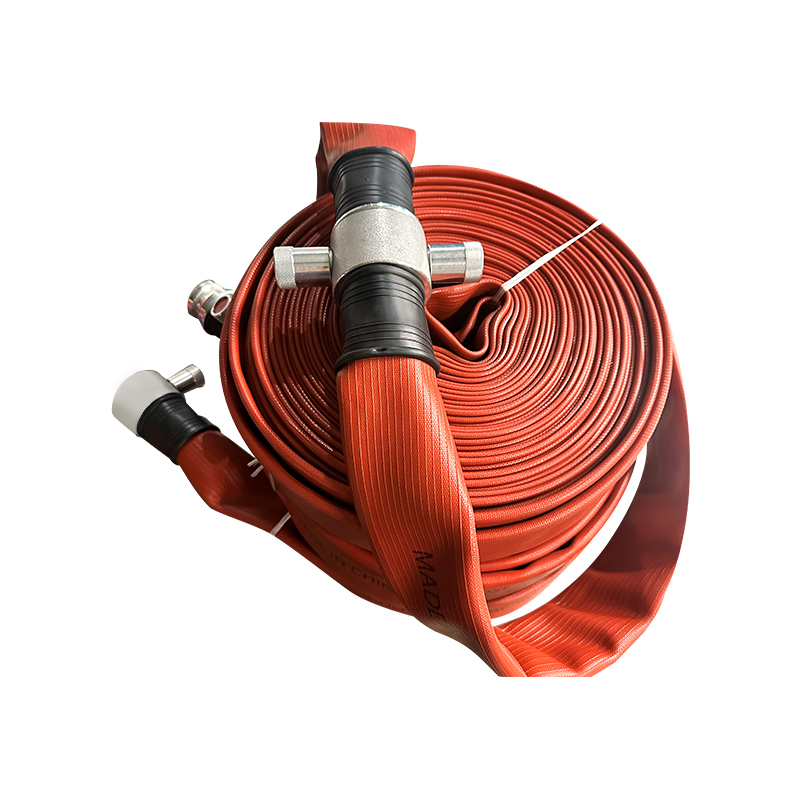
Every fire hose is built in layers, each engineered for a specific function. From the inside out:
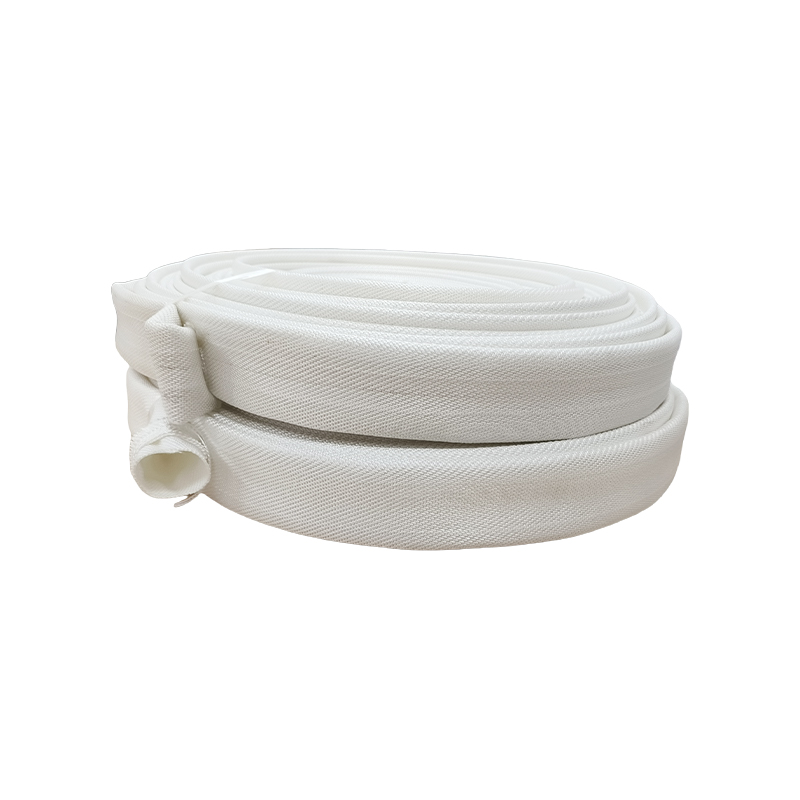
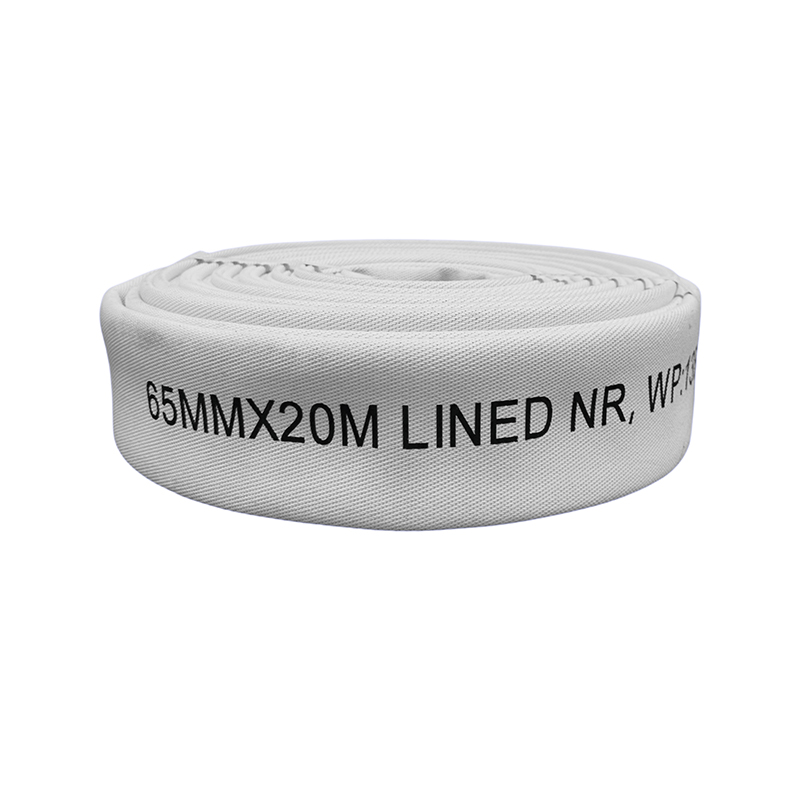
- Inner liner (tube): Rubber, EPDM, or thermoplastic polyurethane — provides a watertight, smooth-bore interior. Smoothness directly affects friction loss and flow efficiency.
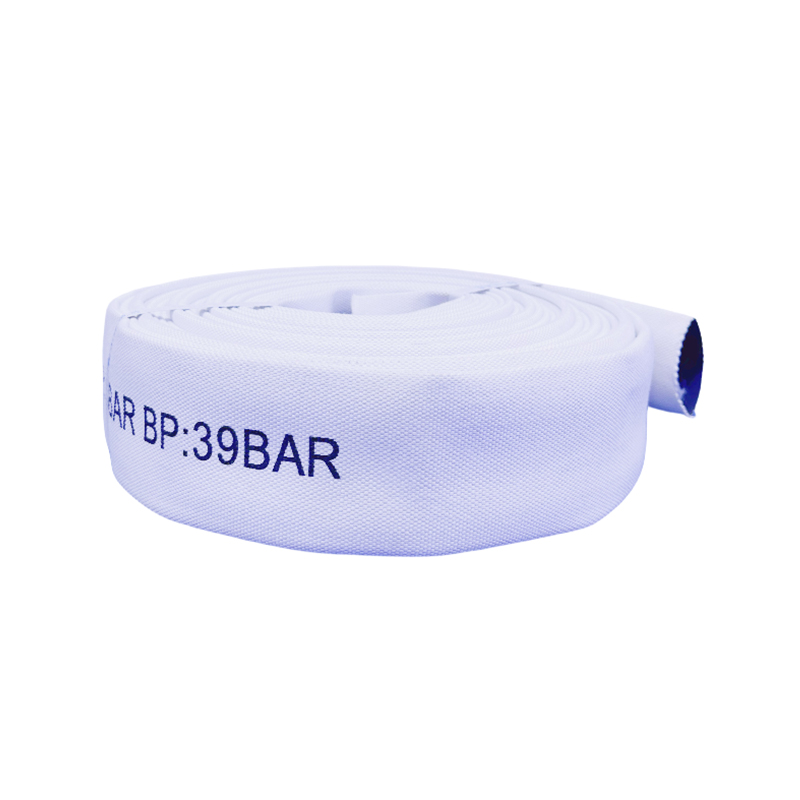
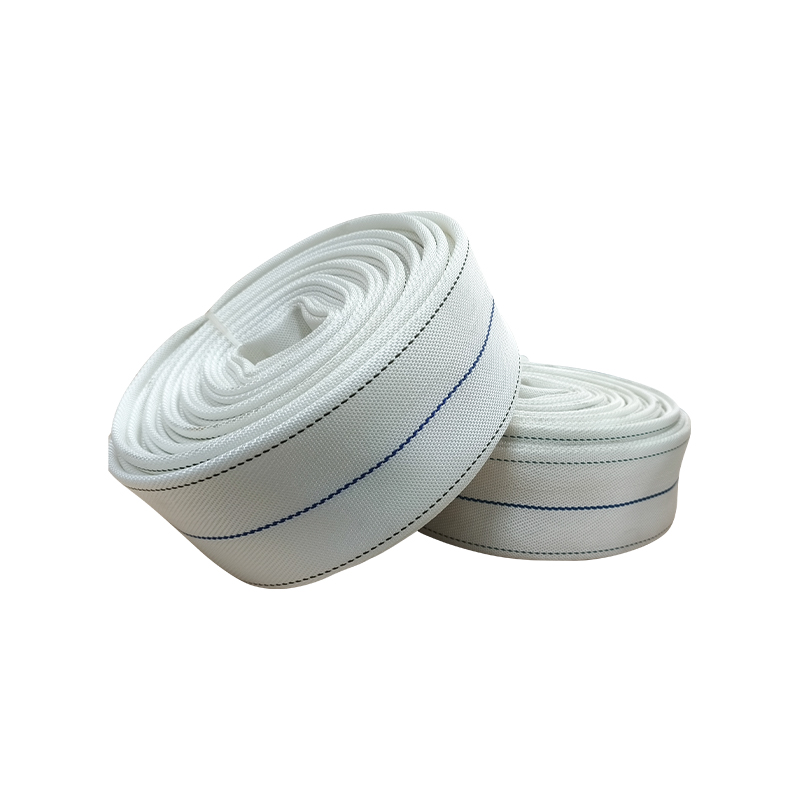
- Reinforcement jacket: Woven polyester, nylon, or cotton — carries the tensile load of internal pressure. Weave density determines burst rating.
- Outer jacket: Abrasion-resistant synthetic material that protects against road surface drag, heat, and mechanical wear during deployment.
- Couplings: Aluminum or brass Storz or threaded fittings swaged or pressed onto each end, creating the pressure-tight connection points between sections and appliances.
| Hose Type | Diameter | Operating Pressure | Flow Rate | Primary Use |
|---|---|---|---|---|
| Booster Hose | 0.75 – 1 in | Up to 800 psi | 10 – 30 GPM | Grass fires, vehicle fires |
| Attack Hose (1.5 in) | 1.5 in (38mm) | 100 – 200 psi | 60 – 125 GPM | Interior structural attack |
| Attack Hose (1.75 in) | 1.75 in (45mm) | 100 – 175 psi | 125 – 200 GPM | Standard residential attack |
| Attack Hose (2.5 in) | 2.5 in (65mm) | 100 – 175 psi | 200 – 325 GPM | Commercial / industrial attack |
| Supply / LDH | 4 – 6 in (100–150mm) | 150 – 200 psi | 1,000 – 1,500 GPM | Hydrant relay, tanker fill |
| Forestry Hose | 1 in (25mm) | Up to 300 psi | 15 – 40 GPM | Wildland firefighting |
The Role of Friction Loss
Friction loss — the pressure drop caused by water moving through the hose — is one of the most important operational variables. It increases dramatically with distance and flow rate, and decreases with larger diameter hose. A 200-foot (60m) length of 1.75-inch hose flowing 150 GPM loses approximately 40–50 psi to friction, meaning the pump must compensate with higher discharge pressure to maintain adequate nozzle pressure (typically 75–100 psi at the tip). This is why pump operators calculate friction loss coefficients for every line before charging.
Does a Fire Hose Have an Expiration Date?
No manufacturer-stamped expiration date exists on a fire hose the way one would appear on medication or food. Service life is determined by condition, test results, and compliance with inspection standards — not calendar age alone. However, governing standards effectively define functional expiration timelines through mandatory testing intervals.
Typical Service Life Expectations by Hose Type
| Hose Category | Typical Service Life | Retirement Trigger |
|---|---|---|
| Municipal attack hose (structural) | 10 – 15 years | Failed hydrostatic test, visible jacket degradation |
| Supply / LDH hose | 10 – 20 years | Coupling looseness, liner cracking, test failure |
| Wildland / forestry hose | 5 – 10 years | UV degradation, abrasion from terrain, coupling corrosion |
| Industrial / plant hose | 5 – 10 years | Chemical exposure, heat aging, mandatory plant policy |
| Booster (hard rubber) hose | 15 – 20 years | Inner tube cracking, outer cover separation |
| Occupant-use cabinet hose | 5 years maximum | NFPA 1962 requires replacement at 5 years regardless of condition |
How Often Do Fire Hoses Need to Be Replaced?
Replacement frequency for a fire hose depends on usage intensity, storage conditions, maintenance quality, and the specific standards the organization adheres to. There is no single universal replacement interval — rather, a structured decision framework built around inspection outcomes.
Check jacket for cuts, abrasions, burns, mildew, and coupling tightness. Failure = immediate removal.
Pressurized to 300 psi (service test) for 3 minutes. Any leakage, coupling movement, or bulging = retirement.
Drain, clean, dry fully before re-racking. If used at fire: hydrostatic test required before return to service.
Material fatigue, UV aging, and coupling wear make retirement advisable regardless of passing test results.
Factors That Accelerate Hose Deterioration
Hydrostatic Test Procedure and Pass/Fail Criteria
The service test specified by NFPA 1962 pressurizes each section to 300 psi (2,070 kPa) for 3 minutes using a dedicated hydrostatic test pump. The test evaluates:
- Any visible leakage through the jacket, liner, or coupling interface
- Coupling displacement greater than 1/8 inch (3mm) from the hose end
- Any bulging, blistering, or loss of circular cross-section under pressure
- Any jacket separation, unraveling, or burn-through visible during pressurization
A hose failing on any single criterion is immediately condemned and removed from service inventory. Tags or markings indicating "CONDEMNED — DO NOT USE" are applied per NFPA 1962 before the hose is cut (to prevent re-use) and disposed of. No repair is acceptable for a failed service test hose in emergency service applications.
Record-Keeping Requirements
NFPA 1962 mandates that departments maintain written records for every individual hose section, including manufacture date, purchase date, placement in service, all test dates and results, incident use dates, any repairs, and final retirement date. These records not only demonstrate compliance — they provide statistical data that helps departments project replacement budgets and optimize procurement cycles. A well-managed 50-section hose inventory tracked properly over 15 years can generate the data needed to negotiate manufacturer performance warranties.
Selecting the Right Fire Hose for Your Application
Choosing a fire hose requires matching construction, diameter, pressure rating, and coupling type to the operational environment. Mispecification does not just reduce performance — it creates safety risks at the point of use.
Jacket Material
Polyester double-jacket is the industry standard for attack hose — high tensile strength, mold resistance, and abrasion tolerance. Cotton-polyester blends offer better hand-feel for manual deployment but degrade faster. Single-jacket hose is acceptable for low-pressure industrial cabinet use but is not suitable for structural firefighting.
Liner Type
EPDM rubber liners are standard and offer excellent chemical resistance. TPU (thermoplastic polyurethane) liners are lighter and more flexible at low temperatures — preferred for wildland and cold-climate applications. PVC liners are cost-effective for plant use but should not be used for potable water or foam-agent service.
Coupling Specification
Storz (sexless) couplings allow any two ends to connect and are preferred for LDH supply hose. NST (National Standard Thread) is the US standard for attack and booster hose. Cam-and-groove couplings are used in industrial plant service. Confirm coupling compatibility with your existing apparatus before purchase — mismatched threads require adapters that introduce friction loss and coupling failure risk.
Certification Marks
Look for UL Listed or FM Approved marks for North American fire service use. In Europe, EN 14540 or EN 671 compliance is required. For municipal use, NFPA 1961 (the standard for new fire hose) certification from the manufacturer is mandatory in most jurisdictions. Non-listed hose may perform adequately but creates liability exposure for the department and purchasing authority.