en
en
 عربى
عربى

Content
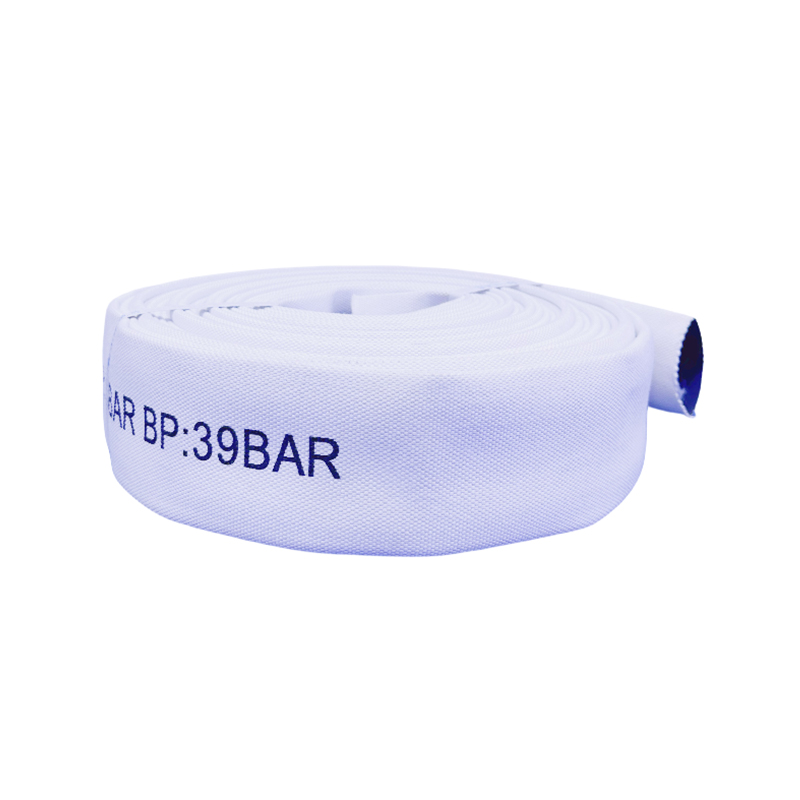
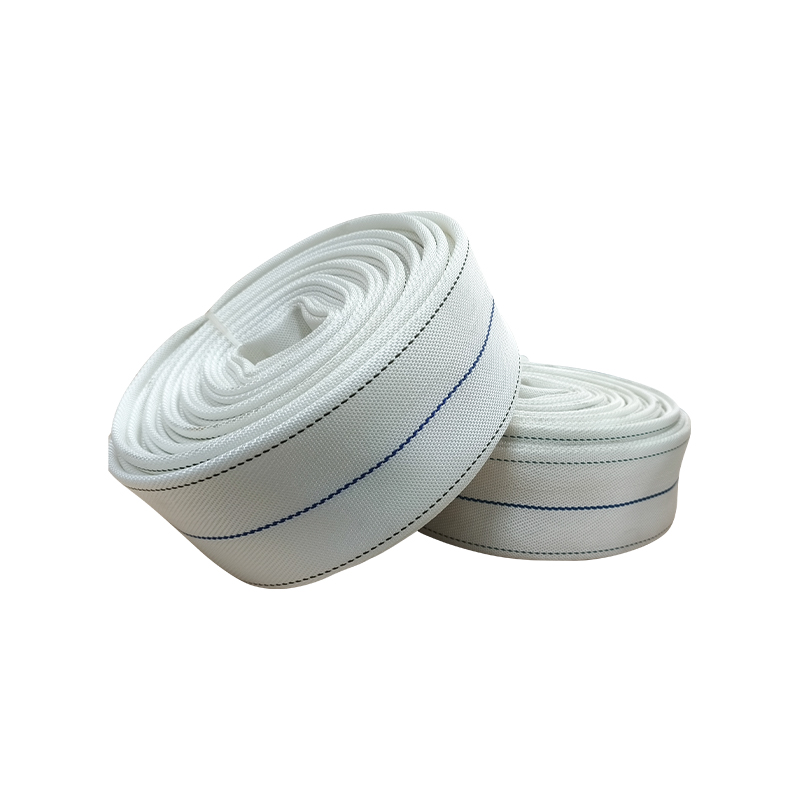
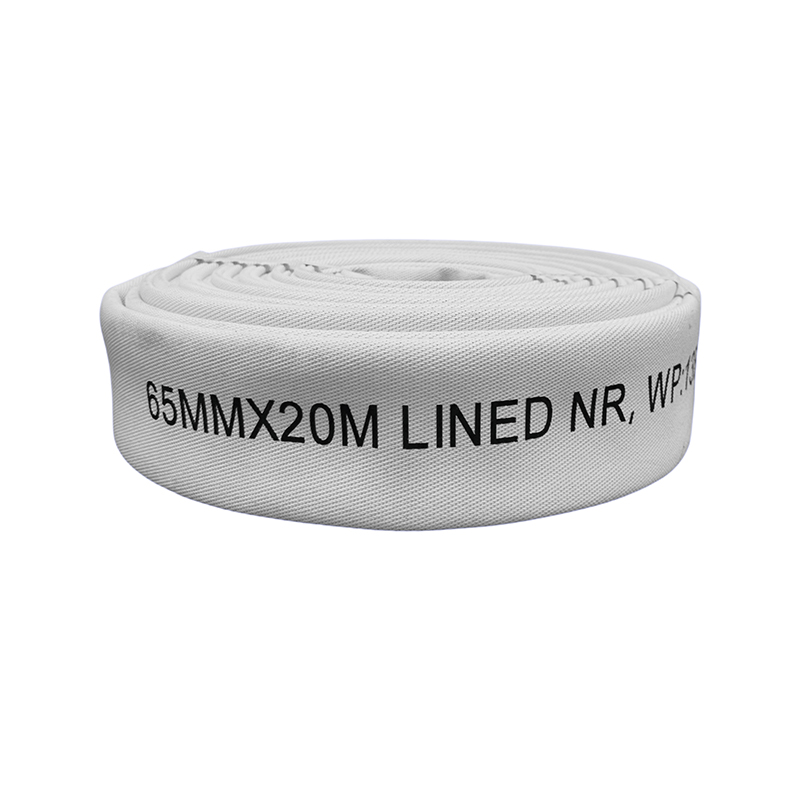
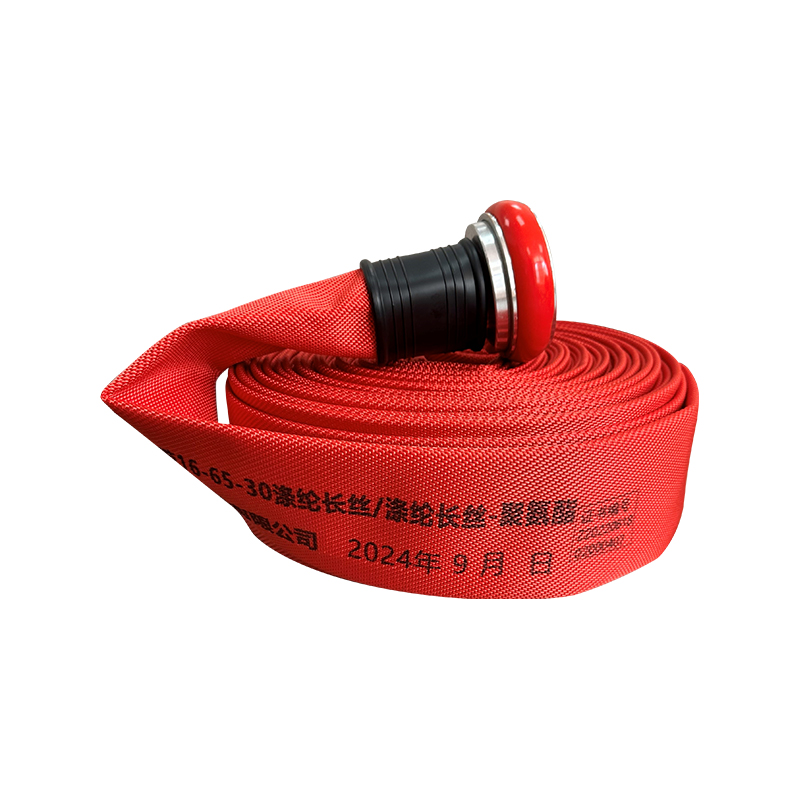
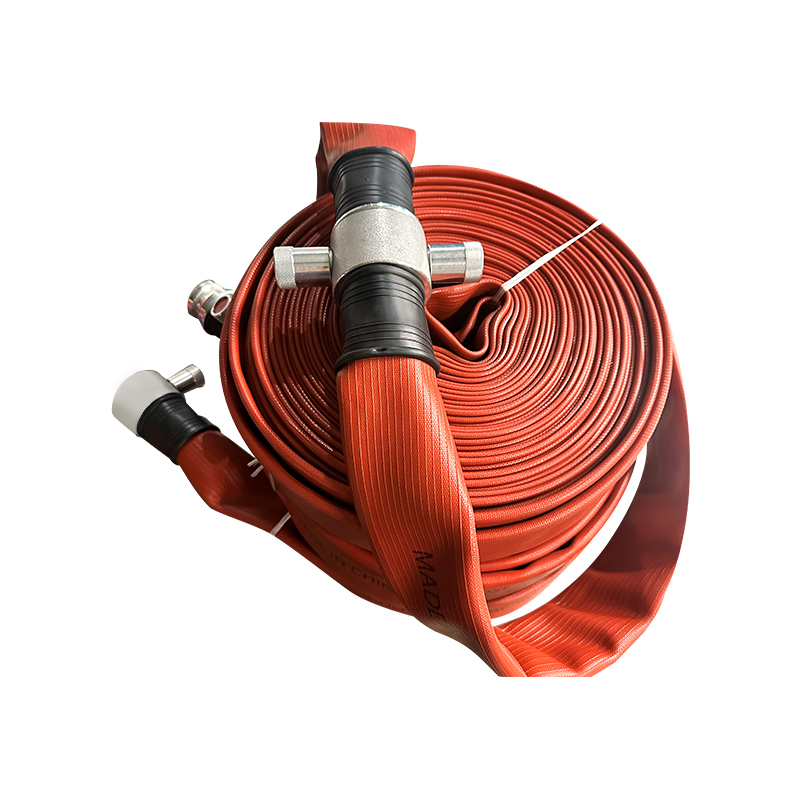
A professional fire hose is an engineered high-pressure conduit built to withstand intense hydraulic force, abrasions, and extreme thermal conditions. Typically manufactured by weaving a synthetic textile outer jacket over a vulcanized rubber or polymer inner liner, modern hoses balance structural elasticity with brute burst strength. For standard building safety, commercial facilities deploy fixed 30-meter fire hose reels, while municipal firefighters rely on portable 15-meter or 30-meter hose lengths designed to handle working pressures up to 300 PSI (20.7 bar).
How Fire Hose is Made: Engineering for Extreme Pressures
Modern fire hose production is a precise, multi-stage manufacturing process governed by strict regulatory frameworks such as NFPA 1961 and EN 14540. To remain flexible without kinking or bursting under extreme pressure, a high-performance hose uses a dual-layer composite design: a structural woven outer textile jacket and a fluid-tight elastomeric liner.
Yarn Preparation and Circular Loom Weaving
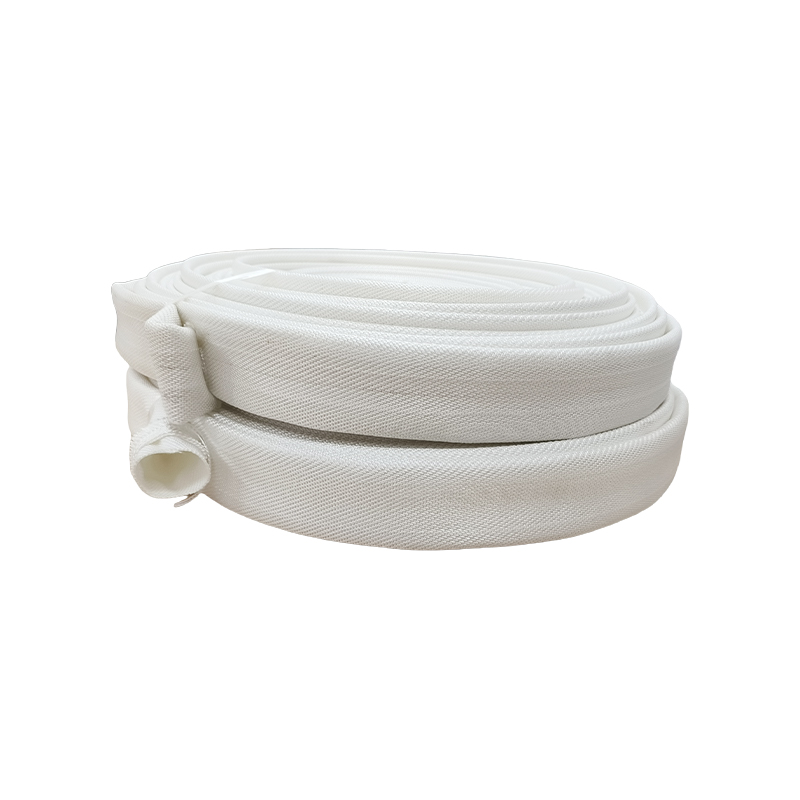
The structural strength of the hose comes from its outer jacket. Manufacturers use high-tenacity polyester filaments or nylon fibers. The yarns are split into two categories: warp threads running longitudinally down the hose length to absorb linear tension, and filler yarns wound circumferentially to resist radial expansion and burst pressures. These threads are fed into high-speed circular weaving looms that weave a seamless, hollow fabric sleeve directly around a central axis. For heavy-duty municipal environments, a second outer sleeve is woven directly over the first to create a "double-jacket" hose for double the abrasion protection.
Liner Extrusion and Vulcanization
The inner water barrier must be completely smooth to minimize friction loss (pressure dropped due to fluid turbulence). Liquid synthetic rubber (EPDM) or thermoplastic polyurethane (TPU) is extruded into a perfectly smooth, thin-walled tube. This liner is pulled inside the woven textile jacket along with a strip of uncured adhesive material.
Once inside, the entire assembly is attached to steam manifolds. High-pressure steam (around 150 degrees Celsius) is injected into the hose, forcing the liner to expand tightly against the interior fabric walls. The intense thermal energy cures the adhesive and vulcanizes the rubber, establishing a permanent, delamination-proof mechanical bond between the jacket and the inner lining.
How Long is a Fire Hose? Industry Standard Specifications
Fire hose lengths are globally standardized to ensure uniform deployment tactics, predictable weight calculations, and standardized friction loss metrics. In most jurisdictions, tactical hoses are manufactured in fixed increments of 15 meters (50 feet) or 30 meters (100 feet). Rather than deploying a single, long hose, response teams couple multiple modular sections together using threaded or sexless quick-connect couplings (such as Storz or British Instantaneous fittings) to reach the fire source.
| Hose Classification | Standard Length Options | Primary Operational Use Case |
|---|---|---|
| Attack Hose (1.75" to 2.5") | 15m / 50ft or 30m / 100ft | Interior structural fire suppression and structural attack runs. |
| Supply Line (3.0" to 5.0") | 30m / 100ft | Moving large water volumes from hydrants to pump trucks. |
| Fixed Building Hose Reel | 30m / 100ft (Continuous) | Commercial office buildings, warehouses, and industrial corridors. |
| Wildland Attack Hose | 30m / 100ft | Lightweight forestry deployments where long hose lays are required. |
How Much Does a Fire Hose Weigh? Dry vs. Charged Weights
The operational weight of a fire hose depends on its internal diameter, liner compound composition, and whether it is "dry" or "charged" (filled with high-pressure water). Water weighs exactly 1 kilogram per liter (8.34 lbs per gallon), meaning that a charged hose is significantly heavier and requires specialized posture and physical strength to manipulate safely.
| Hose Diameter & Type | Dry Weight (Per 15m / 50ft) | Water Capacity (Per 15m) | Charged Weight (Per 15m) |
|---|---|---|---|
| 1.5 inch (38mm) Single Jacket | ~5.4 kg (12 lbs) | ~17.3 Liters (4.6 gal) | ~22.7 kg (50 lbs) |
| 1.75 inch (45mm) Double Jacket | ~9.1 kg (20 lbs) | ~23.4 Liters (6.2 gal) | ~32.5 kg (72 lbs) |
| 2.5 inch (65mm) Double Jacket | ~13.6 kg (30 lbs) | ~47.7 Liters (12.6 gal) | ~61.3 kg (135 lbs) |
| 5.0 inch (127mm) Large Supply Line | ~24.9 kg (55 lbs) | ~191.2 Liters (50.5 gal) | ~216.1 kg (476 lbs) |
Critical Safety Indicator: A standard 2.5-inch attack line gains more than 400 percent of its uncharged weight when filled with water. This massive shift highlights why proper team backup and anchoring techniques are mandatory to control nozzle reaction forces.
How to Use Fire Hose Reel Systems in an Emergency
Fixed structural fire hose reels are designed for rapid, first-response intervention by building occupants before municipal emergency units arrive. Because these systems are directly connected to the building's pressurized water main, following the correct sequence is crucial to protect yourself and prevent line damage.
Locate the stop valve (usually a bright red handle) mounted directly on the pipe substrate beneath the reel assembly. Turn the valve fully counter-clockwise to the open position. This charges the reel hub with pressurized water *before* you run with the hose. Leaving this valve closed will result in zero water flow at the nozzle, even if you unravel the entire line.
Hold the heavy-duty nozzle assembly firmly and pull the line away from the reel. The drum will rotate on its internal spindle, paying out the non-kinking rubber tubing. Pull out only as much length as you need to safely approach the hazard zone, ensuring the tubing does not twist around sharp architectural edges.
Plant your feet shoulder-width apart to resist the counter-force of the water stream. Direct the nozzle assembly firmly toward the base of the flames. Twist the nozzle sleeve or throw the shutoff lever forward to release the stream. Adjust the nozzle pattern from a dense solid stream (for deep penetration) to a wide fog cone pattern if you need a thermal heat shield.