en
en
 عربى
عربى

Content
- 1 I. The Structural Mandate of Fire Hoses
- 2 II. Weave Density and Fiber Strength for Pressure Integrity
- 3 III. Meeting Certification and Safety Margin Requirements
- 4 IV. Long-Term Reliability and Fiber Fatigue
- 5 V. Quality Assurance and Global Sourcing Solutions
- 6 VI. Designing for Maximum Safety
- 7 VII. Frequently Asked Questions (FAQs)
- 7.1 Q1: What is the primary function of the EPDM liner versus the outer jacket in an EPDM Fire Hose?
- 7.2 Q2: What is the required safety margin for the EPDM fire hose working pressure burst ratio NFPA?
- 7.3 Q3: How does polyester fire hose jacket weave density optimization affect the hose's performance?
- 7.4 Q4: Does the aramid reinforcement fire hose fatigue analysis indicate a definite lifespan limit?
- 7.5 Q5: Why is aramid fiber used for the outer jacket despite being more expensive than polyester for fire hose jacket fiber strength for high pressure?
I. The Structural Mandate of Fire Hoses
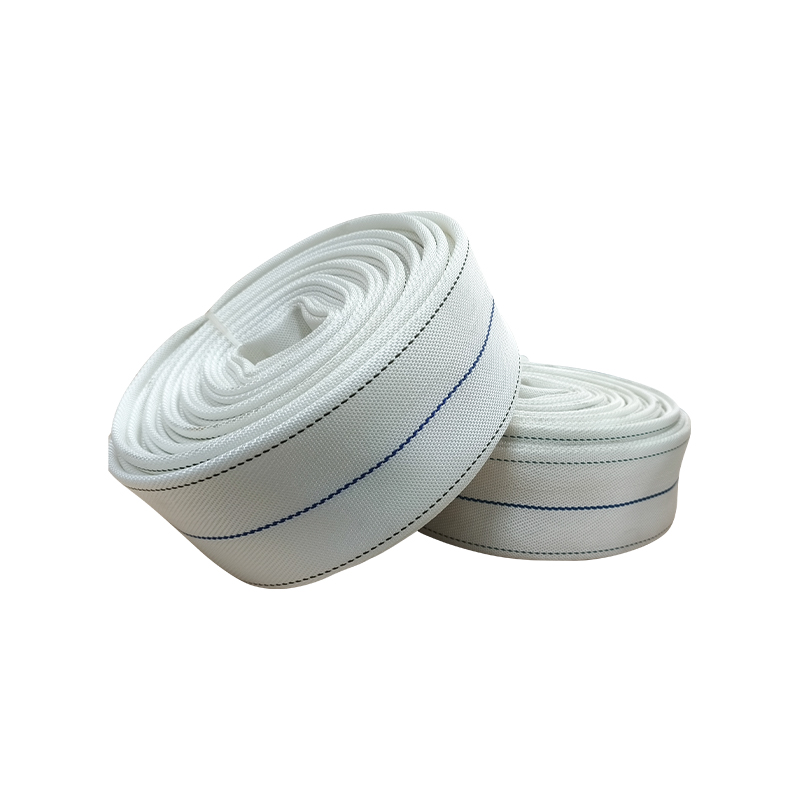
The performance of an EPDM Fire Hose relies critically on the structural integrity of its two main components: the inner EPDM rubber liner (providing a smooth waterway and chemical resistance) and the outer textile jacket (providing the necessary mechanical strength to contain high internal pressure). For fire professionals and B2B buyers, understanding the design specifications of the jacket—specifically its weave density and fiber strength—is essential to verify that the hose meets the stringent safety margins required by standards like NFPA 1961 and UL. Failure to achieve proper reinforcement leads directly to catastrophic failure in high-pressure scenarios. Taizhou Jun'an Fire Technology Co., Ltd., located adjacent to Shanghai, specializes in the production of fire hoses and emergency rescue equipment. We leverage modern and advanced production equipment, alongside professional technical and management personnel, to design and manufacture rubber/PVC/PU lined fire hoses. By fully absorbing the advantages of similar products globally, we offer reasonable prices and high-quality products, providing first-class equipment and high-quality after-sales service to domestic and foreign customers, often through customized OEM and ODM services.
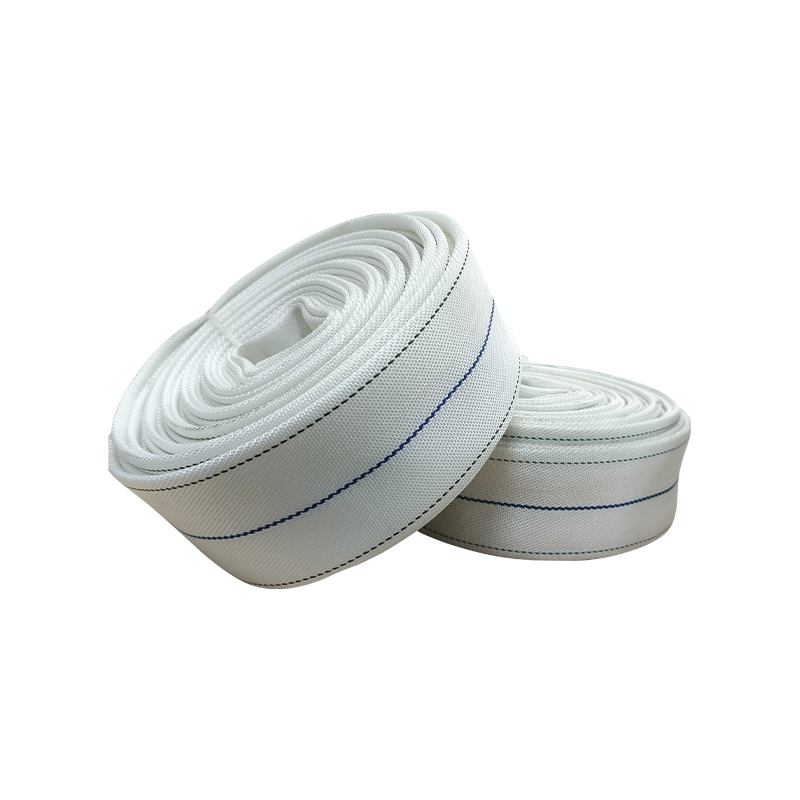
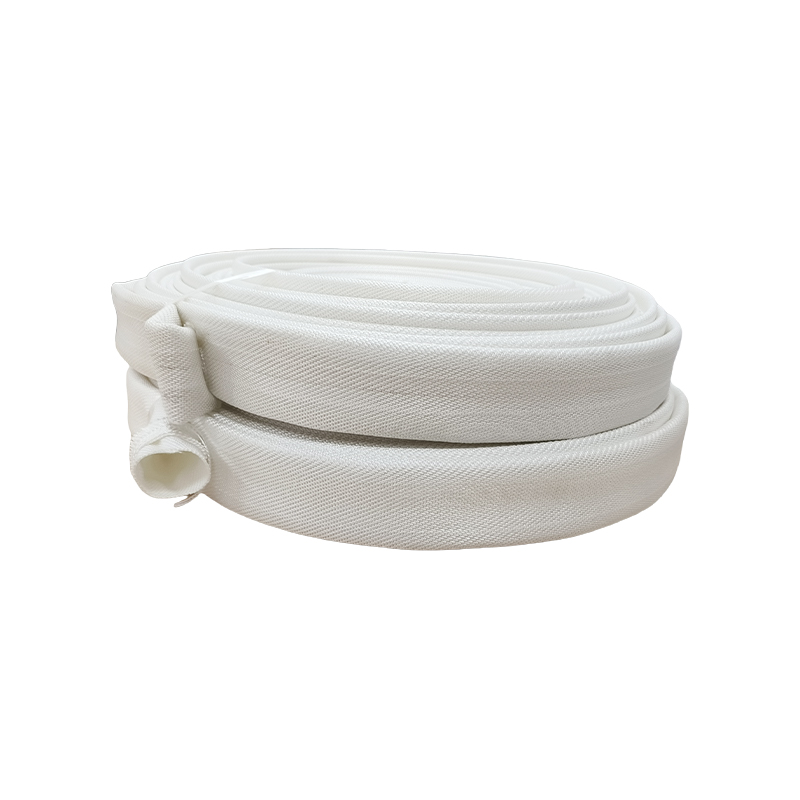
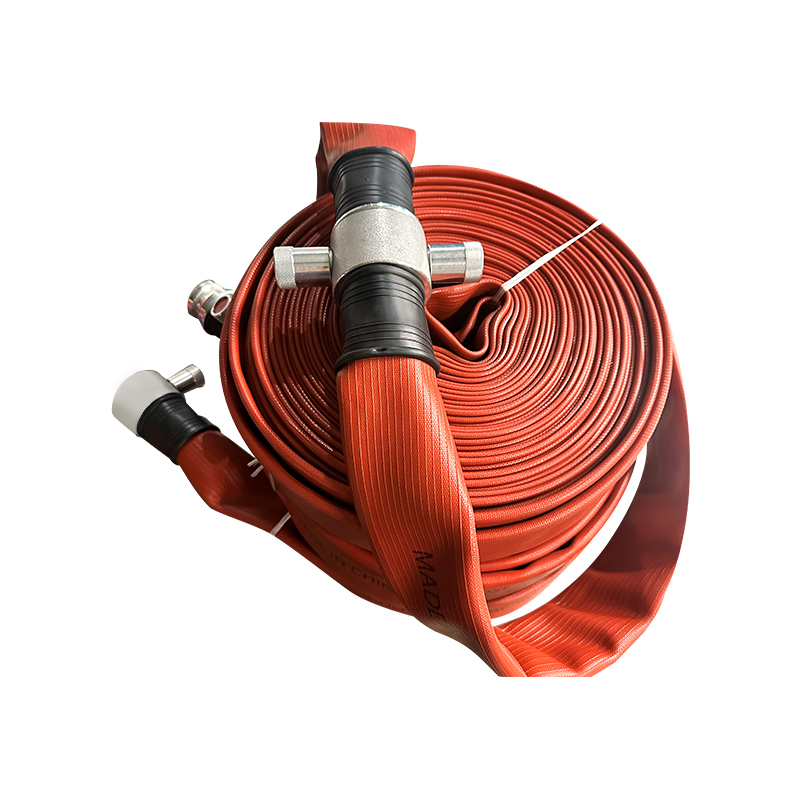
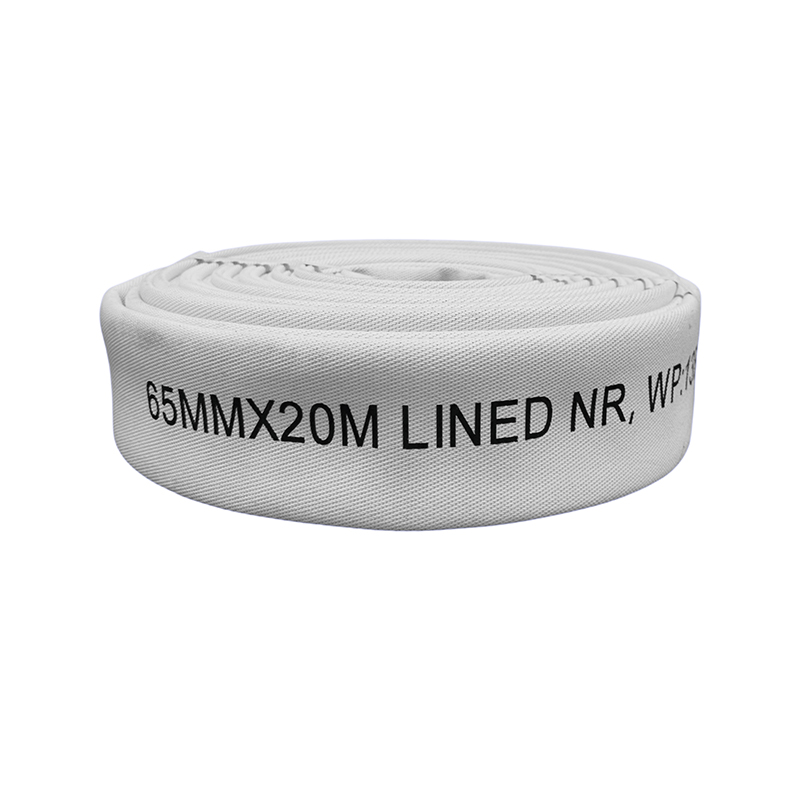
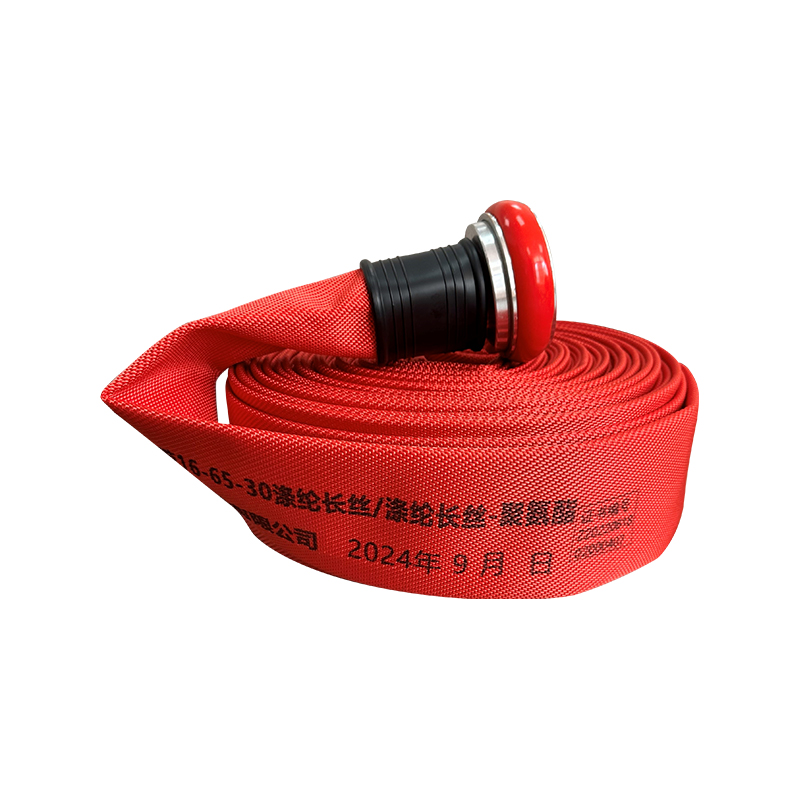
EPDM Lined Hose Fiber Canvas Fire Extinguishing Flat Hose
II. Weave Density and Fiber Strength for Pressure Integrity
The outer jacket, typically a single or double layer, acts as a braided restraint, converting the radial force of the water pressure into axial tension along the woven fibers. The two key determinants of this restraint are the tightness of the weave and the specific tenacity of the fiber material itself.
A. Polyester Fire Hose Jacket Weave Density Optimization
Weave density, usually measured as picks per inch (P.P.I.) and ends per inch, is critical. Higher polyester fire hose jacket weave density optimization increases the total cross-sectional area of the fibers bearing the load. However, the density must be precisely controlled. An overly dense weave can lead to excessive hose elongation under pressure and inhibit the necessary 'weeping' or moisture equalization of the jacket material. Furthermore, a precise weave is necessary to ensure the jacket maintains a tight, uniform adherence to the inner EPDM liner during the curing and vulcanization process, preventing delamination. Comparing weave characteristics for different operational demands:
| Weave Density | Fiber Material | Hose Elongation Under Pressure | Typical Burst Pressure Target |
|---|---|---|---|
| Standard (Lower P.P.I.) | Polyester | Moderate | ~45 Bar / 650 PSI |
| High (Higher P.P.I.) | Polyester/Aramid Blend | Low | ~60 Bar / 870 PSI |
| Extreme (Tightest) | Aramid Only | Very Low | > 80 Bar / 1160 PSI |
B. Fire Hose Jacket Fiber Strength for High Pressure
For applications requiring extreme working pressures (e.g., high-rise firefighting), the specific tenacity (strength per unit weight) of the fiber is paramount. This dictates the material choice. Polyester is common due to its balance of strength, cost, and excellent abrasion resistance. However, aramid (often known by its technical name) offers significantly higher specific strength and modulus, making it the preferred choice for manufacturing EPDM Fire Hose designed for ultra-high pressure. The fire hose jacket fiber strength for high pressure must be specified using high-denier fibers with the lowest possible elongation characteristics to minimize volumetric expansion during pressurization.
III. Meeting Certification and Safety Margin Requirements
Regulatory standards like NFPA 1961 and UL mandate a significant safety margin between the hose's maximum operating pressure (Working Pressure) and its actual failure point (Burst Pressure).
A. EPDM Fire Hose Working Pressure Burst Ratio NFPA
NFPA 1961 specifies a minimum Burst Pressure of at least three times the intended service pressure, establishing a 3:1 safety ratio. For example, a hose rated for 17.5 Bar (250 PSI) service must withstand a minimum hydrostatic pressure of 52.5 Bar (750 PSI) before rupture. The jacket design, specifically the combination of fire hose jacket fiber strength for high pressure and weave geometry, must be engineered to reliably achieve this ratio. The EPDM fire hose working pressure burst ratio NFPA compliance is not optional; it is the fundamental assurance of safety for the end-user. The integrity of this ratio is verified through a rigorous hydrostatic test procedure for EPDM fire hose.
IV. Long-Term Reliability and Fiber Fatigue
A critical concern for the professional user is whether long-term, cyclical high-pressure use causes degradation or failure in the jacket material.
A. Aramid Reinforcement Fire Hose Fatigue Analysis
The question of whether long-term high-pressure use leads to fiber fatigue in the outer jacket is highly relevant, especially for aramid-reinforced hoses. Aramid reinforcement fire hose fatigue analysis shows that while aramid fibers exhibit extraordinary tensile strength, they are susceptible to mechanical fatigue from constant folding, flexing, and cyclical pressurization, particularly if the fibers are nicked or exposed to harsh chemicals. This fatigue manifests as a gradual loss of tensile strength, increasing the risk of rupture below the original burst pressure over the hose's service life. Proper manufacturing, using well-lubricated fibers and a robust outer coating, is necessary to mitigate this fatigue.
B. Hydrostatic Test Procedure for EPDM Fire Hose
To manage the risk of fatigue and other degradation (like liner micro-cracks), the hydrostatic test procedure for EPDM fire hose must be performed periodically on in-service hoses according to NFPA standards. This procedure subjects the hose to its rated proof test pressure (typically 1.5 times the service pressure) to identify permanent elongation, coupling slippage, or pinhole leaks before a catastrophic failure occurs during a critical event. This periodic testing is the primary defense against unforeseen failure from fiber fatigue.
V. Quality Assurance and Global Sourcing Solutions
Taizhou Jun'an Fire Technology Co., Ltd. ensures the consistency required for high-pressure safety by employing modern, advanced production equipment and a highly skilled technical team. Our expertise in manufacturing the inner liner (rubber/PVC/PU) and weaving the outer jacket allows us to control the entire production chain. We welcome OEM and ODM requests, enabling us to customize the polyester fire hose jacket weave density optimization or incorporate specific high-performance aramid fibers to meet unique client pressure requirements, ensuring products align perfectly with the required EPDM fire hose working pressure burst ratio NFPA standards. We are dedicated to providing first-class equipment and look forward to partnering with global customers.
VI. Designing for Maximum Safety
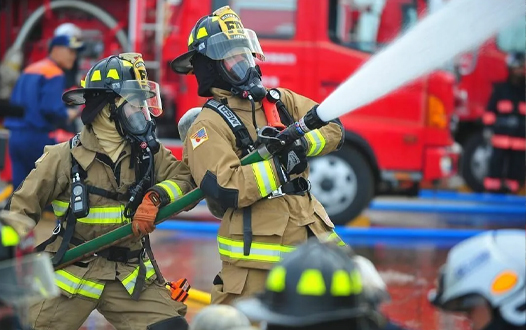
The integrity of an EPDM Fire Hose under pressure is a direct result of precise engineering in the outer jacket. Ensuring that the working and burst pressures meet NFPA and UL safety margins requires the synergistic optimization of fiber material tenacity (polyester vs. aramid), meticulous polyester fire hose jacket weave density optimization, and rigorous quality control using the hydrostatic test procedure for EPDM fire hose. While long-term use inevitably introduces fiber fatigue, specialized manufacturing and disciplined in-service testing remain the ultimate safeguards against structural failure.
VII. Frequently Asked Questions (FAQs)
Q1: What is the primary function of the EPDM liner versus the outer jacket in an EPDM Fire Hose?
- A: The EPDM liner's primary function is to provide a smooth, watertight conduit for water flow and chemical resistance. The outer woven jacket (polyester or aramid) provides the structural integrity and hoop strength necessary to contain the high internal pressure.
Q2: What is the required safety margin for the EPDM fire hose working pressure burst ratio NFPA?
- A: NFPA 1961 typically mandates a minimum safety ratio of 3:1, meaning the actual Burst Pressure must be at least three times the maximum Service Pressure (Working Pressure) to ensure sufficient safety margin during operation.
Q3: How does polyester fire hose jacket weave density optimization affect the hose's performance?
- A: Weave density controls the structural stiffness and elongation under pressure. Optimizing the density ensures sufficient tensile strength to meet burst requirements while limiting elongation to acceptable levels and ensuring proper bonding with the internal EPDM liner.
Q4: Does the aramid reinforcement fire hose fatigue analysis indicate a definite lifespan limit?
- A: Fatigue analysis suggests that the cyclical stress from pressurization and mechanical flexing will gradually reduce the tensile strength of the fibers over time. While not a fixed limit, it necessitates the need for the periodic hydrostatic test procedure for EPDM fire hose to monitor the hose's continued safety and structural integrity.
Q5: Why is aramid fiber used for the outer jacket despite being more expensive than polyester for fire hose jacket fiber strength for high pressure?
- A: Aramid offers a significantly higher specific tenacity (strength per unit weight) and modulus (stiffness) than polyester. This allows manufacturers to achieve much higher burst pressure ratings (necessary for high-rise or industrial applications) with less material bulk, providing superior performance where maximum pressure resistance is non-negotiable.