en
en
 عربى
عربى

Content
- 1 1. Low-Temperature Flexibility: Overcoming the Glass Transition Phase
- 2 2. UV and Ozone Resistance: Protecting the Polymer Backbone
- 3 3. Chemical and Abrasion Resilience in Industrial Settings
- 4 4. Engineering Precision and Quality Assurance
- 5 Frequently Asked Questions (FAQ)
- 5.0.1 1. Why is synthetic rubber better than natural rubber for fire hoses?
- 5.0.2 2. Does Taizhou Jun'an provide customized hose lengths?
- 5.0.3 3. How should I store a synthetic rubber fire hose to maximize its life?
- 5.0.4 4. What is the typical working pressure of these hoses?
- 5.0.5 5. Can these hoses be used for agricultural irrigation?
- 6 Industry References
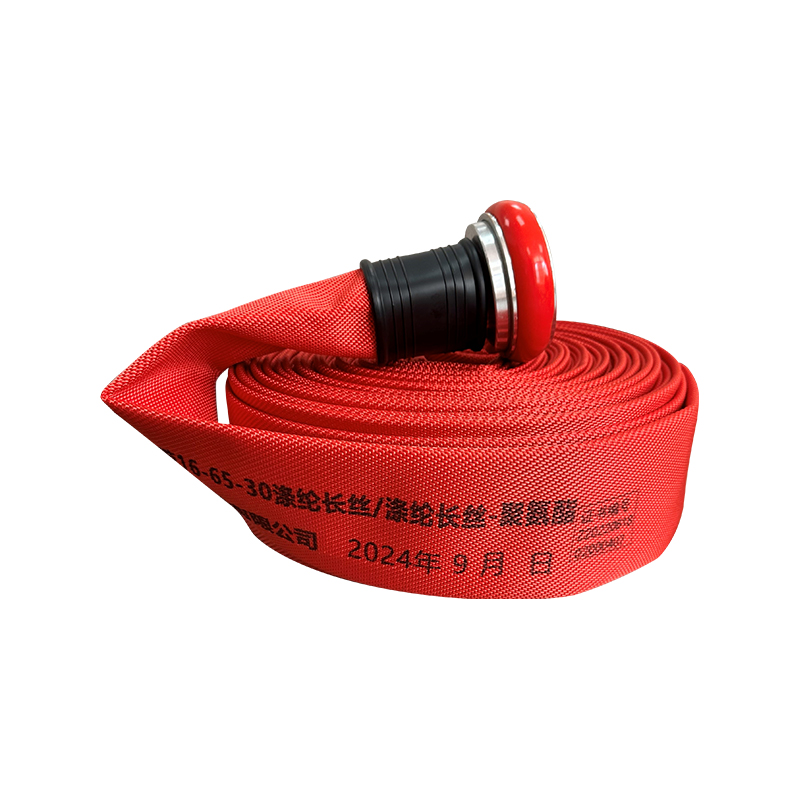
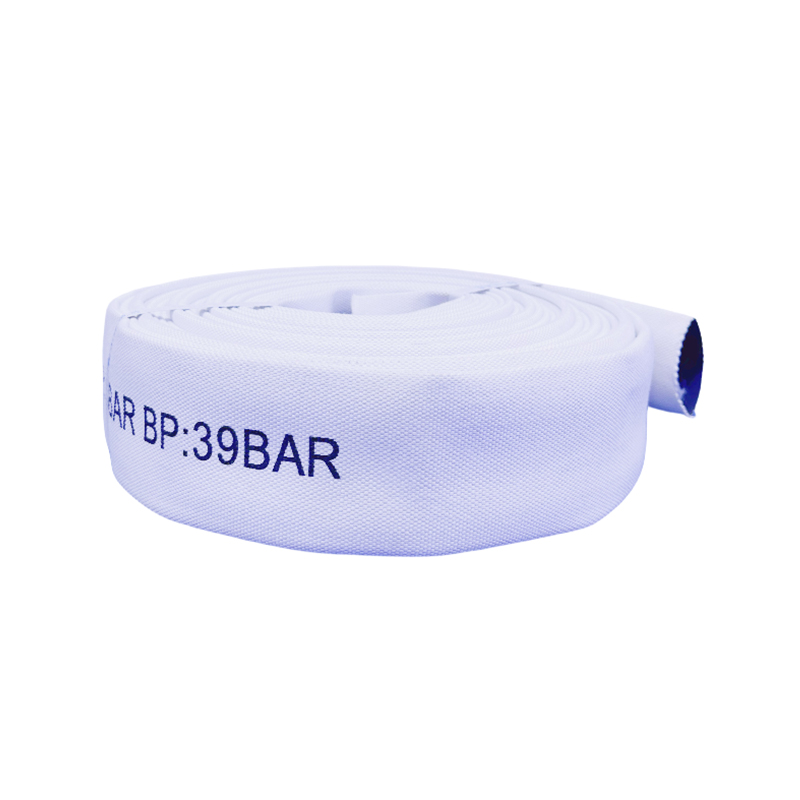
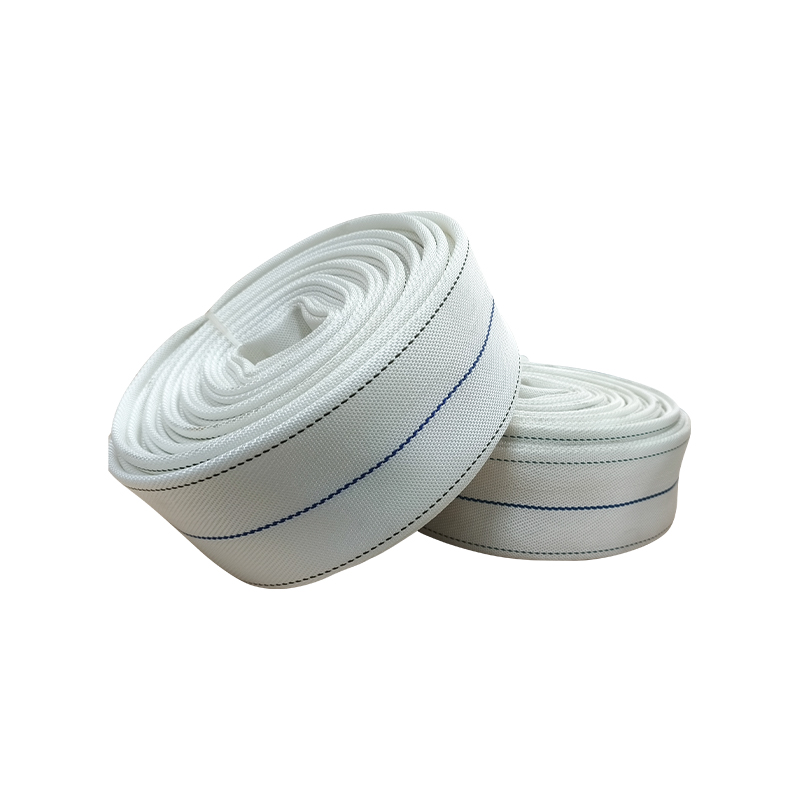
In the high-stakes world of emergency response, the mechanical reliability of water delivery systems is non-negotiable. Firefighters operating in arctic conditions or high-altitude, UV-intense regions require equipment that defies environmental degradation. The synthetic rubber fire hose has long been considered the gold standard for these scenarios. Taizhou Jun'an Fire Technology Co., Ltd., located near the global trading hub of Shanghai, specializes in the R&D and manufacture of rubber, PVC, and PU lined fire hoses. By integrating advanced production equipment with senior technical expertise, we design synthetic rubber fire hose solutions that absorb the advantages of international benchmarks, ensuring elite performance in the most hostile climates.
1. Low-Temperature Flexibility: Overcoming the Glass Transition Phase
A critical engineering challenge is preventing a hose from becoming brittle in sub-zero temperatures. A common technical query is how to prevent fire hose cracking in cold weather. Standard thermoplastic hoses often reach their glass transition temperature (Tg) at moderately low levels, leading to catastrophic failure during deployment. In contrast, a high-quality synthetic rubber fire hose, typically constructed from NBR (Nitrile) or EPDM blends, remains pliable at temperatures as low as -30°C to -40°C. This flexibility is vital for rapid unspooling and maneuvering around obstacles during a fire emergency.
While PVC-based hoses tend to stiffen and "memory-set" in the cold, synthetic rubber maintains its elastic modulus, allowing for consistent flow rates and ease of handling.
| Technical Property | Synthetic Rubber Fire Hose (NBR/EPDM) | Standard PVC/Plastic Hose |
| Cold Flexibility Limit | Down to -40°C | Typically fails below -10°C |
| Kink Resistance | High (Memory-free) | Low (Permanent deformation risk) |
| Deployment Speed | Rapid (Remains soft) | Slow (Stiffens like a pipe) |
2. UV and Ozone Resistance: Protecting the Polymer Backbone
High-altitude or tropical environments subject equipment to intense ultraviolet (UV) radiation and atmospheric ozone. Engineers often ask: what is the best UV resistant fire hose material? UV rays can cause "photo-oxidation," breaking down the polymer chains in lower-grade materials and leading to surface "alligatoring" or cracking. A synthetic rubber fire hose manufactured by Taizhou Jun'an Fire Technology is engineered with specialized antioxidants and antiozonants. This chemical fortification ensures that the ozone resistant fire hose specifications are met, preventing the structural degradation that occurs when rubber is exposed to the elements over long periods.
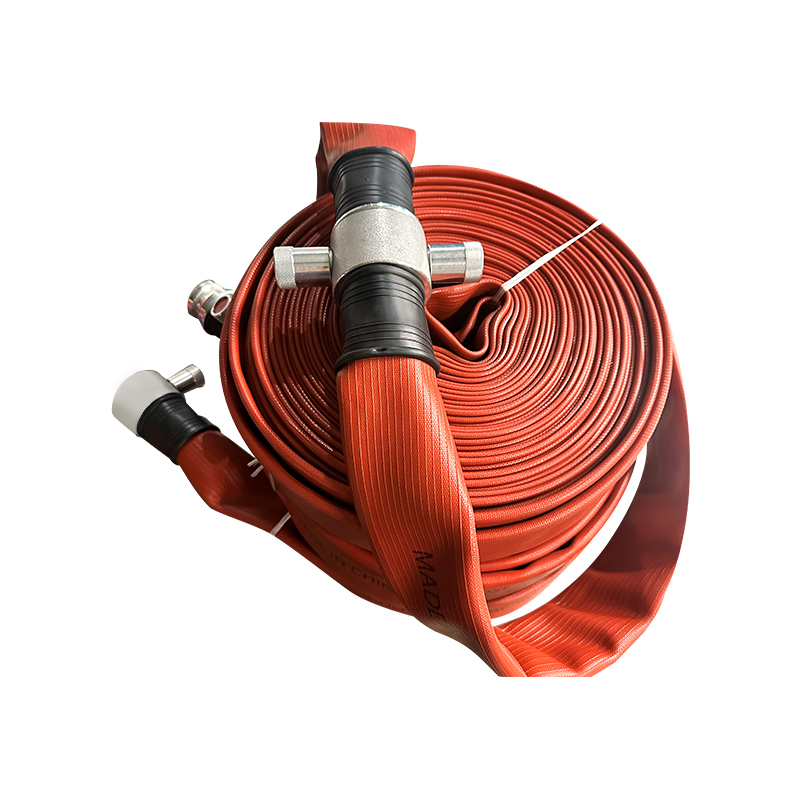
Compared to unprotected jackets, the ribbed synthetic rubber cover acts as a sacrificial shield, protecting the high-tenacity polyester reinforcement from solar damage.
| Environmental Factor | Synthetic Rubber (Ribbed) | Single Jacket Fabric Hose |
| UV Degradation Rate | Extremely Low (Shielded polymer) | Moderate (Fabric can yellow/weaken) |
| Ozone Cracking | Resistant (Chemically stabilized) | Susceptible (Over time) |
| Heat Resistance | Up to +100°C (Intermittent) | Typically up to +60°C |
3. Chemical and Abrasion Resilience in Industrial Settings
In many industrial fire-fighting applications, the hose is exposed to more than just water. Many procurement officers investigate the nitrile rubber fire hose benefits for chemical plants. Synthetic rubber is naturally resistant to oils, greases, and many common industrial chemicals that would dissolve or weaken a standard PVC liner. Furthermore, Taizhou Jun'an Fire Technology designs these hoses with a ribbed exterior to significantly reduce the drag coefficient and increase abrasion resistance when the hose is dragged over sharp gravel or concrete debris.
- Oil Resistance: NBR blends ensure the hose does not swell or delaminate when in contact with fuel spills.
- Abrasive Durability: The heavy-duty "through-the-weave" construction provides a seamless bond between the liner and cover.
- Agricultural Utility: These properties also make them ideal for heavy duty agricultural hose applications, such as slurry discharge.
4. Engineering Precision and Quality Assurance
Achieving a high pressure synthetic rubber hose for fire fighting requires meticulous process control. At Taizhou Jun'an Fire Technology, we utilize modern and advanced production equipment to ensure the uniform wall thickness of our hoses. This precision prevents "thin spots" that could burst under surge pressures (water hammer). Whether providing OEM or ODM services, we adhere to strict quality management standards to win the trust of global customers who require first-class equipment and reliable after-sales support.
When comparing synthetic rubber vs PU lined fire hoses, the rubber variant consistently offers superior heat and abrasion resistance, making it the preferred choice for frontline municipal fire departments.
Frequently Asked Questions (FAQ)
1. Why is synthetic rubber better than natural rubber for fire hoses?
Synthetic rubber is engineered for specific properties. Unlike natural rubber, a synthetic rubber fire hose offers superior resistance to heat, ozone, chemicals, and aging, making it far more durable for long-term storage and use.
2. Does Taizhou Jun'an provide customized hose lengths?
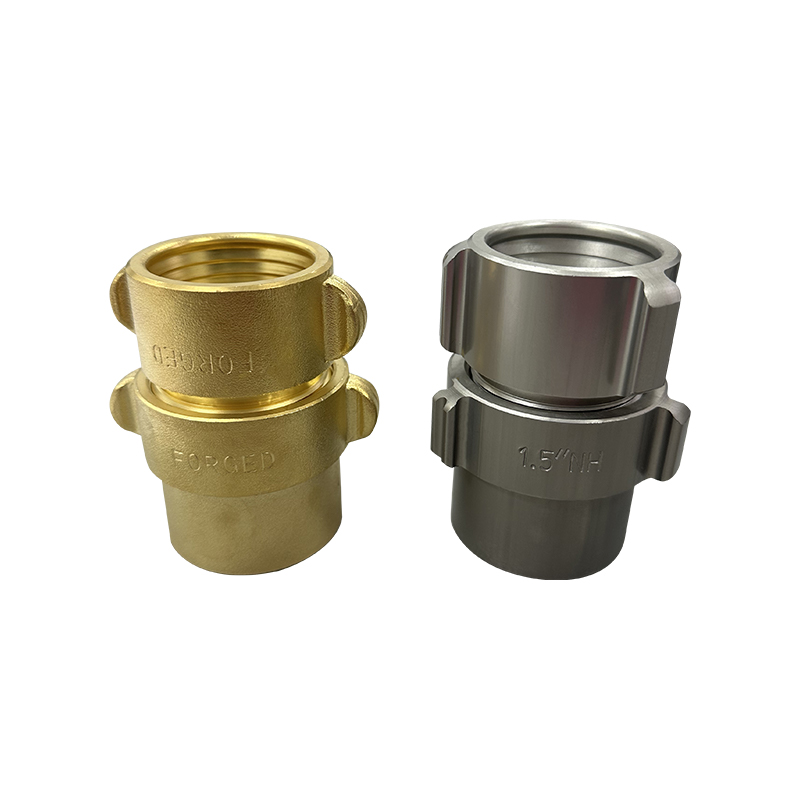
Yes. As an enterprise specializing in production, we offer OEM and ODM services to meet specific customer requirements regarding length, diameter, and coupling types.
3. How should I store a synthetic rubber fire hose to maximize its life?
While our hoses are highly UV resistant, it is always best practice to store them clean and dry in a cool, ventilated area. However, unlike fabric-jacketed hoses, the synthetic rubber cover requires less drying time and is more resistant to mildew.
4. What is the typical working pressure of these hoses?
Our high pressure synthetic rubber hose for fire fighting is typically rated for working pressures between 16 Bar and 25 Bar, with a safety burst pressure significantly higher to ensure operator safety.
5. Can these hoses be used for agricultural irrigation?
Absolutely. Due to their durability and chemical resistance, our products are widely used for heavy duty agricultural hose applications, including water transfer and liquid fertilizer distribution.
Industry References
- NFPA 1961: Standard on Fire Hose (National Fire Protection Association).
- BS 6391: Specification for non-percolating layflat delivery hoses and hose assemblies for fire fighting.
- ISO 4642-1: Rubber and plastics hoses, non-collapsible, for fire-fighting service.
- Technical Production Manual: Taizhou Jun'an Fire Technology Co., Ltd. (2026 Edition).