en
en
 عربى
عربى

Content
- 1 1. Defining the Maximum Working Pressure (MWP) for 8-Inch Configurations
- 2 2. The Engineering Logic of the Burst Safety Factor
- 3 3. Factors Influencing Durability: TPU vs. PVC
- 4 4. Operational Safety and Deployment Standards
- 5 5. Conclusion: Choosing Reliability for Large-Scale Transfer
- 6 Frequently Asked Questions (FAQ)
- 6.1 1. What is the standard 8 inch TPU hose pressure rating for agricultural use?
- 6.2 2. In the TPU vs PVC lay flat hose durability debate, which lasts longer?
- 6.3 3. How to maintain TPU lay flat hose for a longer lifespan?
- 6.4 4. Can I use a TPU lay flat hose for oil and gas applications?
- 6.5 5. Why is the burst safety factor so important for large diameter hoses?
- 7 Industry References
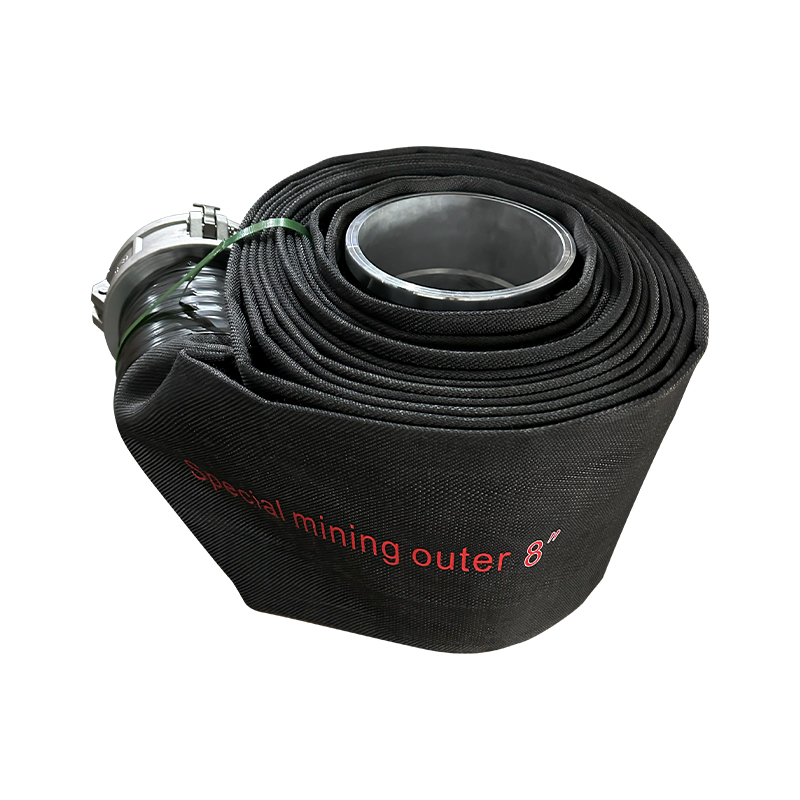
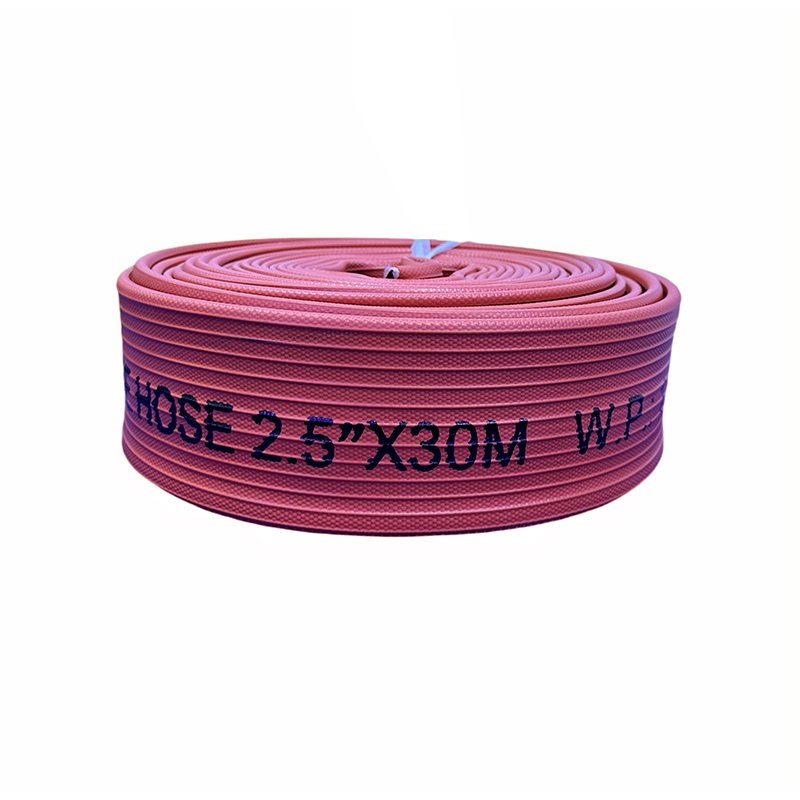
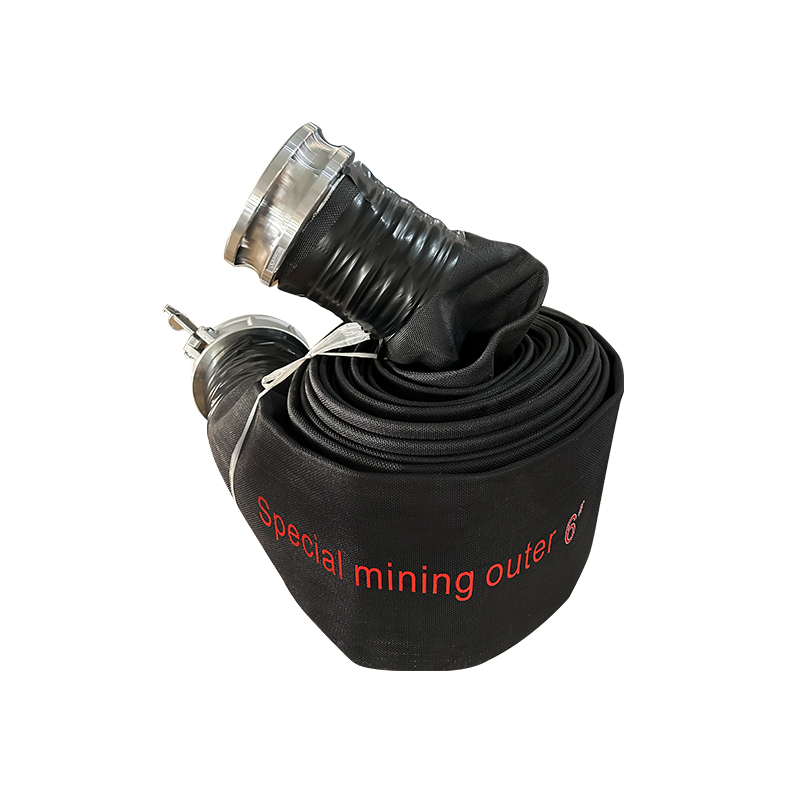
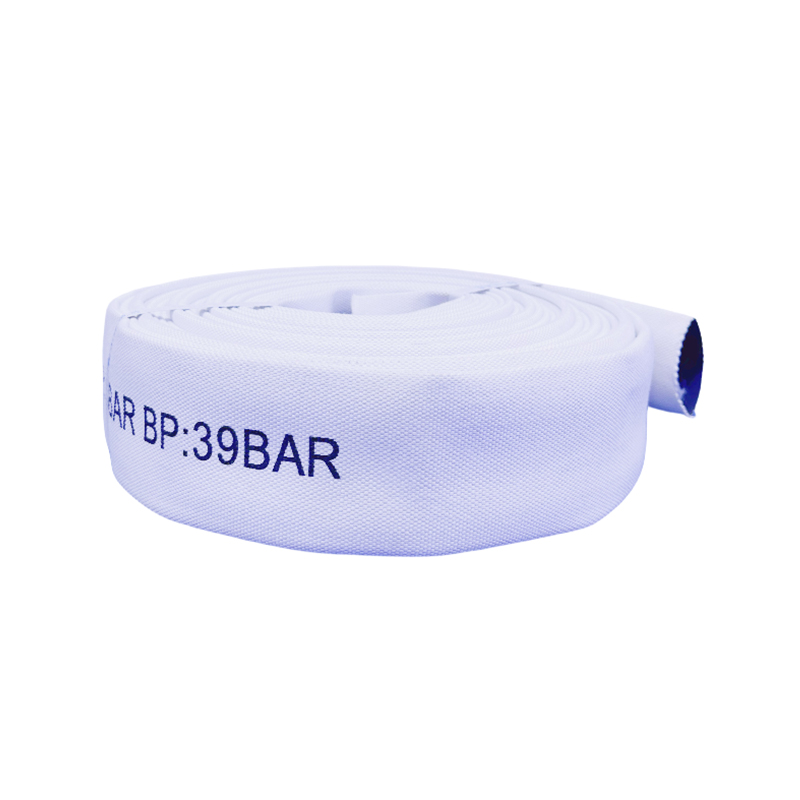
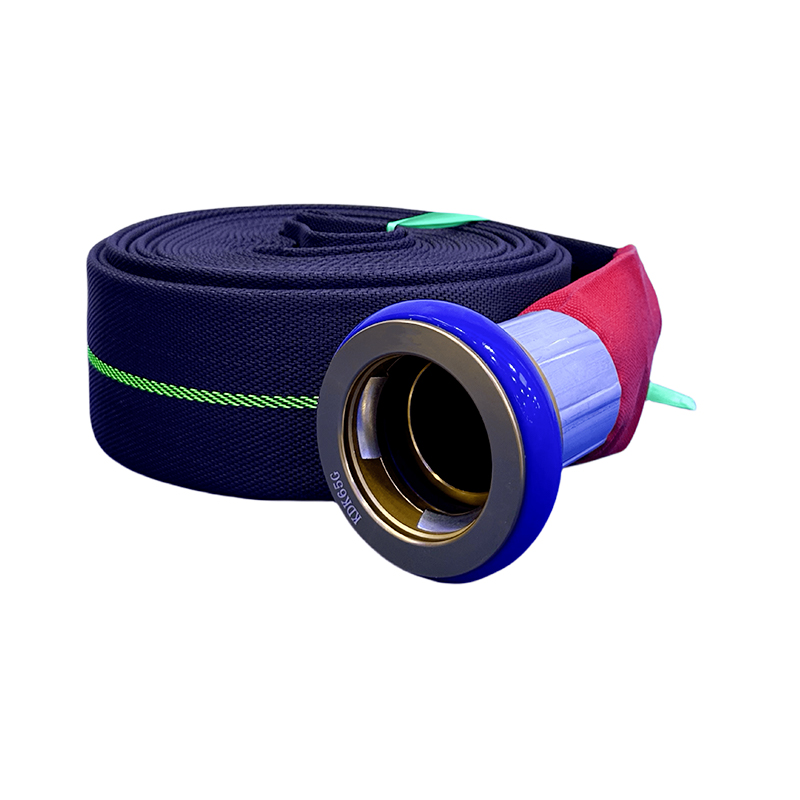
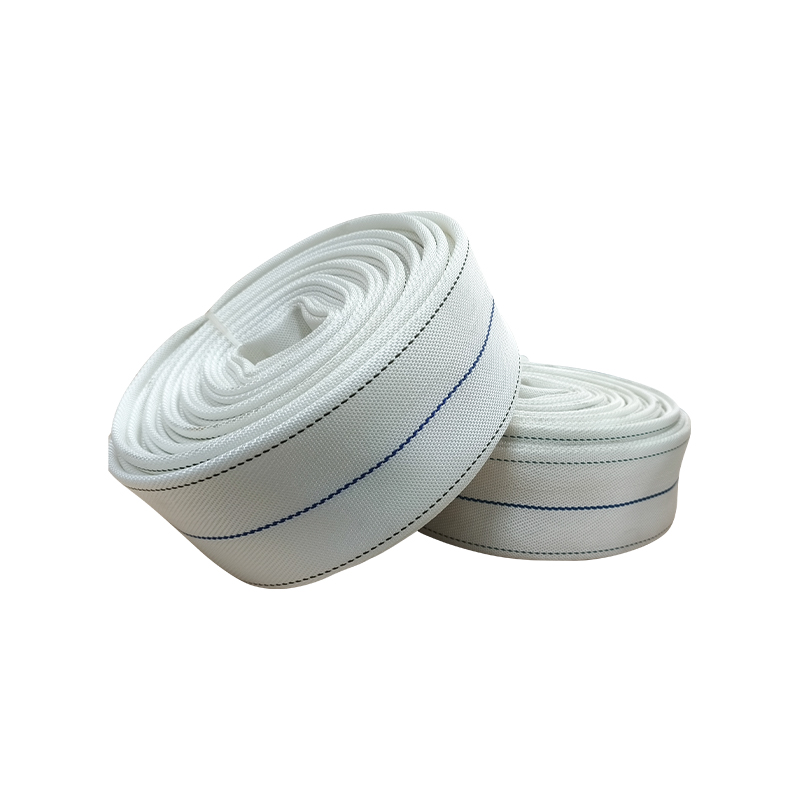
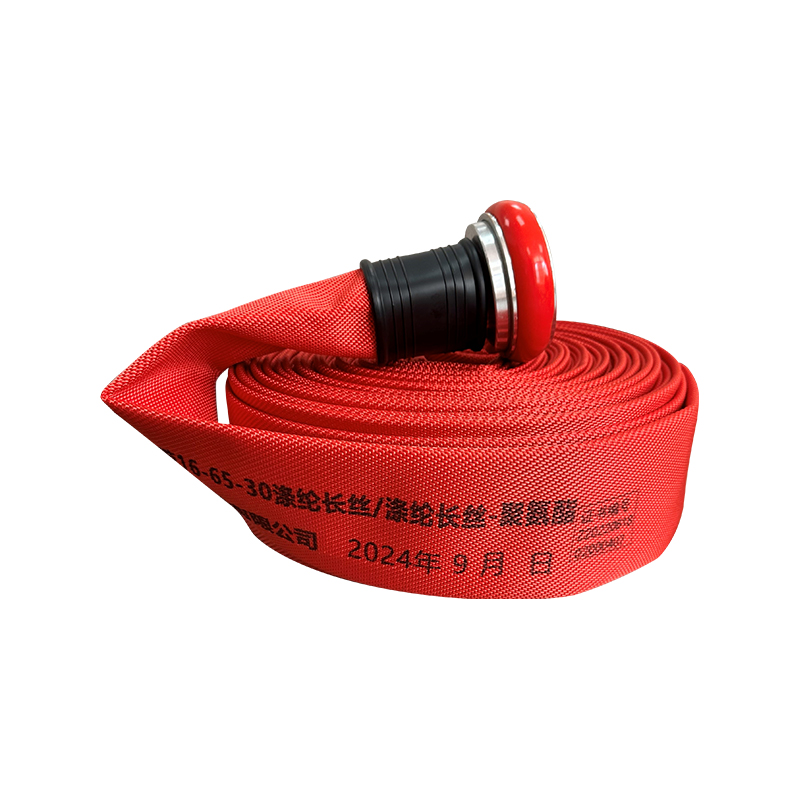
In high-volume fluid transfer operations, such as fracking, large-scale irrigation, and emergency fire rescue, the mechanical integrity of the conduit is paramount. The TPU lay flat hose (Thermoplastic Polyurethane) has become the industry benchmark for these demanding applications due to its extraordinary strength-to-weight ratio. Taizhou Jun'an Fire Technology Co., Ltd., located near the global shipping hub of Shanghai, specializes in the advanced engineering of fire equipment and emergency rescue systems. By integrating senior technical expertise with modern production lines, we manufacture PU-lined hoses that fully absorb the technical advantages of global high-performance standards. Understanding the specific 8 inch TPU hose pressure rating and the engineering logic behind the burst safety factor is essential for operational safety and equipment longevity.
1. Defining the Maximum Working Pressure (MWP) for 8-Inch Configurations
The Maximum Working Pressure (MWP) of a TPU lay flat hose is determined by the tensile strength of its internal reinforcement—usually a circular woven high-tenacity polyester jacket—and the adhesion quality of the TPU lining. For an 8-inch diameter hose, the surface area exposed to internal hydraulic force is significant, requiring a robust carcass to prevent elongation or snaking. While a standard high pressure TPU lay flat hose in smaller diameters may handle 300-400 PSI, the 8-inch variant is typically engineered for a working pressure ranging from 150 PSI to 200 PSI depending on the specific weave density. Compared to traditional rubber hoses, TPU allows for higher pressures without the prohibitive weight of heavy vulcanized materials.
Comparison: TPU vs. PVC Pressure Performance
Thermoplastic Polyurethane offers significantly higher pressure retention and dimensional stability at large diameters compared to Polyvinyl Chloride (PVC) equivalents.
| Material Type | Typical 8" Working Pressure | Tensile Strength Retention |
| PVC Lay Flat Hose | 40 - 80 PSI | Moderate (Prone to stretching) |
| NBR/Rubber Hose | 100 - 150 PSI | High (But heavy and bulky) |
| TPU Lay Flat Hose | 150 - 200+ PSI | Superior (High-tenacity reinforcement) |
2. The Engineering Logic of the Burst Safety Factor
In industrial fluid transfer, the "Burst Pressure" is the theoretical point of mechanical failure. The safety factor is the ratio between the burst pressure and the working pressure, typically set at 3:1 for industrial applications and often higher for heavy duty TPU discharge hose used in fire fighting. For an 8-inch TPU hose with an MWP of 150 PSI, the burst pressure should exceed 450 PSI. This buffer accounts for "water hammer" effects, transient pressure spikes, and mechanical wear over time. Taizhou Jun'an Fire Technology ensures that our designs maintain this rigorous safety margin through precision-controlled extrusion-through-the-weave technology, which bonds the TPU directly to the polyester jacket to prevent delamination under extreme stress.
3. Factors Influencing Durability: TPU vs. PVC
The choice between TPU vs PVC lay flat hose durability often comes down to abrasion resistance and environmental tolerance. TPU is a "living" elastomer with a molecular structure that resists cracking and abrasion significantly better than PVC. When researching how to maintain TPU lay flat hose, engineers note that TPU remains flexible at temperatures as low as -50°C, whereas PVC becomes brittle and prone to failure. Furthermore, the oil and chemical resistance of TPU makes it the preferred choice for TPU lay flat hose for oil and gas transfer, where exposure to hydrocarbons would quickly degrade a standard agricultural hose.
Comparison: Environmental and Physical Resistance
TPU maintains its mechanical properties across a wide thermal and chemical spectrum, whereas PVC is limited by its plasticizer stability.
| Factor | PVC Material | TPU Material |
| Abrasion Resistance | Low (Standard) | Excellent (4-5 times higher) |
| Cold Flex Temperature | 0°C to -10°C | -50°C |
| Oil/Fuel Resistance | Poor | Excellent |
4. Operational Safety and Deployment Standards
Deploying an 8-inch TPU lay flat hose requires an understanding of its bend radius and weight when charged with fluid. Because TPU is thinner and lighter than rubber, it allows for longer continuous runs with fewer couplings, reducing potential leak points. However, the high flow rates associated with 8-inch conduits mean that proper TPU hose coupling installation is vital. Taizhou Jun'an provides OEM and ODM services to ensure that the hose and the coupling interface are perfectly matched to maintain the 3:1 safety factor throughout the entire assembly, preventing "blow-offs" at the shank.
Technical Advantages of Jun'an TPU Hoses:
- Advanced Extrusion: One-piece construction prevents delamination between layers.
- High Purity TPU: Superior hydrolysis resistance for long-term water immersion.
- Lightweight Design: Significant reduction in transport and deployment labor.
- Verified Safety: Manufactured in accordance with domestic and international fire-fighting standards.
5. Conclusion: Choosing Reliability for Large-Scale Transfer
The 8-inch TPU lay flat hose is a masterclass in modern material science, offering a maximum working pressure of up to 200 PSI with a robust 3:1 safety factor. Its superiority over PVC in terms of temperature range, abrasion resistance, and chemical stability makes it the only viable choice for critical infrastructure and emergency response. At Taizhou Jun'an Fire Technology Co., Ltd., we are dedicated to providing first-class equipment and high-quality after-sales service. Our commitment to using high-carbon and high-chromium alloy materials in our manufacturing machinery reflects our broader goal: ensuring that when you rely on our hoses, they perform under the most extreme hydraulic pressures.
Frequently Asked Questions (FAQ)
1. What is the standard 8 inch TPU hose pressure rating for agricultural use?
For agricultural irrigation and manure injection, the working pressure is typically rated between 100 and 150 PSI, with a burst pressure around 450 PSI to ensure a safe margin for pump fluctuations.
2. In the TPU vs PVC lay flat hose durability debate, which lasts longer?
TPU typically lasts 3 to 5 times longer than PVC in high-abrasion environments. While PVC is more cost-effective for low-pressure, static water transfer, TPU is the industry standard for moving/drag applications.
3. How to maintain TPU lay flat hose for a longer lifespan?
Ensure the hose is drained of fluid before storage and avoid dragging it over sharp metallic edges. While TPU is highly UV resistant, storing it away from direct sunlight when not in use will further preserve the elastomer's elasticity.
4. Can I use a TPU lay flat hose for oil and gas applications?
Yes. Unlike PVC or standard rubber, TPU has excellent resistance to hydrocarbons, making it suitable for the transfer of fuels, crude oil, and produced water in fracking operations.
5. Why is the burst safety factor so important for large diameter hoses?
Because an 8-inch hose holds a massive volume of water, a failure at 150 PSI releases a destructive amount of kinetic energy. A 3:1 safety factor ensures that even if a valve is closed too quickly (causing a pressure surge), the TPU lay flat hose will not rupture.
Industry References
- NFPA 1961: Standard on Fire Hose (National Fire Protection Association).
- ISO 8029: Plastics hose — General-purpose collapsible water hose, textile-reinforced — Specification.
- BS 6391: Specification for non-percolating layflat delivery hoses and hose assemblies.
- Technical Datasheet: TPU High-Pressure Transfer Systems, Taizhou Jun'an Engineering Dept.