en
en
 عربى
عربى

Content
Are fire hoses heavy?
Fire hoses are substantially heavier than most people expect — and the weight changes dramatically depending on whether the hose is empty, charged with water, or being dragged at speed through a burning building.
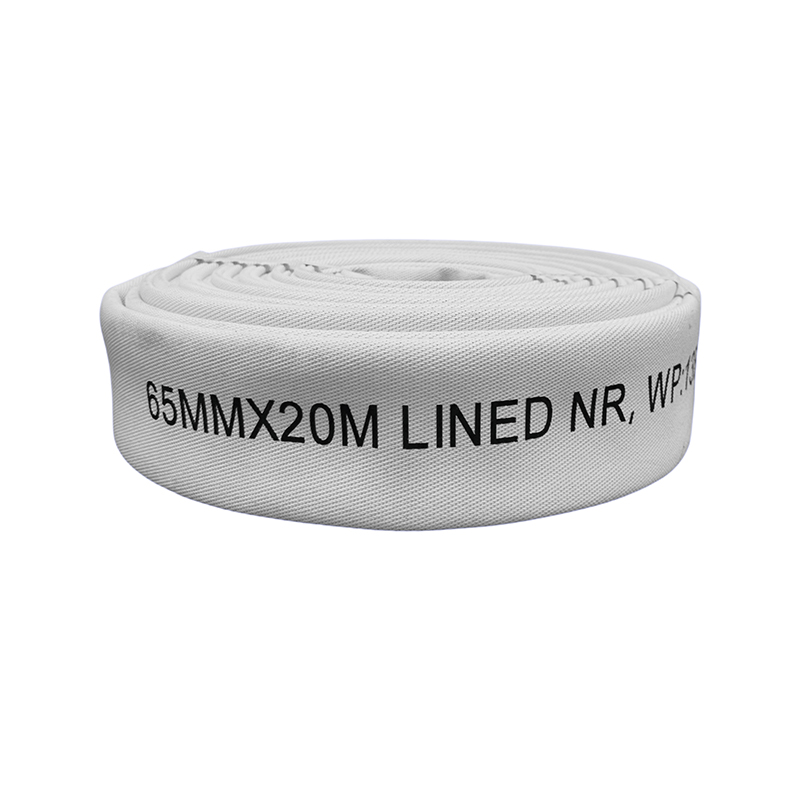
An empty 65 mm (2.5-inch) attack hose weighs approximately 0.5–0.8 kg per metre. Fill it with water at operating pressure, and that climbs to around 1.5–2.5 kg per metre. A single standard 30-metre section of charged 65 mm hose can weigh close to 60–75 kg — roughly the weight of an adult person — which is why fire crews typically advance in pairs or teams.
Hose diameter directly determines weight. Common sizes and their approximate charged weights per metre are:
| Hose diameter | Common use | Empty weight (per metre) | Charged weight (per metre) |
|---|---|---|---|
| 38 mm (1.5 in) | Indoor attack, forestry | ~0.3 kg | ~1.1 kg |
| 45 mm (1.75 in) | Standard attack hose | ~0.4 kg | ~1.4 kg |
| 65 mm (2.5 in) | Structural firefighting | ~0.6 kg | ~2.0 kg |
| 100 mm (4 in) | Supply / relay lines | ~1.0 kg | ~5.0 kg |
| 150 mm (6 in) | Large-diameter supply | ~1.5 kg | ~10.5 kg |
Large-diameter supply hose — the wide, flat type laid from a hydrant to a pumper truck — is among the most physically demanding equipment firefighters handle. A 150 mm hose charged at 700 kPa can exceed 300 kg for a single 30-metre length, and moving it requires mechanical assistance or multiple crew members.
Modern hose construction has made some inroads on weight. Ultra-lightweight attack hoses using aramid (Kevlar) jacket fibres weigh 20–30% less than traditional woven polyester designs, an important advantage in high-rise or wildland firefighting where crews may carry hose packs uphill for long distances.
What are fire hoses made of?
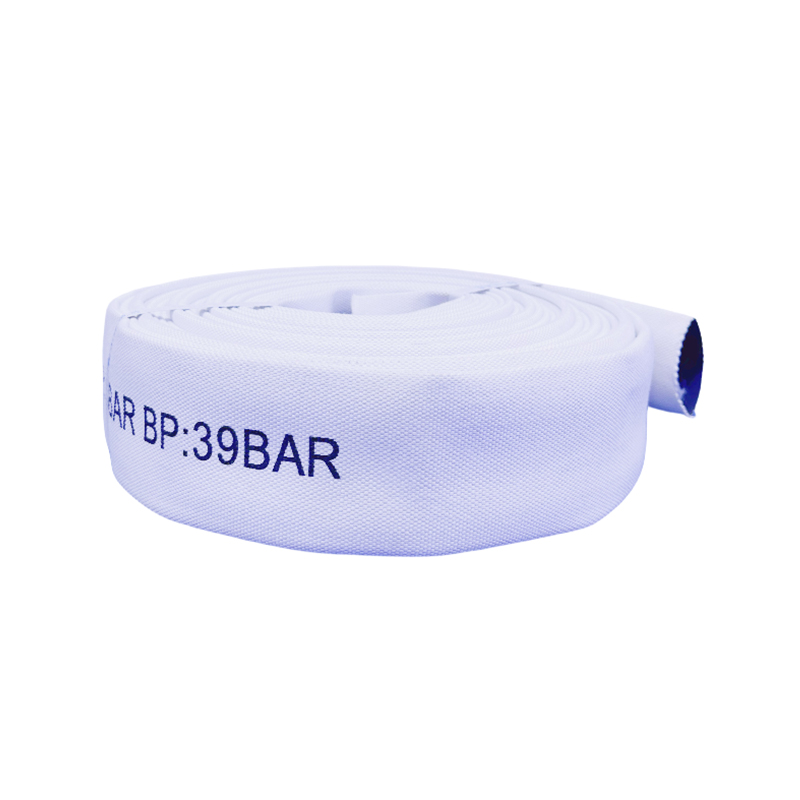
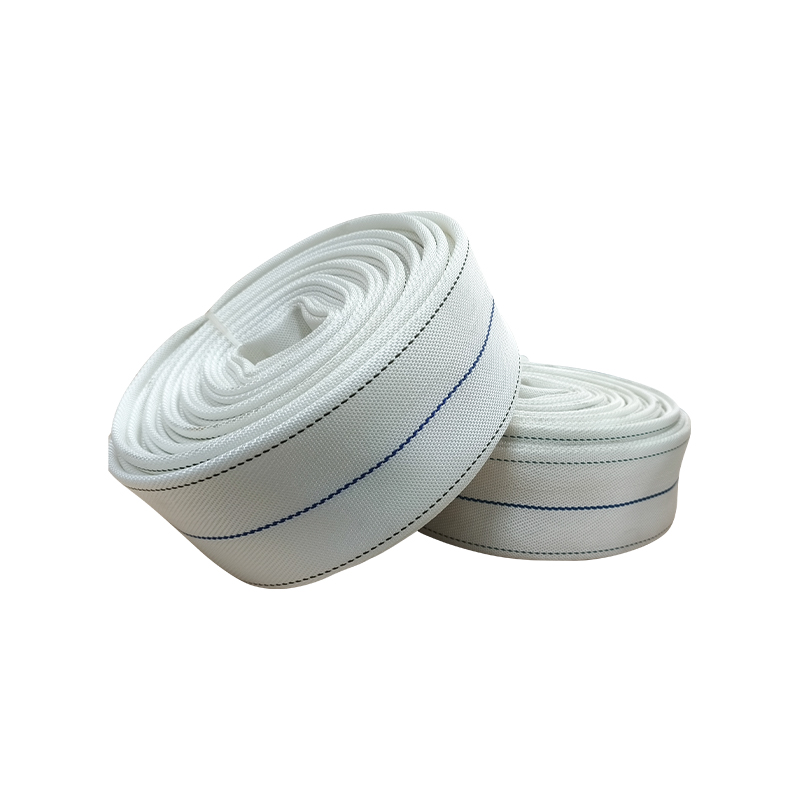
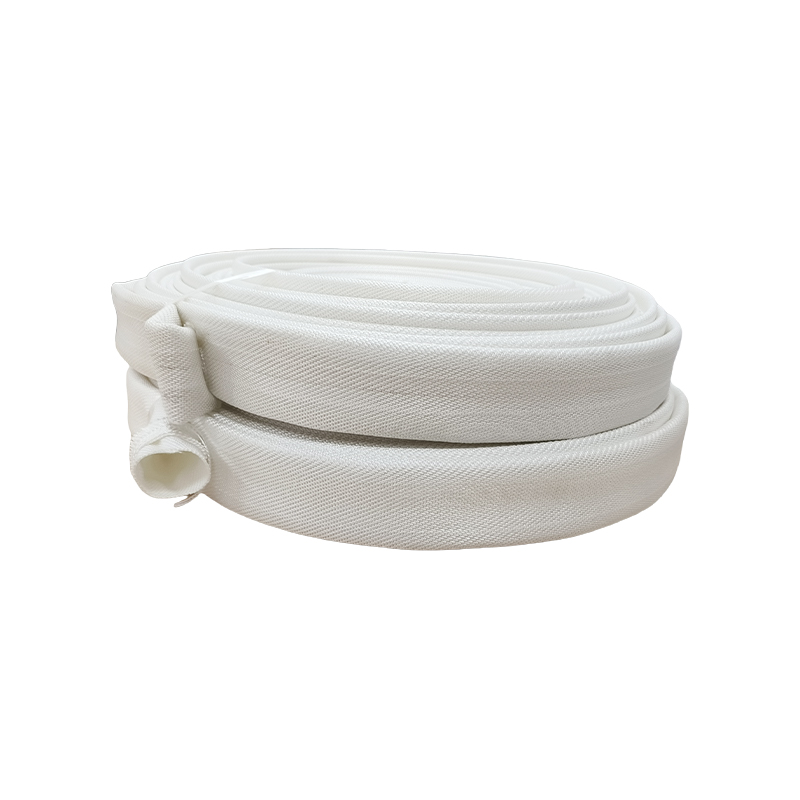
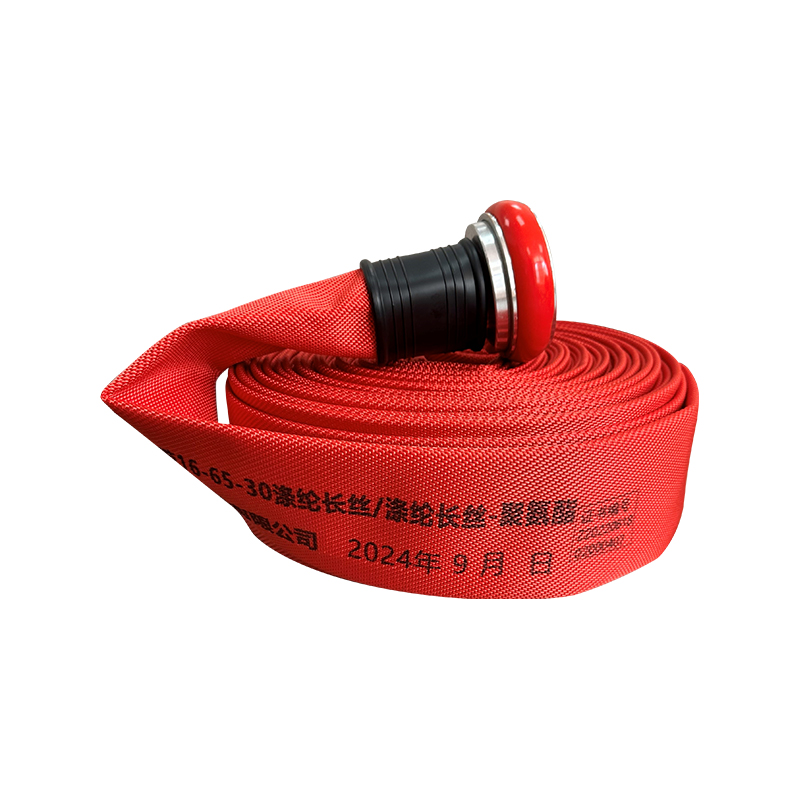
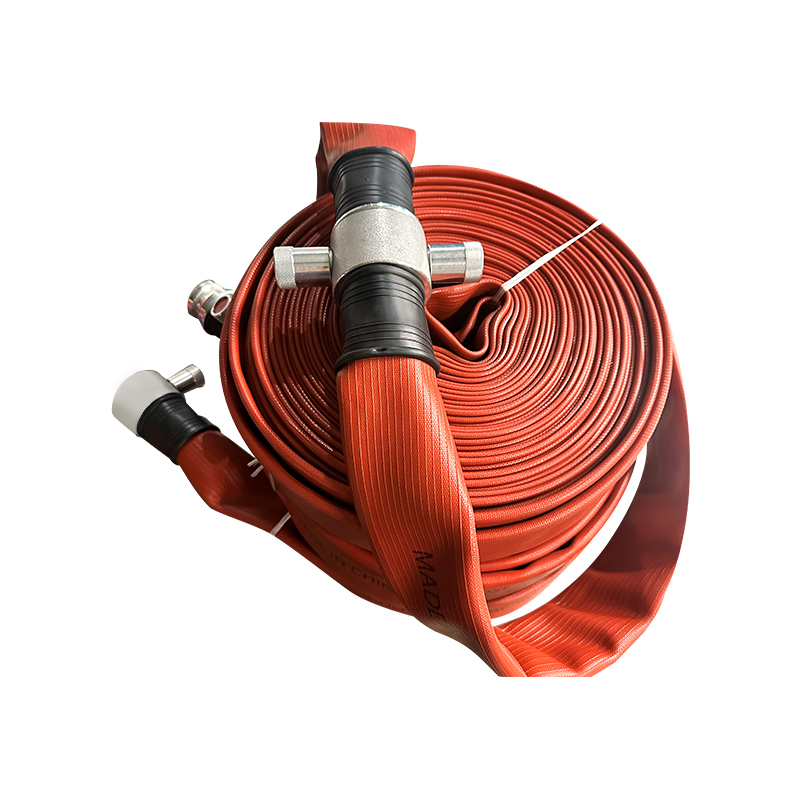
A fire hose is a composite product — typically three distinct layers working together to handle high pressure, resist heat and abrasion, and remain flexible enough to be manoeuvred quickly.
The inner liner is the most critical component. It must be completely watertight and chemically resistant. Most modern hoses use either:
- EPDM rubber — durable, ozone-resistant, and tolerant of a wide temperature range (−40 °C to +120 °C). Common in structural attack hoses.
- Thermoplastic polyurethane (TPU) — lighter than rubber, excellent abrasion resistance, used in high-performance and wildland hoses.
- Polyvinyl chloride (PVC) — lowest cost, found in industrial and garden-grade hoses, not suitable for high-pressure firefighting.
The jacket is the outer woven sleeve that provides tensile strength and protects the liner from physical damage. Materials include:
- Polyester — the most common jacket material. Resists mildew, abrasion, and UV degradation. A woven polyester jacket can withstand burst pressures exceeding 2,000 kPa (290 psi).
- Nylon — more elastic than polyester, better energy absorption under pressure surges.
- Aramid fibre (Kevlar / Nomex) — used in specialist hoses for high-temperature or high-pressure environments. Up to 5× stronger than steel by weight.
The couplings at each end are almost universally aluminium alloy (for lightweight attack hoses) or brass (for supply connections requiring high corrosion resistance). Storz couplings — the symmetrical, quarter-turn design — have become the international standard for attack hose connections; American fire departments often retain threaded NH (National Hose) couplings for compatibility with older equipment.
Industrial and building-installed hose reels (the type found inside office buildings and hotels) typically use a single-jacket polyester/rubber construction rated for lower pressures (around 1,200–1,400 kPa), since they are intended for occupant use rather than professional firefighting.
Does fire hose expire?
Yes — fire hoses have a defined service life, and using expired or uninspected hose in an emergency is both dangerous and, in most jurisdictions, a regulatory violation.
The standard service life for a fire hose is 10 years from the date of manufacture, according to NFPA 1962 (the US standard for fire hose inspection and maintenance) and broadly similar guidelines from EN 14540 (Europe) and AS 1221 (Australia). Some manufacturers warrant their hoses for 15 years under specific storage conditions.
Expiry is not simply about age, however. The full regime involves:
- Annual service testing — hoses must be hydrostatically pressure-tested each year, typically at 300 psi (2,070 kPa) for attack hose. Any hose that fails, leaks at couplings, or shows jacket damage is taken out of service immediately.
- Visual inspection after every use — checked for cuts, abrasion, mildew, coupling distortion, and liner bulging before being reloaded onto a vehicle.
- Retirement triggers regardless of age — a hose that has been run over by a vehicle, exposed to petroleum products, or subjected to a burn-through is condemned even if it passed its last pressure test.
Improper storage accelerates degradation significantly. A hose stored in direct sunlight will suffer UV-induced jacket breakdown within 3–5 years. Hose folded in the same position indefinitely develops permanent creases that weaken the liner. Best practice is to store hose in a cool, dark location and to re-load it in a different fold pattern annually to prevent crease fatigue.
| Inspection type | Frequency | Key checks | Standard reference |
|---|---|---|---|
| Visual inspection | After every use | Cuts, burns, mildew, coupling damage | NFPA 1962 / EN 14540 |
| Service pressure test | Annually | Hydrostatic test at 300 psi (attack) / 200 psi (supply) | NFPA 1962 |
| Full retirement | 10–15 years from manufacture | Replace regardless of condition | NFPA 1962 Ch. 5 |
| Immediate condemnation | As identified | Vehicle run-over, chemical contamination, liner failure | Manufacturer + NFPA |
How far can a fire hose extend?
A single standard hose section is typically 15 or 30 metres (50 or 100 feet) long. However, fire hose sections are designed to be coupled end-to-end, so the practical reach is limited not by hose length but by pressure loss over distance — a physics problem that determines how many sections can be run before water flow becomes inadequate at the nozzle.
Pressure loss increases with distance and flow rate. As a rule of thumb, a 65 mm attack hose flowing 500 L/min loses approximately 35–40 kPa per 30-metre section. Most fire engines deliver 700–1,000 kPa at the pump outlet. That gives a practical working budget of roughly 400–600 kPa for friction loss before nozzle pressure drops below the 275 kPa minimum required for effective firefighting.
In practical terms, this means:
- Standard structural attack — 2–4 sections (60–120 m) from the pumper to the nozzle is typical. Beyond this, a second pumper or an inline booster pump is added.
- Relay pumping operations — for large incidents or remote locations, tankers and pumpers are spaced at 150–300 m intervals to relay water along lines that can extend for several kilometres. Australian bushfire operations routinely establish relay lines of 1–2 km.
- High-rise firefighting — vertical distance is the limiting factor. Every 10 metres of elevation costs approximately 100 kPa of pressure. A 30-storey building (roughly 90 m) requires the building's own standpipe system to be supplemented by fire service pumps; crews connect attack hoses to standpipe outlets on the floor below the fire rather than running hose up stairwells.
- Wildland / forestry hose — smaller diameter (25–38 mm) hose is used in long lines because it is lighter to carry. Crews may lay 300–600 m of 38 mm hose from a water source to a fire perimeter, accepting lower flow rates in exchange for reach.
The longest hose lays on record are from major industrial and wildland incidents. During the 1988 Yellowstone fires, relay lines exceeded 3 km in some sectors. Offshore platform firefighting protocols specify standby systems capable of delivering water to any point on a platform from connections up to 120 m away. In every case, extending reach requires either more pump pressure, intermediate relay pumps, or accepting reduced flow at the nozzle end.
Choosing the right fire hose for non-professional use
For building occupants, facility managers, and industrial safety officers who maintain hose reels, the decisions are simpler but still worth getting right:
- Diameter: 19–25 mm is standard for occupant-use hose reels. Flow rates of 0.3–0.5 L/s are sufficient for Class A (solid fuel) fires in early stages.
- Length: Building codes (e.g., UK BS 5306-1, Australian AS 2441) specify that every point in a building must be reachable by a hose of no more than 30 m plus 6 m of nozzle throw. Ensure reel locations provide this coverage before assuming any point is protected.
- Maintenance: Hose reels in buildings should be inspected every 6 months and pressure-tested annually by a competent person. Reels that have not been tested in over 12 months should be treated as unreliable.
- Type approval: Purchase hose that carries a recognised mark — UL Listed (USA), Kitemark (UK), or FM Approved — rather than unrated industrial hose sold at a lower price.