en
 عربى


Content
- 1 What Defines a Heavy Duty Layflat Hose for Mining?
- 2 Pressure Ratings: Working Pressure, Burst Pressure, and Safety Margin
- 3 Abrasion Resistance: The Deciding Factor in Mine Service Life
- 4 Material and Construction: Choosing the Lining and Reinforcement
- 5 Storz Couplings: The Standard for Quick Mine Connections
- 6 Kink Resistance, Weight, and On-Site Handling
- 7 How to Verify Performance Before You Buy
- 8 Frequently Asked Questions
A 6-inch dewatering line goes down on the access bench of an open-pit mine, and the operator has less than half an hour to restore discharge before sump water reaches the working level. The hose that failed was not selected for pressure alone.
Its lining had been worn thin by sand-laden mine water, its cover had split where it dragged over rock, and its Storz coupling had loosened under repeated vibration. Heavy duty layflat hose for mining is specified against a set of performance requirements that go far beyond a burst-pressure number: sustained working pressure, abrasion resistance, chemical tolerance, kink recovery, coupling retention, and the practical weight a crew can handle while moving a line across rough ground. Taizhou Jun'an Fire Technology Co., Ltd., a direct manufacturer of layflat and fire hose in Taizhou, China, produces a dedicated mining outer dewatering hose family in 4-inch, 6-inch, and 8-inch bores with Storz couplings, built around exactly these field demands.
A 6-inch mining layflat hose can move 400 to 600 cubic meters of water per hour at typical dewatering pressures, and a single lining failure stops that flow for the rest of the shift.
What Defines a Heavy Duty Layflat Hose for Mining?
A heavy duty layflat hose for mining is a collapsible transfer hose designed to carry water, slurry, or mine dewatering discharge under sustained pressure while resisting internal abrasion, external wear, chemical attack, and repeated flexing without losing its round bore or coupling grip.
Layflat construction means the hose folds flat when depressurized, stores compactly on a reel or pallet, and opens to a full circular cross-section as soon as working pressure is applied. That geometry is what lets a mine move long transfer lines quickly and store them in small spaces between seasons.
Heavy duty layflat hose for mining is a fabric-reinforced, collapsible discharge hose engineered for continuous service with abrasive or aggressive mine water, with a service life measured in years rather than weeks.
The performance requirements that separate a mine-rated hose from a general-purpose flat hose form a short but demanding list:
- Working pressure that matches the pump curve plus surge conditions of the mine water system
- Lining abrasion resistance suited to the solids content of the discharge, from sand to coal fines to tailings
- Cover durability for dragging over rock, occasional vehicle contact, and UV exposure on the surface
- Kink recovery and vacuum stability so flow never collapses during pump start-up or bypass
- Coupling retention that survives axial pull, twisting, and repeated connect-disconnect cycles
- Weight and coil dimensions that site crews can lift, drag, and reconnect without crane support
Each requirement interacts with the others. A high-pressure hose with a soft lining fails early; an abrasion-resistant hose with a weak coupling creates a different, equally expensive failure. The sections below give the numbers and comparisons used to judge any heavy duty layflat hose before purchase.
Pressure Ratings: Working Pressure, Burst Pressure, and Safety Margin
Select a mining dewatering hose on sustained working pressure equal to the maximum pump discharge pressure, with a documented burst safety factor between 3:1 and 4:1.
Typical mine dewatering lines run at 6 to 16 bar working pressure for 4-inch to 8-inch hoses. A 4-inch hose rated at 10 bar working pressure with a 4:1 safety factor must burst no lower than 40 bar and should be factory-tested to at least 1.5 times working pressure before delivery. Surge events from fast-closing valves or entrapped air can nearly double static pressure for a few seconds, so the buffer is not academic.
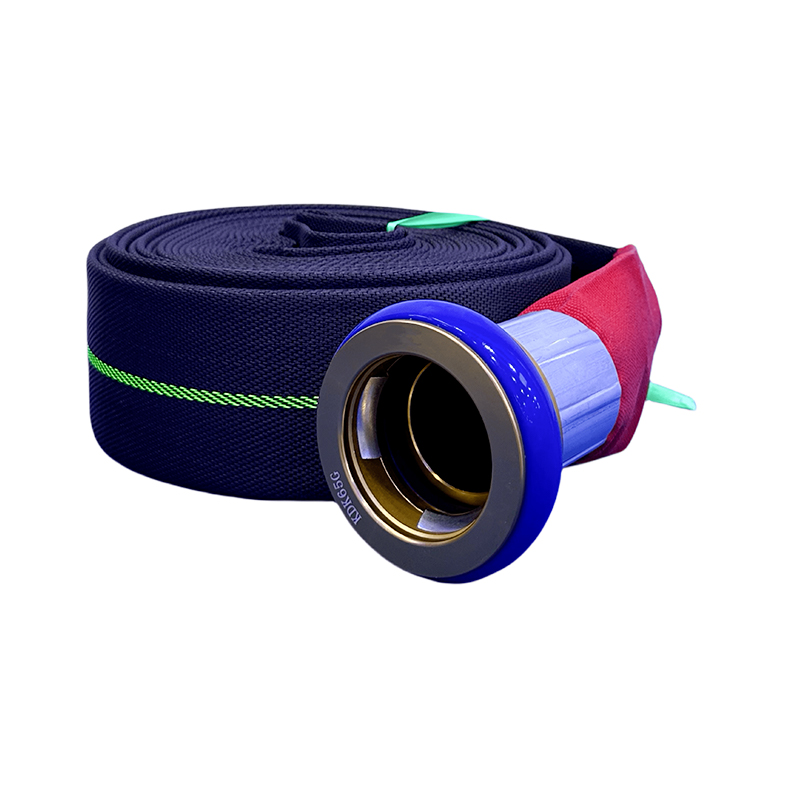
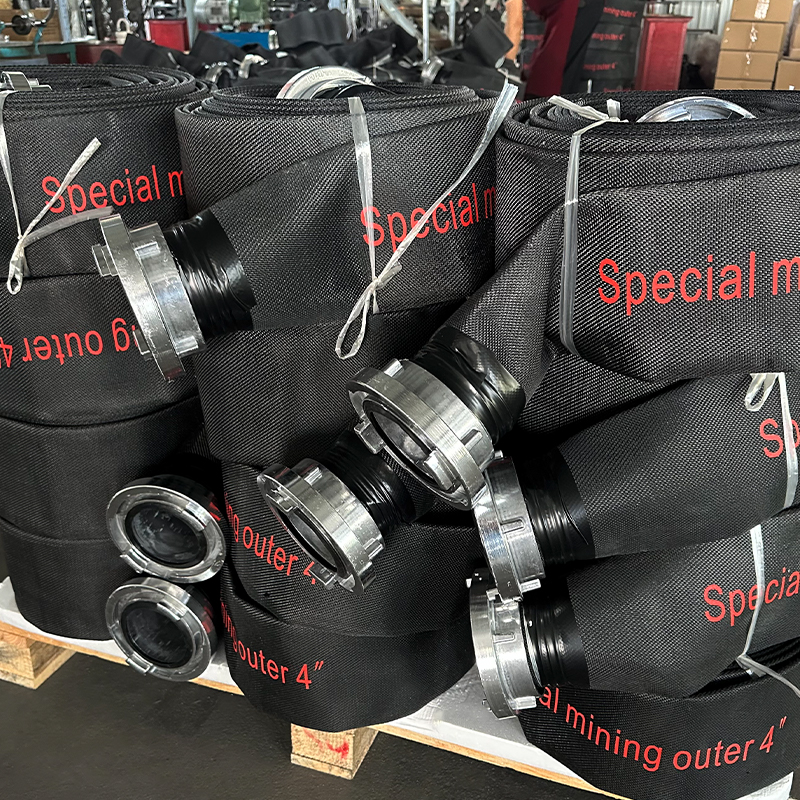 4-Inch Mining Dewatering Hose with Storz Couplings for High-Pressure DrainageThis 4-inch external drainage hose suits mine dewatering and gold-panning tasks. Its reinforced structure resists abrasion and chemicals, while Storz quick connectors enable secure, tool-free hookups. It pairs well with the surrounding discussion on burst-pressure safety factors.View Product →
The entire hose circuit, couplings, adapters, and fittings included, must hold the same rating. A coupling that slips at 60 percent of hose burst pressure becomes the weak point that turns a controllable leak into a full line failure at the worst possible moment.
Abrasion Resistance: The Deciding Factor in Mine Service Life
Abrasion resistance, not pressure rating, decides how many seasons a mining layflat hose survives.
Mine water carries suspended solids. Sand and coal fines act like sandpaper inside the bore at flow velocities of 2 to 5 m/s, while the outside of the hose is dragged over rock, steel edges, and gravel on every relocation. Internal wear thins the lining until the reinforcement shows through; external wear cuts the cover and lets water penetrate the carcass. Both paths lead to the same result: a burst line at an inconvenient moment.
TPU linings typically lose a fraction of the material that PVC or EPDM compounds lose in the same abrasion test, with natural rubber compounds sitting between them. That is why the abrasion value on a data sheet, not the brand name or the color of the cover, should drive the specification for heavy duty mining service.
Caused by suspended solids moving at flow velocity, worst at elbows and under partial-flow conditions. A worn lining weakens burst retention long before visible leaks appear.
Caused by dragging, sliding, and occasional vehicle contact. Cover cuts let moisture and grit reach the reinforcement, which then fails under pressure without warning.
Material and Construction: Choosing the Lining and Reinforcement
The lining material sets the abrasion, chemical, and temperature limits of a mining hose, while a warp-knitted polyester reinforcement carries the pressure load and gives the hose its layflat memory.
Four lining families dominate heavy duty mining layflat hose: PVC, TPU, EPDM, and natural rubber. The choice changes weight, flexibility, cost, and service life in different mine waters.
| Lining material | Abrasion resistance | Chemical resistance | Low-temperature flexibility | Typical mining use |
| PVC | Moderate | Weak against oils and solvents | Stiff below -10C | Light dewatering, clear water, short-term bypass |
| TPU | Excellent | Good; resists oils and many mine reagents | Maintains flexibility near -30C | Abrasive slurries, tailings, frequent relocation |
| EPDM | Good | Excellent against acids and ozone | Flexible to about -20C | Acidic mine water, UV-exposed surface lines |
| Natural rubber | Good to very good | Good against alkaline slurries | Retains flexibility to about -25C | High-solids dewatering where cost matters |
Reinforcement layers and cover thickness matter as much as the lining. A 6-inch hose with three reinforcement plies handles repeated pressure cycling better than a heavier single-ply competitor, and a cover of 2 to 3 mm resists dragging far longer than a thin cosmetic cover. The construction and selection trade-offs behind these numbers are covered in depth in our mine dewatering hose construction guide.
For abrasive mine water, a TPU-lined hose typically outlasts a PVC-lined hose by a factor of five to eight on the same duty cycle. The lining choice is a budget decision, not a technical detail.
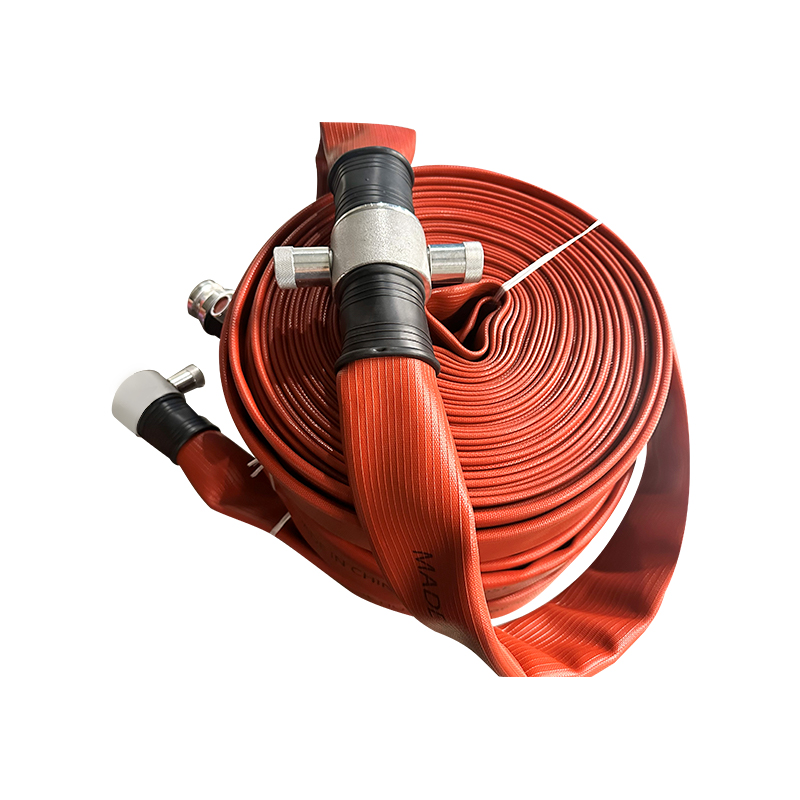
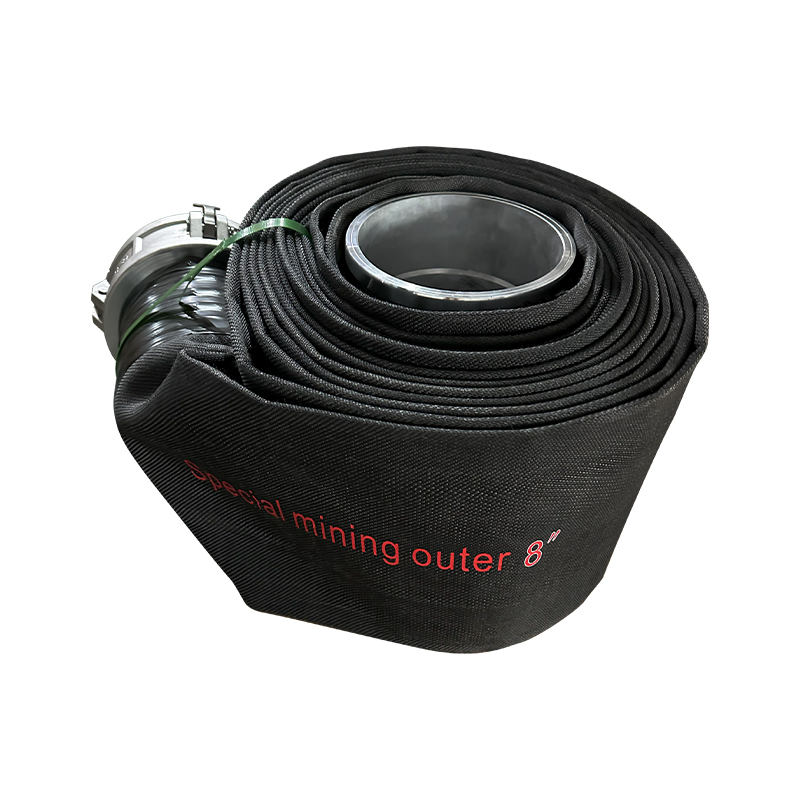 8-Inch Mining Flat Hose with Storz Connectors for High-Pressure Slurry TransferAn 8-inch heavy-duty flat hose rated at 300 PSI, reinforced with rubber and fitted with standard Storz couplings. It lies flat for compact storage and is built for mine dewatering and slurry transport, aligning with the context on lining durability and quick-connect systems.View Product →
Storz Couplings: The Standard for Quick Mine Connections
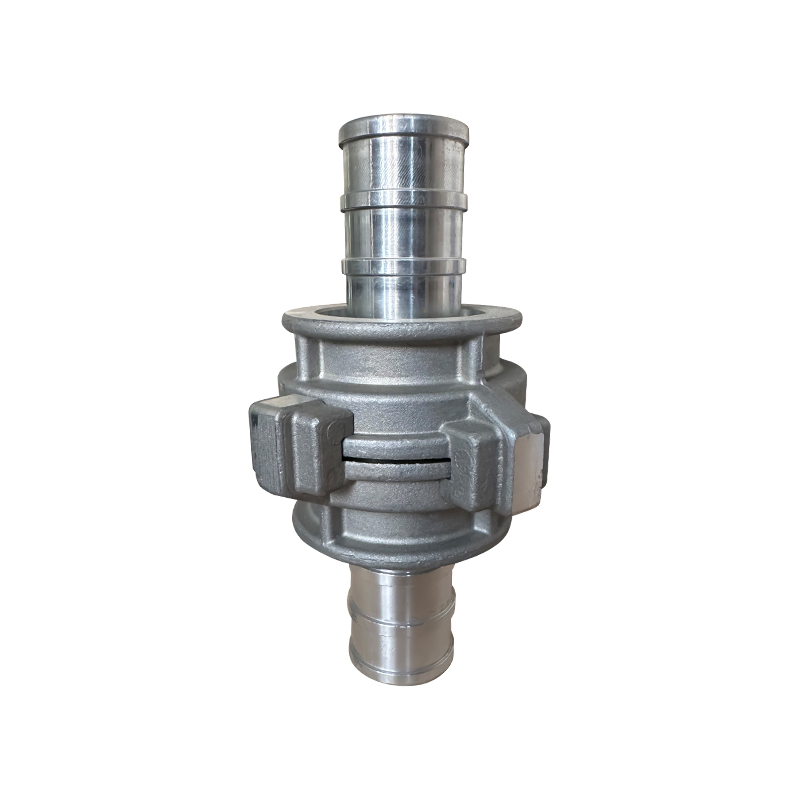
Storz couplings dominate mine dewatering because they connect and disconnect without tools in seconds, even when the line is full of water or coated with mud.
The symmetrical Storz design uses identical halves, a cam-and-groove lock, and a rubber gasket. No threading, no wrenches, no orientation matching: a crew can join two 6-inch hose lengths in under a minute and break them down for relocation just as fast. That speed translates directly into less downtime when a dewatering set must move with the working face.
Jun'an fits the mining hose family with factory-attached Storz couplings in 4-inch, 6-inch, and 8-inch sizes, with coupling retention tested as part of the assembly process. Camlock, American, GOST, and other national-standard couplings are available for projects that use a different interface.
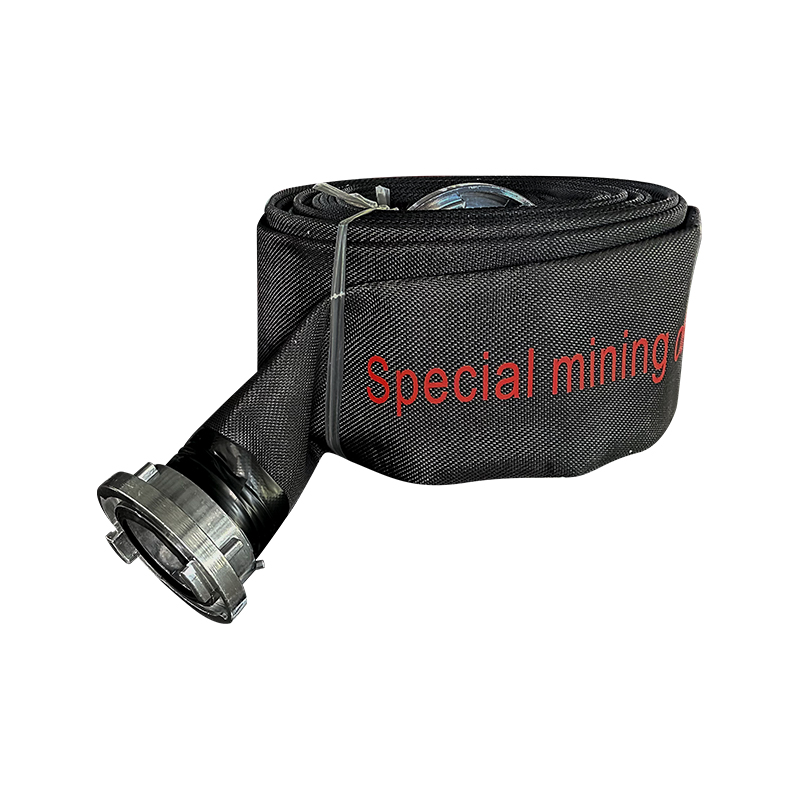
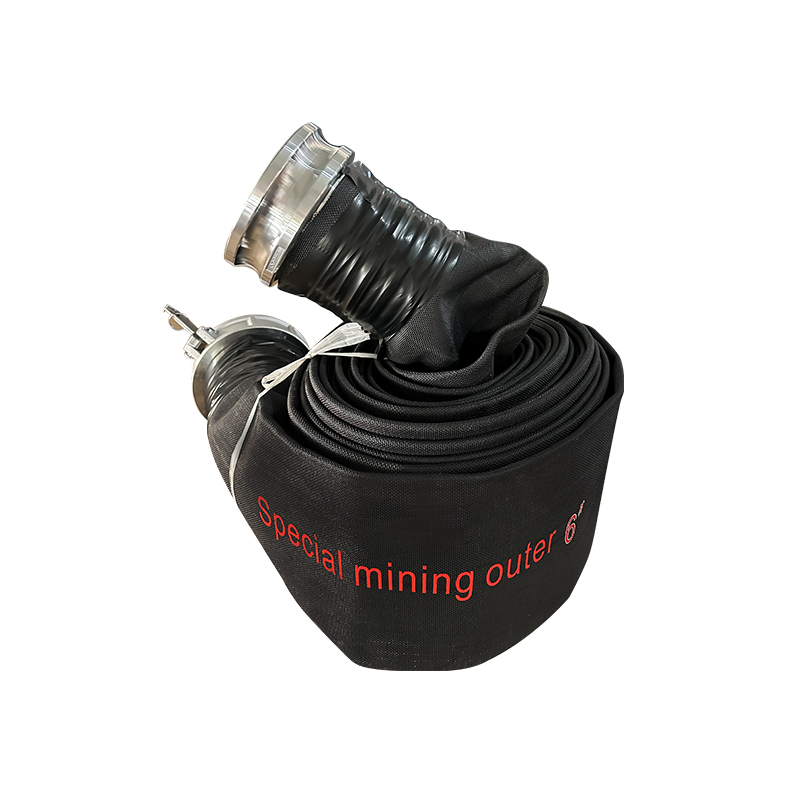 6-Inch Wear-Resistant Flat Hose with Storz Connector for Tough Mining DrainageA 6-inch mining-grade flat hose rated at 250 PSI, featuring reinforced rubber construction and standard Storz connectors. It lies flat to save storage space and is suited for dewatering and slurry transfer, matching the discussion on durability against kinking and rough handling.View Product →
Kink Resistance, Weight, and On-Site Handling
A mining layflat hose must survive repeated kinking, vacuum collapse, and rough handling because site conditions are tougher than any bench test.
A kink stops flow and creates a crease that weakens the reinforcement; vacuum collapse flattens the bore and stalls the pump. High-quality TPU and rubber compounds recover their shape after both events, while stiffer PVC hoses take a permanent set. Weight per meter also drives the specification: a 6-inch heavy duty layflat hose typically weighs 1.5 to 3 kg per meter, and every kilogram affects how fast a team can reposition a 50-meter length by hand.
Buy hose in the longest manageable lengths, 50 to 100 meters, to reduce the number of coupling points. Every connection is a potential leak and a time cost on a moving dewatering set.
How to Verify Performance Before You Buy
Request the burst certificate, abrasion test data, coupling pull-off figures, and a test length before you commit a mine budget to a hose supplier.
A data sheet describes design intent; certificates and tests prove what was actually shipped. For heavy duty mining service, the verification list is short but non-negotiable.
- Burst and test pressure certificate for the production batch, with the safety factor stated
- Lining abrasion loss value and the test standard used, for example DIN 53516
- Coupling pull-off force and the retention method: clamped, crimped, or factory mated
- A test sample length to check kink recovery, flexibility, and weight on your own site
- Written temperature, UV, and ozone limits for the confirmed service environment
As a direct manufacturer with in-house production and an international trading department, Taizhou Jun'an can supply these documents, arrange sample lengths, and adapt designs through OEM and ODM programs. Once the hose is on site, routine inspection of the cover and couplings is what protects the investment over multiple seasons.
Frequently Asked Questions
What pressure rating should a mining layflat hose have?
Match the working pressure to the maximum pump discharge pressure, typically 6 to 16 bar for 4-inch to 8-inch mine dewatering lines, and require a 4:1 burst safety factor. Request the factory test certificate at 1.5 times working pressure before delivery.
Is TPU or rubber the better lining for mine dewatering?
TPU offers the highest abrasion resistance and excellent low-temperature flexibility, which suits abrasive slurries and frequent relocation. Natural rubber and EPDM resist specific chemical attack and remain cost-effective for less abrasive water, so the choice depends on the solids content and chemistry of the mine water.
What diameter and length are typical for mining dewatering hoses?
Mine outer dewatering hose is commonly supplied in 4-inch, 6-inch, and 8-inch bores, in 50-meter or 100-meter lengths. Larger diameters reduce friction loss but increase weight and coupling size, so the flow rate and the pump total head determine the optimum bore.
How long does a heavy duty mining layflat hose last?
With matched pressure, adequate abrasion resistance, and proper handling, a heavy duty mining layflat hose can last three to five years in service. The deciding factors are lining wear from solids, UV exposure, and how often the line is dragged and reconnected.