en
 عربى


Content
- 1 Why Layflat Hose Dominates Agricultural Irrigation
- 2 Selection Factor 1: Lining Material Sets the Ceiling
- 3 Selection Factor 2: Match Pressure Rating to the Pump Curve
- 4 Selection Factor 3: Diameter, Flow Velocity, and Coupling Compatibility
- 5 Selection Factor 4: Field Durability Under UV, Abrasion, and Chemicals
- 6 Selection Factor 5: Compare Cost per Season, Not Cost per Foot
- 7 Frequently Asked Questions
Field experience across large irrigated operations shows a repeating pattern: an irrigation supervisor in Fresno County, California, replaced 1,800 feet of layflat hose three times in one season before the hose rating was matched to the pump's actual discharge curve. The failed reels cost less than $1,400. The labor, crop stress, and missed irrigation windows cost several times more. Most layflat hose failures in agriculture follow the same logic: not one dramatic burst, but a sustained mismatch between the rated specification and the operating condition.
This guide, built on the manufacturing experience of Taizhou Jun'an Fire Technology Co., Ltd., covers five selection factors that prevent that mismatch: lining material, pressure rating, diameter and couplings, field durability, and cost-per-season evaluation.
Why Layflat Hose Dominates Agricultural Irrigation
Layflat hose is the standard water-transfer product for agricultural irrigation because it delivers high flow capacity, drains completely when the pump stops, and stores in a fraction of the space required by rigid pipe or round rubber hose.
The flat profile lets a 200-foot length coil into a roll one person can carry. When pressurized, the bore opens to its full diameter, so the flow capacity matches a rigid pipe of the same nominal size. That combination of flat storage and round-flowing performance makes layflat hose the default choice for pivot connections, field-to-field transfer, and pump-to-header supply lines.
Selection Factor 1: Lining Material Sets the Ceiling
Lining material is the single most important selection factor because it determines the maximum working pressure, chemical tolerance, UV service life, and price bracket of the hose.
Agricultural irrigation hoses on the market fall into four lining families: PVC, TPU, EPDM, and natural rubber. Each handles a different set of field conditions.
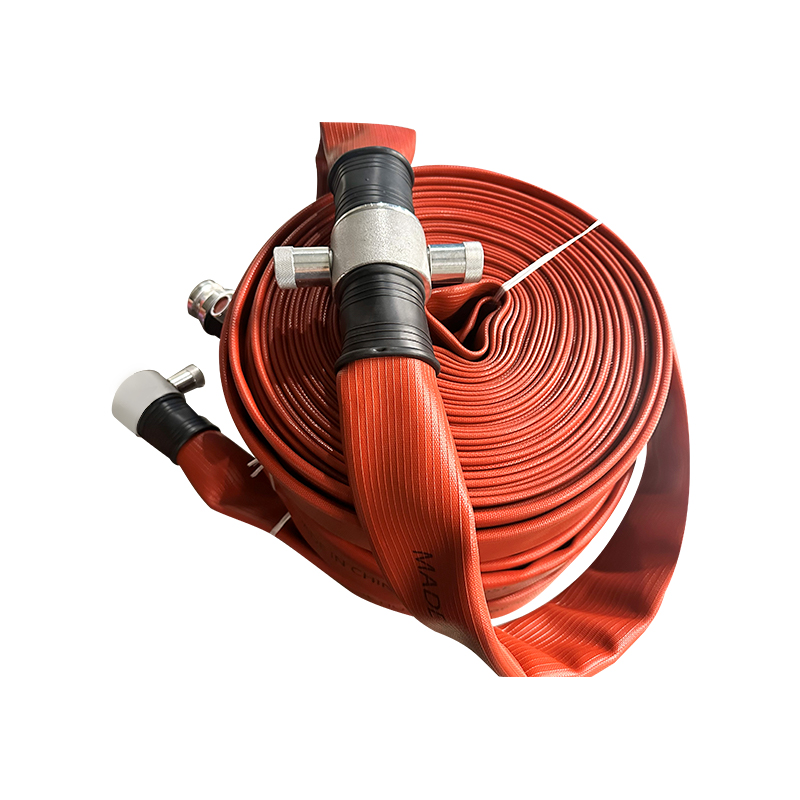
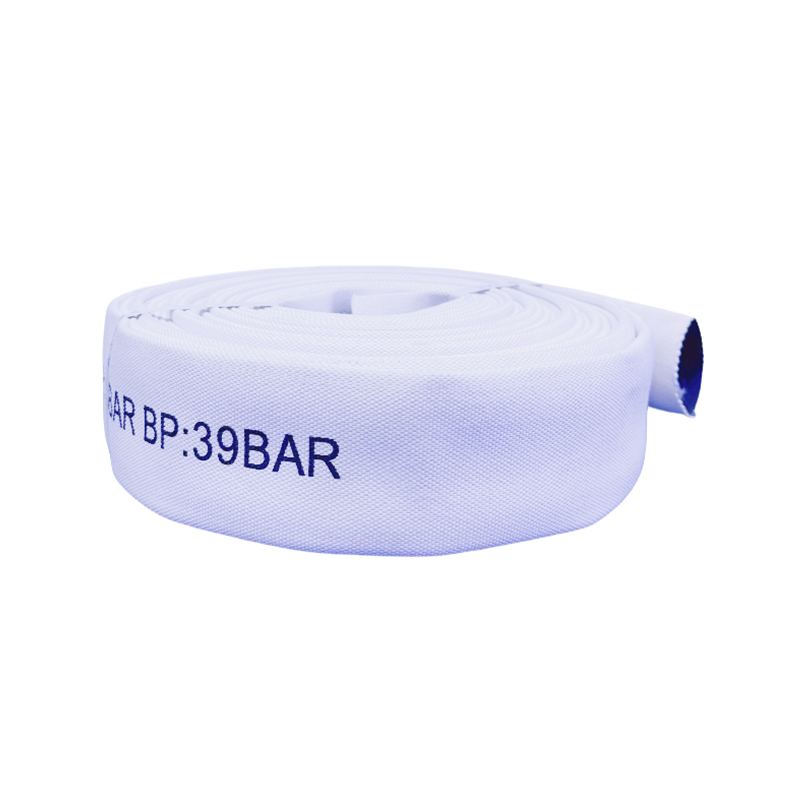
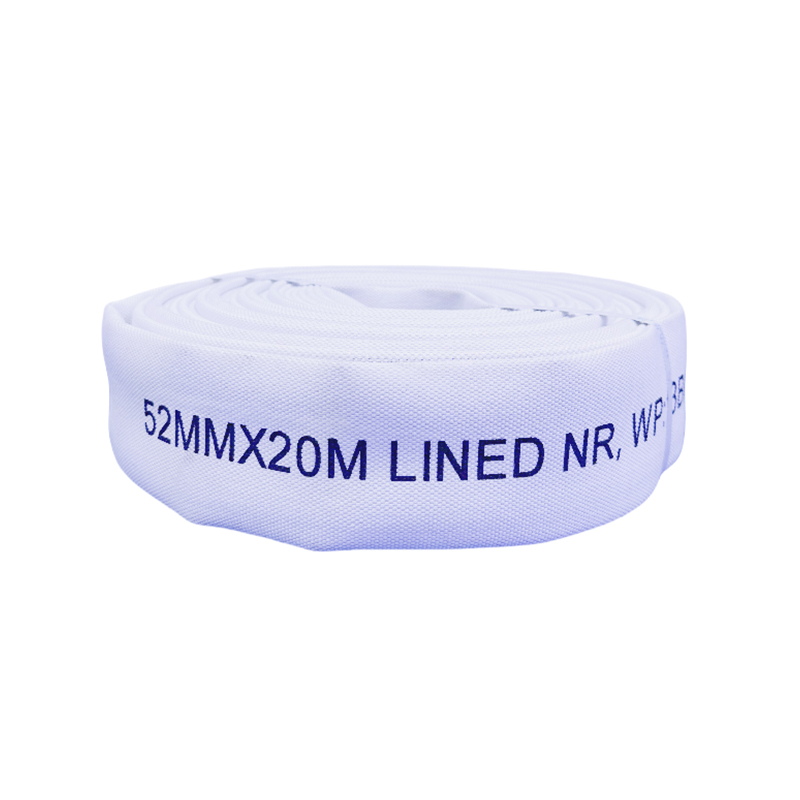 PVC Lined Layflat Hose for Fire and Agricultural IrrigationA lightweight polyester-jacketed hose with a smooth PVC lining that minimizes friction loss. It offers the lowest upfront cost for standard field irrigation using clean water.View Product →
| Lining material | Typical pressure range | UV resistance | Chemical tolerance | Relative cost | Typical role |
| PVC | 80-150 psi | Moderate | Good with clean water | Low | Row-crop transfer, pivot pads |
| TPU | 150-300 psi | High | Excellent | Moderate to high | High-pressure, abrasive sites |
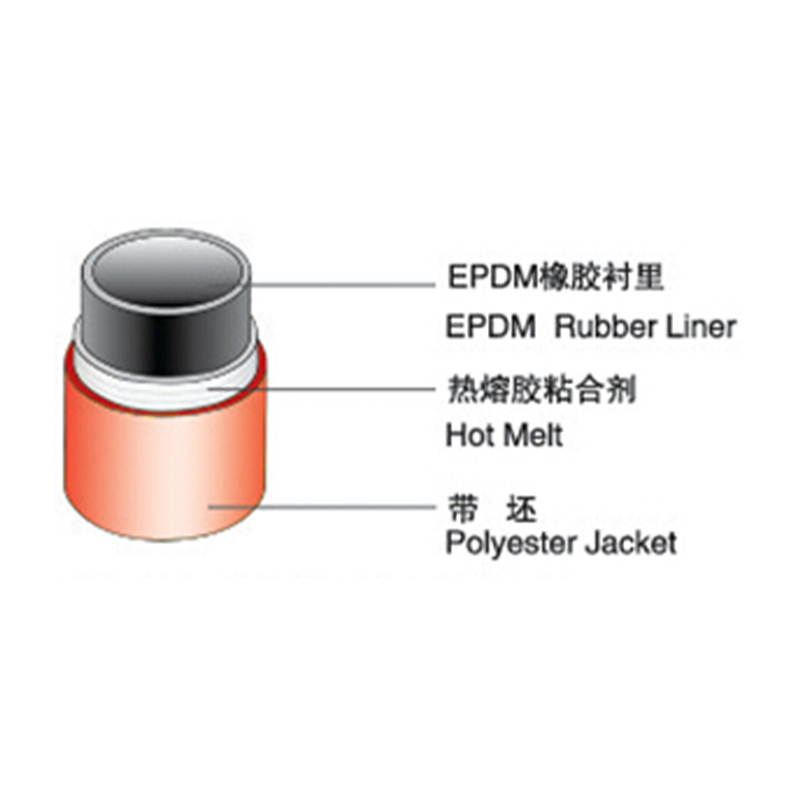
| EPDM | 100-250 psi | Very high | Good | High | Long-season exposed layouts |
| Natural rubber | 100-200 psi | Moderate | Excellent | Moderate | Chemical injection, sediment water |
For standard field irrigation with clean well or canal water, PVC offers the lowest acquisition cost and the widest availability.
PVC layflat hose with an 80-150 psi working range fits most gravity-fed and moderate-pressure pump systems, and replacement cycles of one to three seasons are normal in this class. Material selection becomes clearer when UV and abrasion scores are compared side by side.
When the water quality or pressure profile is more demanding, a mid-range hose with better material properties is worth the premium. For a practical overview of the full range of options, see our detailed guide to choosing a lay-flat irrigation hose for agricultural and landscape use.
Selection Factor 2: Match Pressure Rating to the Pump Curve
The pressure rating of a layflat hose must match the pump's discharge pressure at the actual operating flow, not the pump's nameplate maximum.
A pump rated at 120 psi maximum may discharge only 80 psi at the flow your irrigation plan calls for. If the delivery point sits lower than the pump, static head pushes the system pressure higher when valves close. The hose spec should therefore exceed the worst-case system pressure.
Use a three-step check before ordering:
Selection Factor 3: Diameter, Flow Velocity, and Coupling Compatibility
Diameter selection starts with the target flow rate and an acceptable flow velocity, and coupling compatibility then narrows the choice.
A 4-inch hose carrying 200 gpm runs at roughly 5 feet per second. Pumping the same volume through a 3-inch hose raises the velocity to about 9 feet per second, which increases friction loss and accelerates wear at bends and connections. Keeping velocity below 15 feet per second protects both the hose and the fittings.
- 2-inch: up to 60 gpm for short transfer runs
- 3-inch: 60-150 gpm for field supply lines
- 4-inch: 150-300 gpm for main distribution
- 6-inch: 300-700 gpm for large block delivery
- 8-inch: 700-1,200 gpm for pumping stations
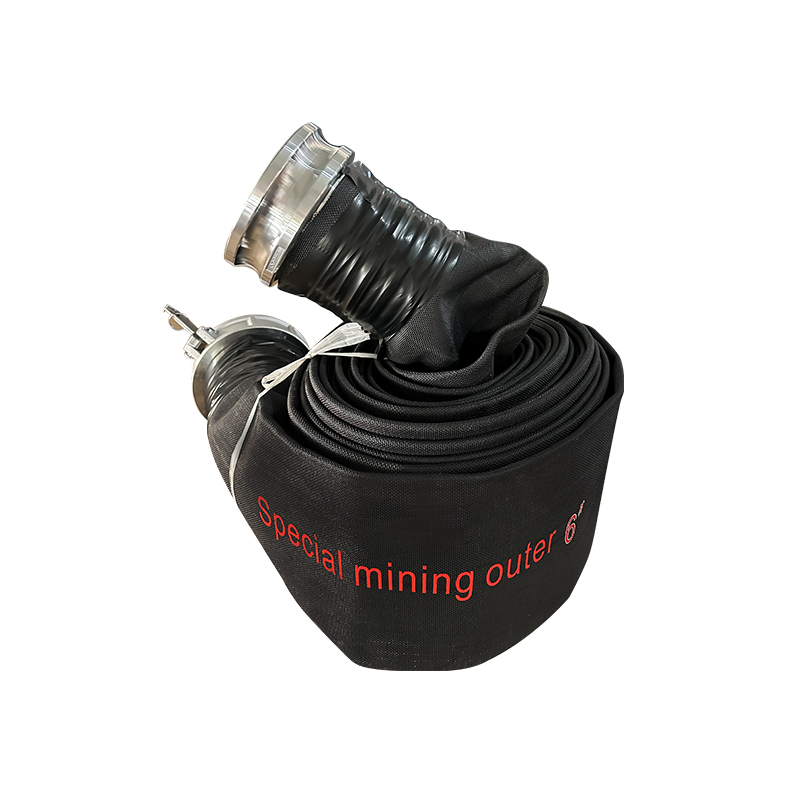
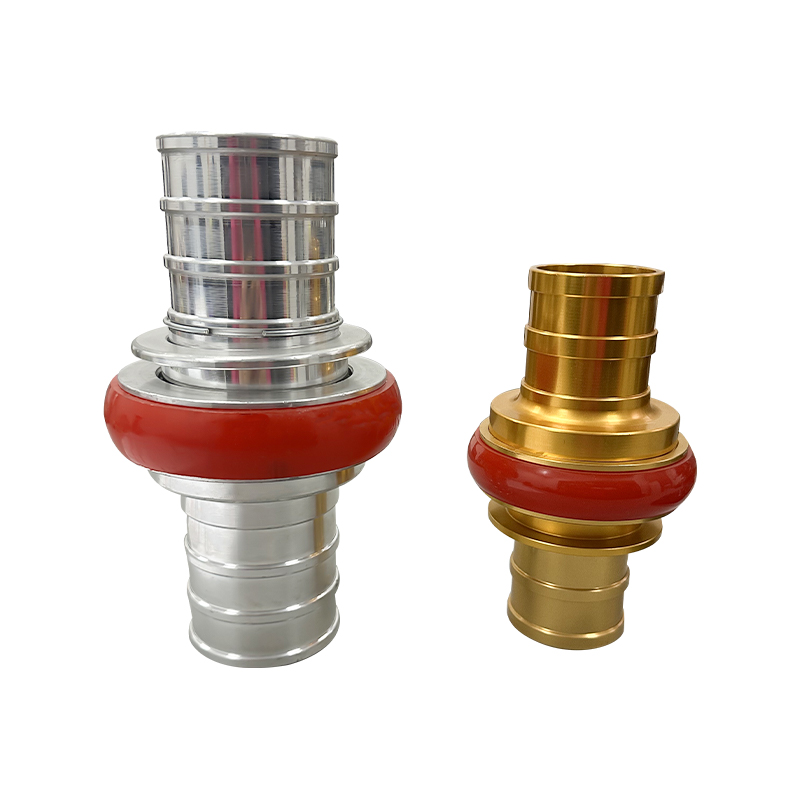
Coupling types also matter because irrigation infrastructure varies by region and pump configuration. Camlock couplings are common on portable pump skids, Storz couplings appear on fire-service and mining equipment, and threaded or quick-connect fittings dominate older field layouts. The hose end profile must match the pump outlet and riser manifold.
Selection Factor 4: Field Durability Under UV, Abrasion, and Chemicals
Field durability is controlled by three degradation mechanisms: ultraviolet radiation, abrasive surface contact, and chemical attack from fertilizers or water treatment additives.
UV exposure is cumulative. A PVC hose left in full California sun for one season loses a measurable share of its flexibility and impact strength. TPU and EPDM retain their properties much longer. Abrasion is equally real on concrete aprons and gravel headlands; dragging a 200-foot hose over any abrasive surface removes cover material and exposes the reinforcement. Chemical exposure comes from injected fertilizers, chlorine, algaecides, and residual pesticides, which can swell or embrittle the inner tube over time.
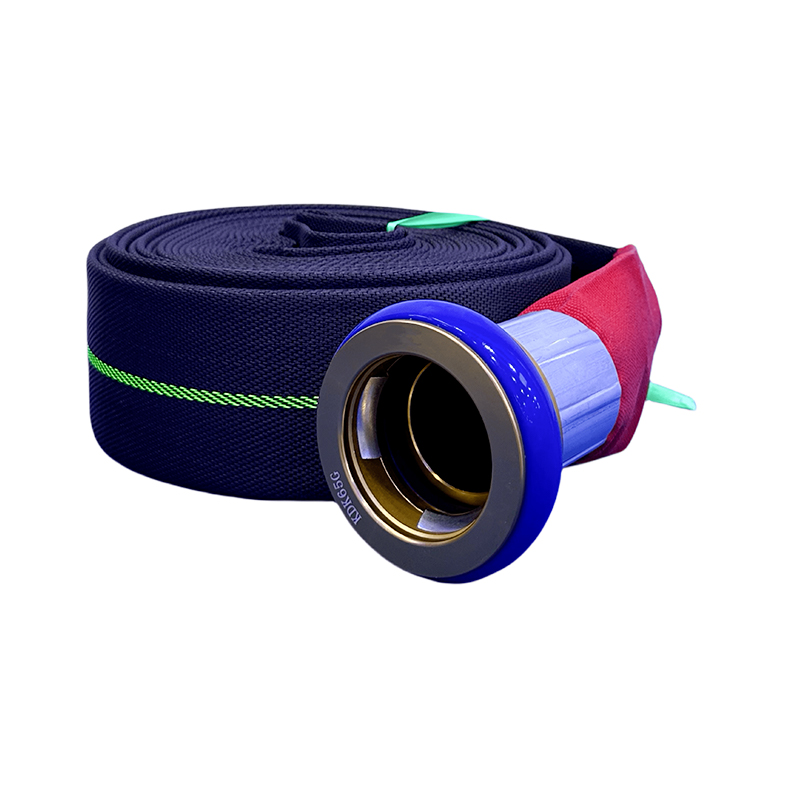
 Heavy-Duty TPU Layflat Hose for Demanding IrrigationBuilt through a through-the-weave process with polyester reinforcement, this abrasion-resistant and UV-tolerant hose suits high-pressure and rough-surface duty cycles better than PVC.View Product →
Where the duty cycle includes high pressure, frequent repositioning, and rough surface contact, a TPU-lined layflat hose is the usual upgrade path. Its abrasion resistance is significantly higher than PVC, and its low-temperature flexibility keeps it usable during cold early-morning shifts.
Field benchmarks relative to a PVC baseline: TPU provides roughly 2.5 times the abrasion life and 3 times the UV life in irrigation service. EPDM performs similarly in UV but has less low-temperature flexibility.
Selection Factor 5: Compare Cost per Season, Not Cost per Foot
The most economical layflat hose is the one with the lowest cost per acre-foot of water delivered across its service life, which almost always ranks durable materials above the cheapest reel.
A hose that costs $0.80 per foot and lasts one season is not cheaper than a $1.60-per-foot hose that lasts four seasons. The durable hose costs half as much per season and avoids the labor of two mid-season replacements. Contractors who bid irrigation jobs on material cost alone rarely account for the labor of dragging, flushing, and changing hoses.
Option A: Low-cost PVC
- Upfront cost per foot: low
- Replacement frequency: every 1-2 seasons
- Labor impact: highest, with mid-season failure risk
- Predictability: lower in hot, sunny climates
Option B: TPU or rubber-lined
- Upfront cost per foot: moderate to high
- Replacement frequency: every 3-4 seasons
- Labor impact: lowest, with planned replacement
- Predictability: high in the same conditions
For irrigation systems that inject fertilizer or carry well water with notable sediment, natural rubber linings offer excellent chemical tolerance and abrasion performance. Rubber-lined layflat hose sits below TPU in price and above PVC in durability, which makes it a practical middle path for permanent or semi-permanent layouts.
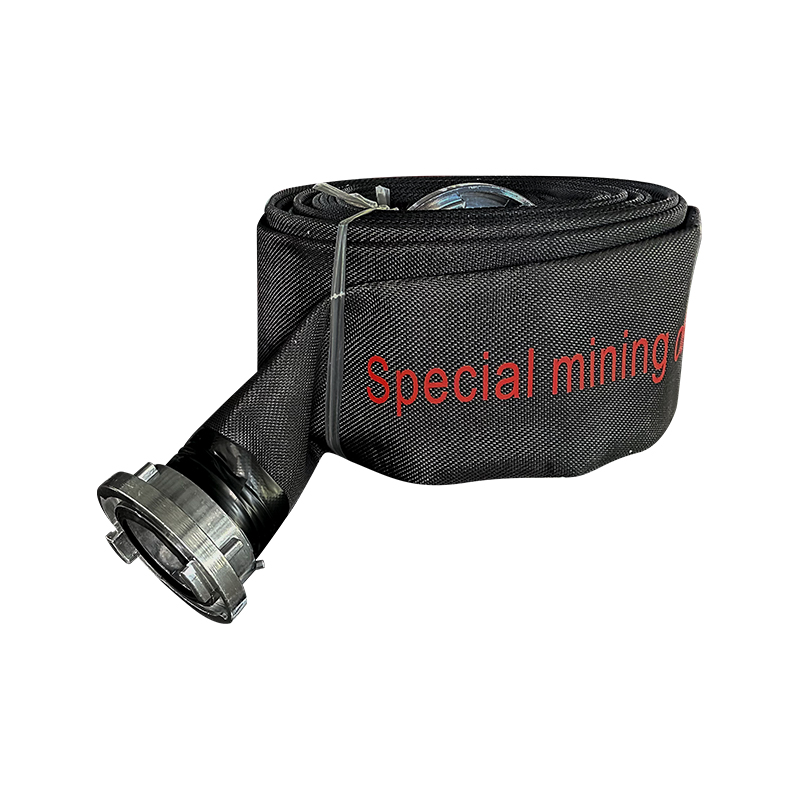
 Natural Rubber Layflat Hose for Outdoor UseA weatherproof, abrasion-resistant hose with a synthetic fiber interlayer. It balances cost and durability between PVC and TPU, making it practical for fertilizer-laden water or sediment-rich wells.View Product →
A direct side-by-side comparison of rubber and PVC irrigation hose is covered in our durability-focused review of rubber and PVC layflat hoses.
Frequently Asked Questions
What is the best material for a layflat agricultural irrigation hose?
For most row-crop and orchard irrigation with clean water, PVC is the most practical balance of price and performance. For sites with abrasive surfaces, strong sun, or high discharge pressures, TPU is the recommended upgrade. EPDM suits permanent exposed installations, and natural rubber handles chemical injection and sediment-heavy water.
What pressure rating should I choose for a layflat irrigation hose?
Calculate the pump's discharge pressure at operating flow, add elevation head, then select a hose with a working pressure at least 1.5 times that total. If the pump delivers 90 psi at operating flow and the highest point is 20 feet above the pump, add roughly 9 psi, bringing the requirement to 99 psi. A 150 psi working pressure hose is the safe standard.
How long does a PVC layflat hose last in direct sunlight?
In continuous field exposure, a standard PVC layflat hose typically shows noticeable surface stiffening and reduced flexibility within 12 to 18 months. TPU and EPDM versions commonly last three to four times longer under identical sun exposure, which is why permanent layouts should not be specified in PVC.
What diameter layflat hose should I use for a 300 gpm pump?
At 300 gpm, a 4-inch layflat hose runs at roughly 8 feet per second, which is acceptable for short runs. For runs beyond 300 feet, or where friction loss matters, a 6-inch hose reduces the velocity to about 3.5 feet per second and substantially improves delivered pressure at the far end.