en
en
 عربى
عربى

Content
An EPDM lined fire hose rated at 10 bar working pressure must withstand 15 bar of hydrostatic test pressure and 30 bar burst pressure before it leaves the factory. That 1.5:3 pressure margin is the foundation of every fire hose specification. This article breaks down the EPDM material properties and pressure requirements that procurement teams need to understand before ordering hoses for municipal fire engines, industrial plants, or emergency response units. The information draws from industry standards and manufacturing experience at Taizhou Jun'an Fire Technology Co., Ltd., a fire hose manufacturer in Jiangsu, China.
What Is an EPDM Lined Fire Hose?
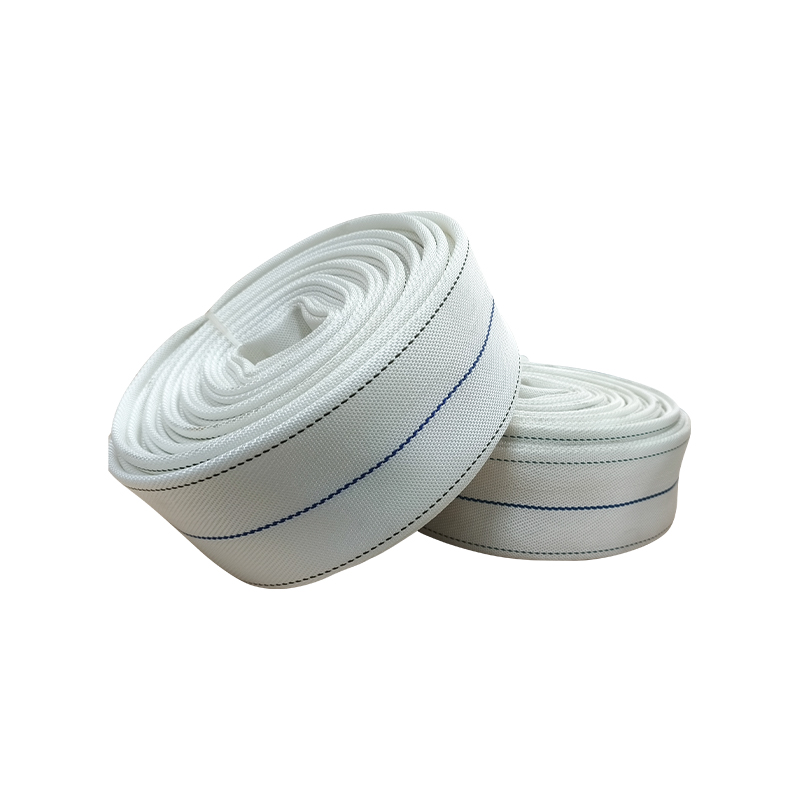
An EPDM lined fire hose is a firefighting hose with an inner lining made of ethylene propylene diene monomer rubber, covered by a woven polyester or nylon jacket. The lining creates a watertight barrier, while the jacket carries the tensile load that converts internal pressure into longitudinal stress.
Core definition: EPDM (Ethylene Propylene Diene Monomer) is a synthetic rubber that resists ozone, UV, heat, and water-induced degradation, making it one of the most reliable lining materials for fire hoses in demanding environments.
EPDM is a synthetic rubber built from ethylene, propylene, and a diene monomer. Its saturated polymer backbone gives the rubber exceptional resistance to heat, ozone, ultraviolet radiation, and weathering, while the diene component provides cross-linking sites for vulcanization.
Two construction variants exist. In a single-jacket EPDM lined hose, one woven layer wraps the lining and offers flexibility for lighter duty. In a double-jacket construction, a second woven layer adds penetration resistance and raises burst strength. Taizhou Jun'an Fire Technology Co., Ltd. manufactures both variants in its Jiangsu facility.
EPDM Material Properties That Affect Fire Hose Performance
EPDM's operating temperature range spans from -40 deg C to 120 deg C, which makes it more suitable for firefighting in extreme climates than PVC or natural rubber. The lining properties determine how the hose behaves during deployment, storage, and flow. Four properties matter most in procurement decisions.
| Property | Typical Value | Practical Impact |
| Operating temperature range | -40 deg C to 120 deg C | Remains flexible in cold weather, resists softening in heat |
| Ozone resistance | Excellent | No cracking during outdoor storage |
| UV resistance | Excellent | Sunlight exposure does not degrade the lining |
| Abrasion resistance | Good to very good | Withstands dragging over concrete and rough ground |
| Chemical compatibility | Resists most acids, alkalis, and alcohols | Suitable for industrial applications with chemical exposure |
EPDM's cold flexibility is particularly important for northern European and northern US fire departments. A natural rubber lining stiffens below -20 deg C, causing kinks when crews lay the hose. An EPDM lining stays pliable at -40 deg C, allowing a 65 mm diameter hose to coil into a compact flat profile without creasing the lining.
- No ozone cracking when stored outdoors for extended periods
- No UV embrittlement in sun-exposed hose racks
- Maintains elasticity after years of cyclic flexing
- Resists water absorption and swelling from continuous flow
For more detail on how compounding changes affect these numbers, see our guide on EPDM heat flexibility and compounding.
Pressure Requirements for EPDM Lined Fire Hoses
EPDM lined fire hoses are rated by three pressure values: working pressure, test pressure, and burst pressure, typically in a 1:1.5:3 ratio. The working pressure is the maximum pressure the hose can sustain continuously. The test pressure is a one-time hydrostatic verification level. The burst pressure is the point of physical failure.
| Working Pressure | Test Pressure | Burst Pressure | Typical Application |
| 8 bar / 116 psi | 12 bar / 174 psi | 24 bar / 348 psi | Municipal fire engines, low-rise buildings |
| 10 bar / 145 psi | 15 bar / 217 psi | 30 bar / 435 psi | Standard industrial firefighting |
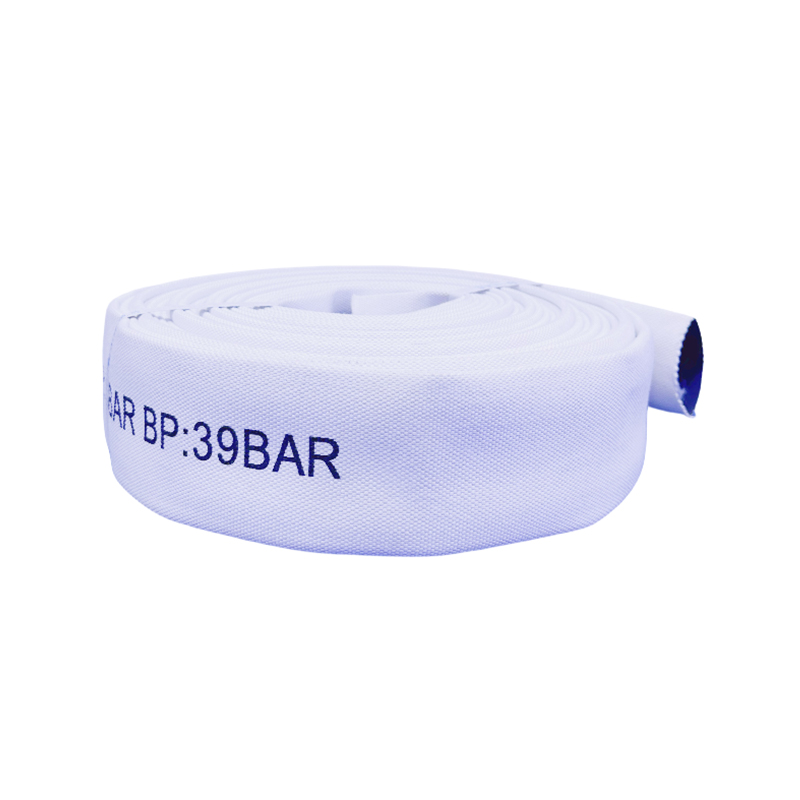
| 13 bar / 188 psi | 20 bar / 290 psi | 39 bar / 565 psi | High-rise pumps and industrial plants |
| 16 bar / 232 psi | 24 bar / 348 psi | 48 bar / 696 psi | Municipal pumping stations, heavy industry |
| 20 bar / 290 psi | 30 bar / 435 psi | 60 bar / 870 psi | Rapid intervention vehicles, high-pressure systems |
Pressure ratio: 10 bar working EPDM lined fire hose
The relationship between these values is not arbitrary. International standards such as NFPA 1961 and UL 19 require that a fire hose sustain a test pressure of 1.5 times its rated working pressure and exhibit a burst pressure of at least 3 times its working pressure. EN 14540, the European standard for non-percolating fire hoses, follows a similar 1.5:3 ratio.
For deeper background on UL pressure ratings and test methods, read our EPDM lined fire hose pressure ratings and UL standards article.
How Pressure Ratings Are Tested
Pressure ratings for EPDM lined fire hoses are verified by hydrostatic testing at 1.5 times the working pressure and by destructive burst testing at increasing pressure until failure. A hose that fails either test is rejected and cannot ship.
Hydrostatic Test Procedure
The full length of hose is filled with water, sealed at both ends, and pressurized gradually to the test level. The hose is held at that pressure for 30 seconds to 1 minute. Any leakage, sleeve slippage, or rupture rejects the hose. NFPA 1961, UL 19, and EN 14540 all require this verification before a hose is certified for use.
Burst Test Procedure
For burst testing, pressure is increased without stopping until the hose fails. The recorded pressure at failure is the burst pressure. Taizhou Jun'an Fire Technology Co., Ltd. tests a burst sample from every production batch to confirm that the safety margin stays consistent across the manufacturing process.
A hose that passes its burst test at 3 times working pressure today may fail at 2.5 times after years of storage. Hydrostatic retesting at regular intervals is the only way to catch aging degradation.
Selecting the Right EPDM Lined Fire Hose
Selecting the correct EPDM lined fire hose requires matching the working pressure to your pump output, verifying the coupling standard, and choosing the right jacket construction for the operating conditions.
- Define the required working pressure. If your pump delivers 12 bar at full volume, select a 13 bar rated hose. A 10 bar hose will pass its test today but will degrade quickly when operated repeatedly above its rating.
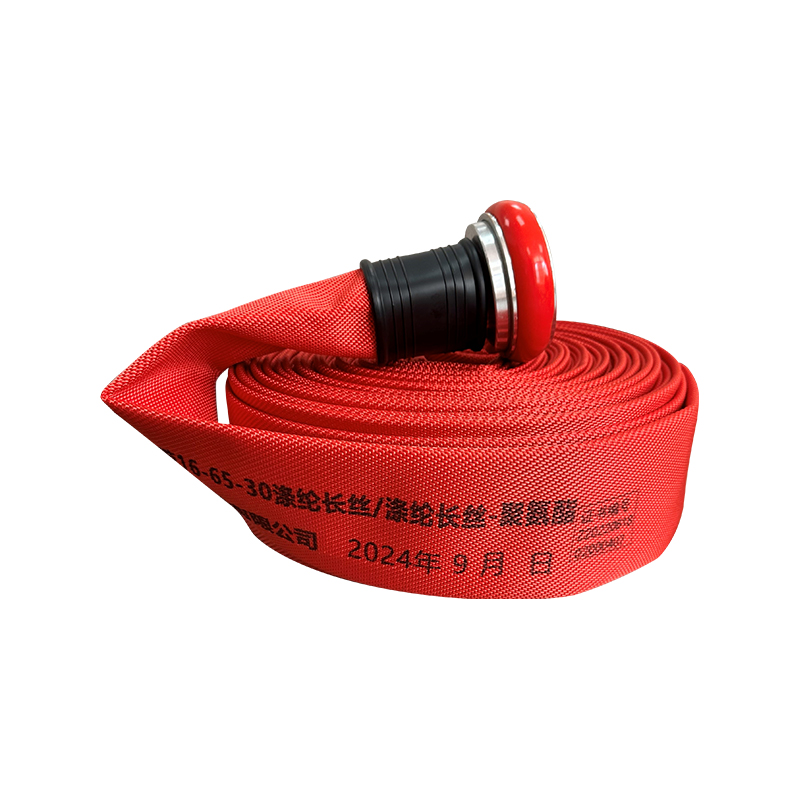
- Verify the coupling standard. The hose must mate with your existing couplings. Common standards include Storz, American, GOST, and Camlock. Taizhou Jun'an manufactures multi-standard couplings that match the hose to the system.
- Confirm the jacket construction. Single jacket is lighter and more flexible. Double jacket adds penetration resistance and higher burst strength. For industrial applications where hoses are dragged over rough ground, double jacket is recommended.
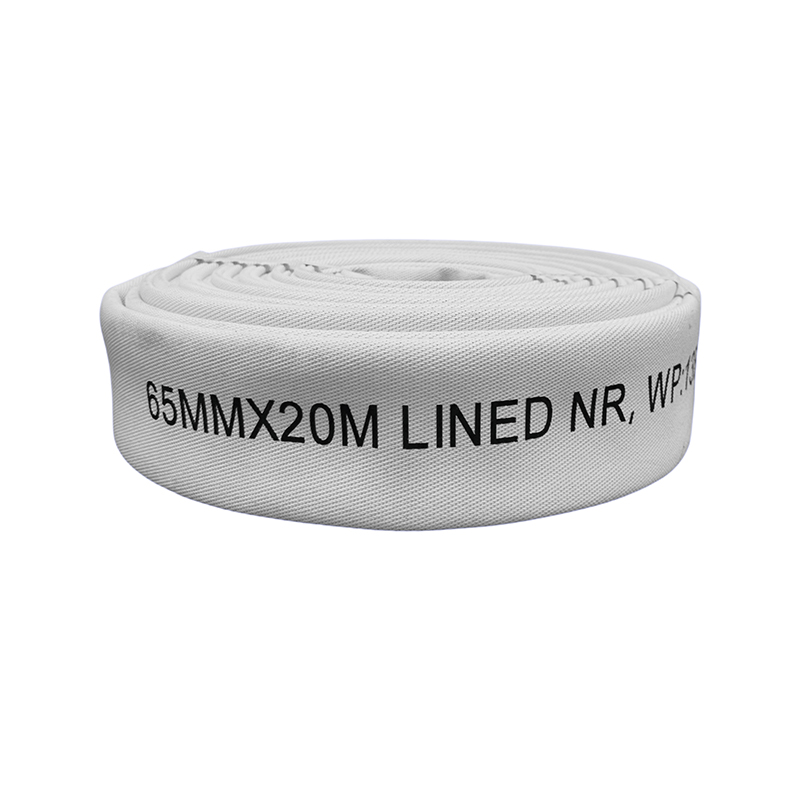
- Check the hose ID and length. Standard fire hose IDs range from 25 mm to 150 mm. The length is typically 20 m, 25 m, or 30 m per section. Select the diameter that matches your pump flow rate.
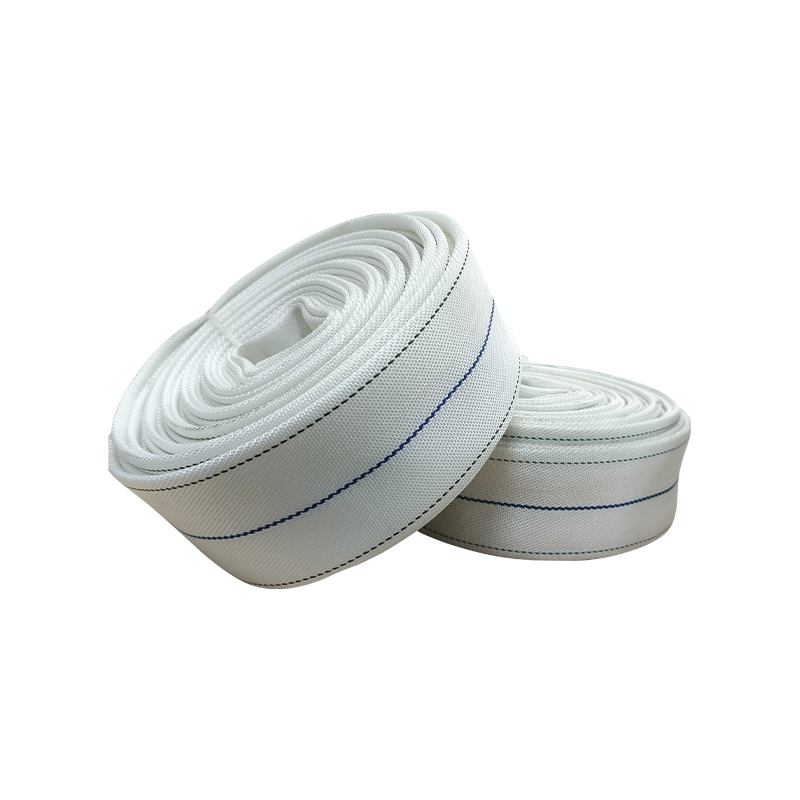 EPDM Lined Fire Hose with Polyester Jacket for Industrial and Municipal UseThis flat hose combines a woven polyester outer jacket with an EPDM rubber lining, offering flexibility across extreme temperatures and resistance to wear, corrosion, and low water flow. Ideal for matching pump output and coupling standards in fire suppression.View Product →
EPDM vs Other Lining Materials
EPDM reliably outperforms PVC in every firefighting temperature range and remains chemically stable in industrial environments where PVC would degrade.
EPDM Lining
- Operating range -40 deg C to 120 deg C
- Ozone and UV resistant
- Maintains flexibility after years of storage
- Resistant to common industrial chemicals
PVC Lining
- Operating range -5 deg C to 60 deg C
- Becomes stiff in cold weather
- Can crack after repeated flexing
- Lower resistance to oils and solvents
Fire departments in northern Europe and the northern United States report that PVC lined hoses stiffen at low temperatures, while EPDM lined hoses remain manageable and can be coupled without cracking the lining. For industrial plants with exposure to oils, solvents, or process chemicals, EPDM is also the safer choice.
Frequently Asked Questions
What is the maximum working pressure of an EPDM lined fire hose?
EPDM lined fire hoses are available with working pressures from 8 bar (116 psi) to 20 bar (290 psi). The maximum standard rating is 20 bar, but custom hoses can be manufactured for higher static pressures in specialized applications.
Are EPDM lined fire hoses suitable for both hot and cold climates?
Yes. EPDM lining operates continuously from -40 deg C to 120 deg C, covering firefighting conditions from arctic deployments to industrial plants with ambient heat near pump stations.
How long does an EPDM lined fire hose last?
With proper storage and maintenance, a quality EPDM lined fire hose can last 15 to 20 years. Storage away from direct sunlight, protection from oil and chemicals, and regular hydrostatic testing extend service life.
Is EPDM better than TPU for fire hose lining?
EPDM offers better heat and ozone resistance, while TPU offers lighter weight and lower friction loss. For municipal firefighting where hoses may be stored outdoors for years, EPDM is the more durable choice. For industrial high-flow transfer where weight matters more than long-term storage, TPU may be preferred.