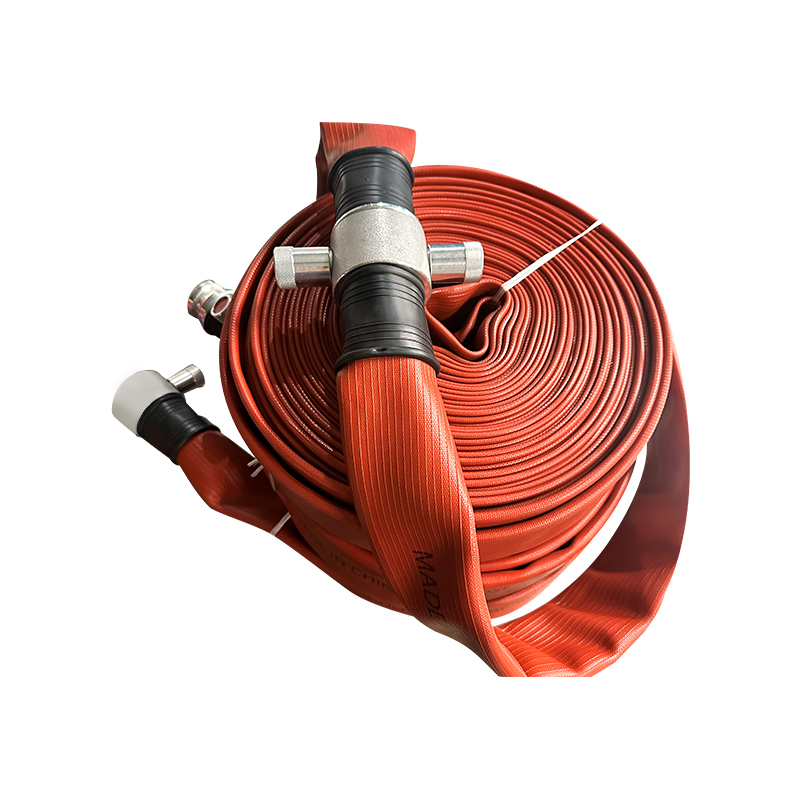
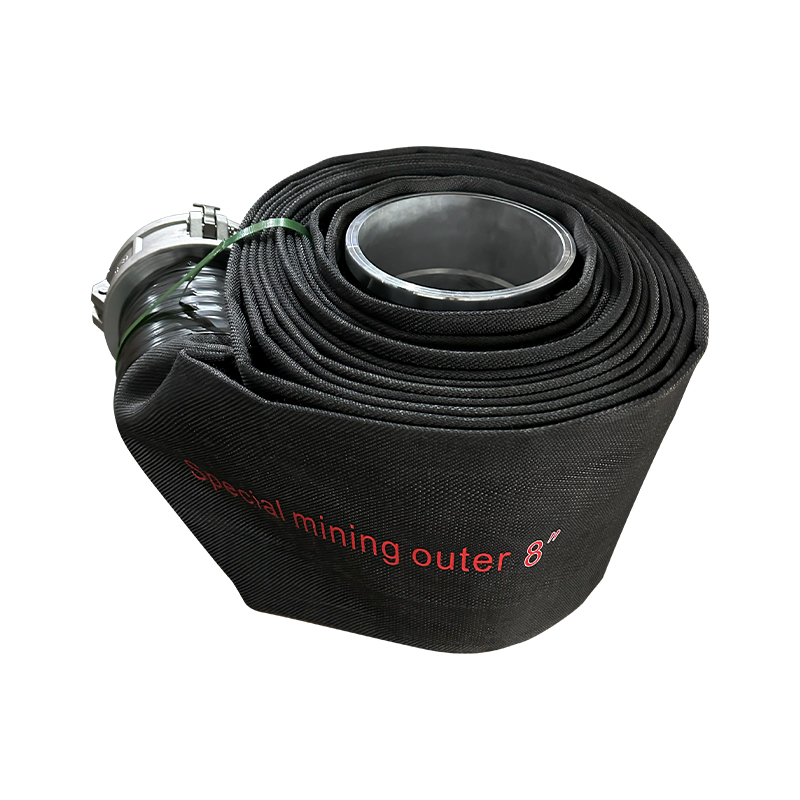
en
en
 عربى
عربى

Content
- 1 Why Wall Thickness Is the First Specification to Check on a PVC Flat Hose
- 2 What "Hose Thickness" Means in a PVC Layflat Hose
- 3 Thickness vs. Pressure Capacity: The Mechanical Link
- 4 Thickness vs. Abrasion Resistance: Protection You Can Measure
- 5 The Trade-Offs: Weight, Flexibility, and Flow
- 6 A Practical Selection Guide Based on Working Conditions
- 7 What to Verify Before You Buy
- 8 Final Verdict: Match Thickness to the Job, Not the Price
Why Wall Thickness Is the First Specification to Check on a PVC Flat Hose
Hose wall thickness is one of the most underrated specifications on a PVC flat hose datasheet. Two suppliers quote the same nominal 4-inch layflat hose. The prices are close, the working pressure figures look similar, but one hose is visibly thinner and lighter. Which one survives a full season of heavy pumping? Which one still holds its rated pressure after being dragged over gravel and stacked in the sun? In most cases, the answer comes down to wall thickness.
Thickness governs how the hose behaves in every direction: how much pressure the wall can contain, how quickly abrasion wears through the cover, how stiff the hose feels when uncoiled, and how much flow the bore can deliver for a given outer diameter. Yet buyers frequently skip this number and compare only price, nominal diameter, or brand. This guide explains why thickness matters in each of those areas, and how to use it as a practical selection tool.
What "Hose Thickness" Means in a PVC Layflat Hose
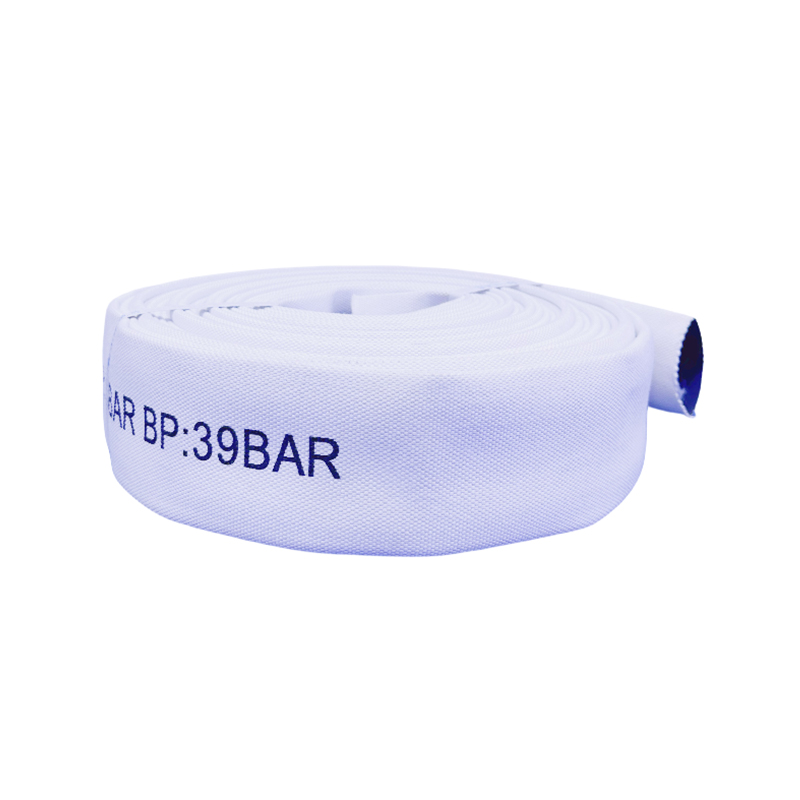
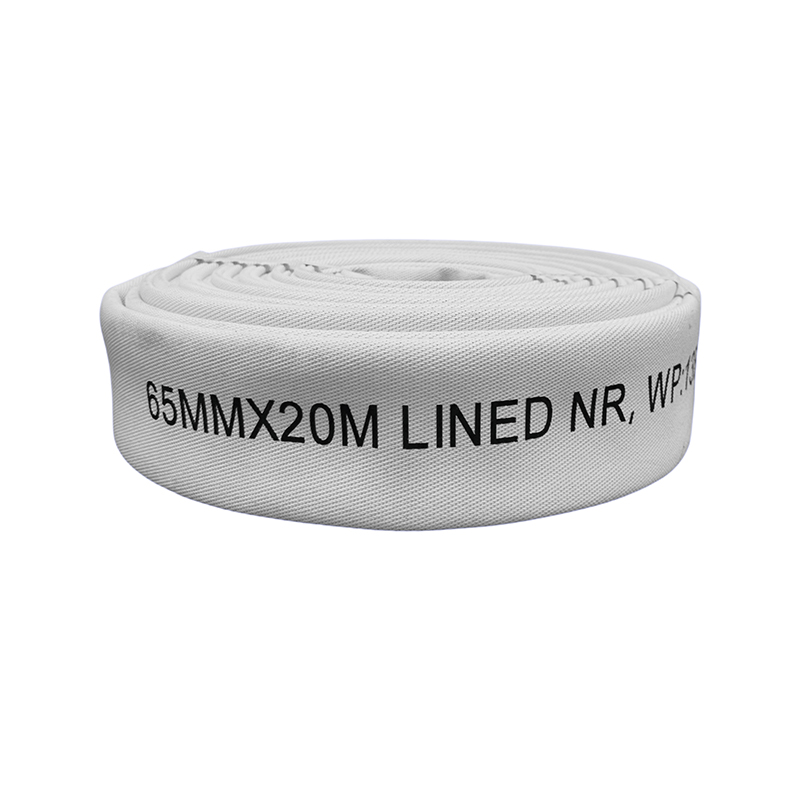
In PVC layflat hose construction, wall thickness is the total measured thickness of the hose wall, expressed in millimeters. The figure covers three functional layers: the inner PVC lining that carries the fluid, the reinforcing yarn layer, usually polyester or another high-tenacity fiber, that carries the pressure load, and the outer PVC coating that protects the yarn from abrasion, sunlight, and weather.
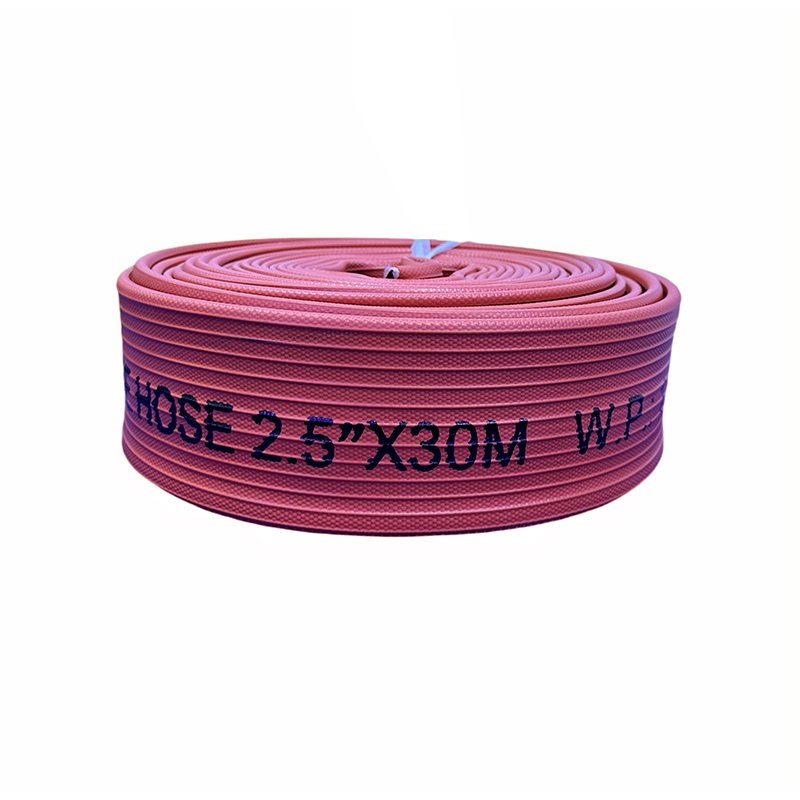
When a manufacturer states a wall thickness of 1.0 mm, 1.5 mm, or 2.5 mm, that value describes the combined wall profile. A lightweight agricultural hose may keep the wall slim to reduce weight and per-meter cost, while a heavy-duty industrial hose adds thickness to survive harsh service. The PVC-lined layflat hose range produced in our own factory shows how different wall designs are matched to different duties, from portable irrigation and firefighting relay lines to tougher industrial transfer jobs.
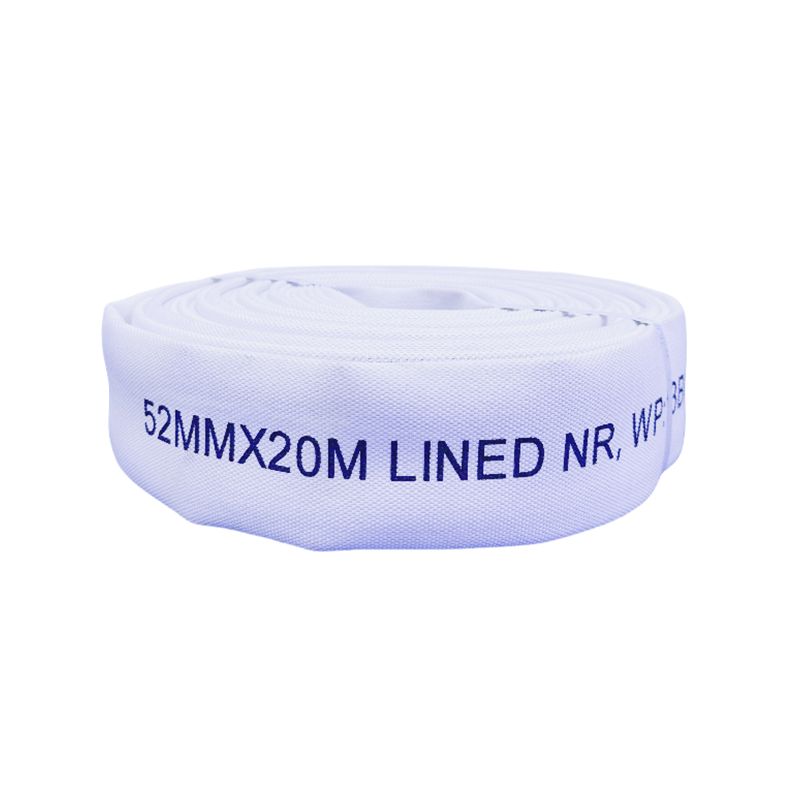 Wholesale Canvas Hose For Fire Extinguishing/Agricultural IrrigationTaizhou Jun'an Fire Technology Co., Ltd. Is China Wholesale Canvas Hose Suppliers, Exporter, Our Canvas Hose Is Mainly Used For Fire Figh...View Product →
The key point is that wall thickness is not an isolated number. It works together with yarn density, PVC compound hardness, and layer adhesion. A thick wall with weak yarn and poor bonding will not outperform a thinner wall built with dense reinforcement and a quality compound. But when construction quality is similar, thickness becomes a reliable indicator of pressure rating and service life.
Thickness vs. Pressure Capacity: The Mechanical Link
The mechanical logic is straightforward. When a hose is pressurized, the wall must resist hoop stress pulling it outward. A thicker wall distributes that stress over more material, so for the same PVC compound and reinforcement design, a thicker wall raises both working pressure and burst pressure.
Buyers usually focus on working pressure, but burst pressure is the real safety margin. A typical PVC layflat hose is designed so that burst pressure is roughly three to four times the working pressure. If two hoses of the same diameter show different pressure ratings, the difference almost always comes back to wall thickness and reinforcement density.
This has a practical consequence. If your pump runs at a discharge pressure close to the rated working pressure of the hose, a thin-walled product that only meets the number on paper is a risky choice. Continuous operation near the upper limit accelerates fatigue, and a thin wall leaves less margin for manufacturing inconsistency or accidental damage. Choose a wall thickness that sits comfortably above your normal working pressure, not one that merely touches it.
End fittings deserve separate attention. Wall thickness also influences how the hose behaves near couplings. Thinner walls are more prone to distortion near metal or plastic fittings when the hose is pressurized, which can cause leaks at the connection point. A slightly thicker wall gives the clamping zone more rigidity and keeps the seal stable over many connection cycles. When you evaluate offers, ask how the hose is finished at the coupling ends, because a perfectly specified wall is useless if the end connection fails first.
Thickness vs. Abrasion Resistance: Protection You Can Measure
Pressure determines whether a hose bursts, but abrasion determines whether it survives the worksite. On mines, construction sites, and farms, a layflat hose is dragged over concrete, gravel, steel edges, and packed earth. Every drag removes a thin layer from the outer PVC coating. Once that coating wears through, the yarn reinforcement is exposed to moisture and grit, and failure follows quickly.
A thicker outer wall provides more sacrificial material. In abrasive service, a hose with a 2.0 mm wall can outlast a 1.0 mm hose several times over, even when both carry the same pressure rating. This is why heavy-duty flat hoses with extra wall thickness are standard for mining dewatering and construction water transfer. Hoses in our special mining outer dewatering series, such as the 8-inch mining pressure-resistant flat hose with Storz coupling, are built with this logic in mind: a thick, tough wall that tolerates scrapes and impacts while maintaining high working pressure.
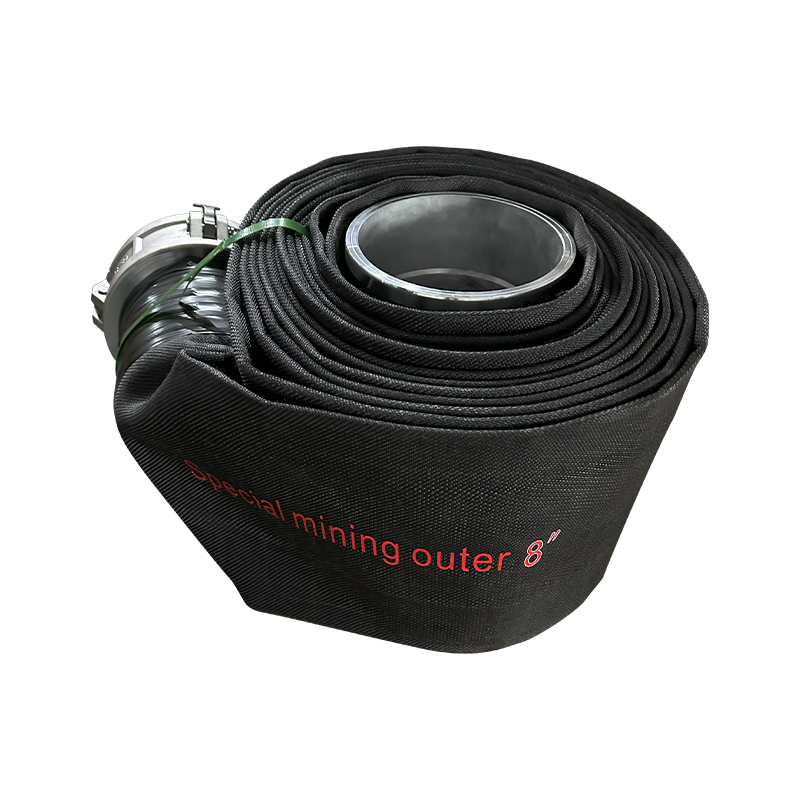 Wholesale 8-Inch Mining Pressure-Resistant External Drainage Flat Hose Pipe WithTaizhou Jun an Fire Technology Co., Ltd Is Wholesale 8-Inch Mining Pressure-Resistant External Drainage Flat Hose Pipe With Storz Connect...View Product →
Abrasion resistance is not only about thickness, however. The PVC compound itself matters. Better compounds resist surface wear, UV cracking, and plasticizer loss more effectively than low-cost alternatives, even at the same thickness. Treat thickness and compound quality as a pair, not as substitutes.
The Trade-Offs: Weight, Flexibility, and Flow
Weight per Meter and Crew Fatigue
A thicker wall adds weight. A 100-meter coil of 3-inch layflat hose with a thin wall is noticeably lighter than the same length with a heavy-duty wall. For crews that deploy and retrieve hose by hand several times a day, the extra weight slows work, increases fatigue, and raises the risk of careless handling. Light weight matters most in seasonal agricultural work and emergency response, where crews move hose rapidly over long distances.
Flexibility, Coiling, and Storage
Thickness also changes the bending behavior of the hose. A thicker wall stiffens the hose, giving it a larger bend radius and making it harder to coil. This stiffness can be beneficial, because a stiff hose resists kinking when stepped on or sharply bent. But it also means larger coil diameters, more space in storage, and a hose that tends to hold the coil shape after long storage. If the job requires frequent setup and takedown, handling is as important as durability.
Flow Capacity
For a given outer diameter, a thicker wall reduces the internal bore. Flow is proportional to the cross-sectional area of the bore, so even a small reduction in diameter causes a noticeable drop. For example, reducing the internal diameter from 100 mm to 90 mm cuts the cross-sectional area by about 19 percent. In a long discharge line, that translates into higher friction losses and lower flow at the outlet. If the pump and pipework are fixed, an overly thick hose becomes the bottleneck in the system. This is why sizing guides for PVC layflat hose always remind buyers to check the internal diameter when comparing products of the same nominal size.
A Practical Selection Guide Based on Working Conditions
No single wall thickness suits every installation. The realistic approach is to match thickness to the demands of the job. The table below summarizes typical selection logic; it is a starting point, not a substitute for the manufacturer's datasheet.
The pressure rating should be treated as the ceiling, not the floor. Selecting a hose whose working pressure is well above the maximum pump pressure gives you a margin for pump surges, temperature-related increases, and the natural ageing of the PVC material. In long runs, margin matters even more, because pressure losses along the line raise the pressure needed at the pump to deliver the required flow at the outlet.
| Working condition | Typical wall thickness | Design priority |
|---|---|---|
| Light irrigation, short-term transfer | 0.8-1.2 mm | Low weight, easy coiling, low cost |
| Agricultural supply, general site use | 1.2-1.8 mm | Balance of pressure, flexibility, and moderate abrasion resistance |
| Municipal transfer, construction dewatering | 1.8-2.5 mm | Higher pressure, repeated handling, rough terrain |
| Mining dewatering, heavy industrial duty | 2.5 mm and above | Maximum abrasion protection and pressure margin |
What to Verify Before You Buy
When comparing PVC flat hoses from different suppliers, do not rely on labels such as "heavy duty" or "premium." Ask for the wall thickness in millimeters, the working pressure at a stated temperature, and the burst pressure. Also clarify whether the quoted thickness refers to the total wall or only the outer coating, because the two figures can differ significantly.
Check the number and density of reinforcing layers. A hose with two reinforcing layers can genuinely carry more pressure than a single-layer hose of the same thickness. Check the internal diameter as well. If the bore is smaller because the wall is thicker, the flow performance may not match what the pump was designed to deliver. Our guides on how to choose PVC layflat hoses by performance, pressure capacity, and durability cover these points in more detail and help buyers structure a fair comparison between offers.
Final Verdict: Match Thickness to the Job, Not the Price
Wall thickness is not a standalone quality indicator. It is a design variable that must be matched to pressure, abrasion exposure, handling constraints, and acceptable flow. A thin hose is the right choice where weight and coil size matter and the duty is gentle. A thick hose earns its cost where pressure is high, the ground is rough, and downtime is expensive. Buyers who read the thickness figure, understand what it does, and then choose a construction that fits the real conditions of the job end up with the lowest lifetime cost.
If your supplier cannot state the wall thickness in millimeters, treat the quotation with caution and ask for a physical sample. Cutting a short section of hose and measuring the wall with a simple caliper takes less than a minute, and it reveals more than any brochure. The best hoses are documented hoses: thickness, working pressure, burst pressure, temperature range, and reinforcement count should all be written down.
For a broader view of how lay flat hose uses, pressure ratings, and durability interact, consult our lay flat water hose uses, pressure, and durability guide before placing an order. When the specification is clear, the decision becomes simple: buy the wall thickness that matches the job, and let the price follow.