en
 عربى


Content
- 1 The jacket carries the pressure, the lining decides whether it keeps carrying it
- 2 How PVC, TPU, EPDM, and rubber compare in service
- 3 Abrasion and cold flexibility decide the real working life
- 4 Service life, and the rules that force replacement
- 5 Specifying a lined hose without overpaying
- 6 Direct answers for specifiers
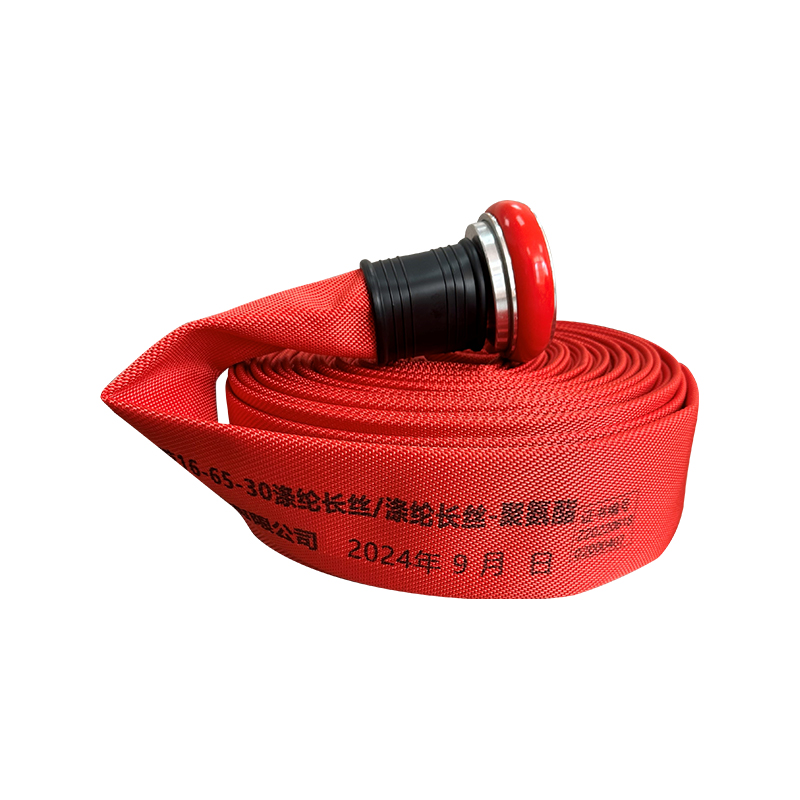
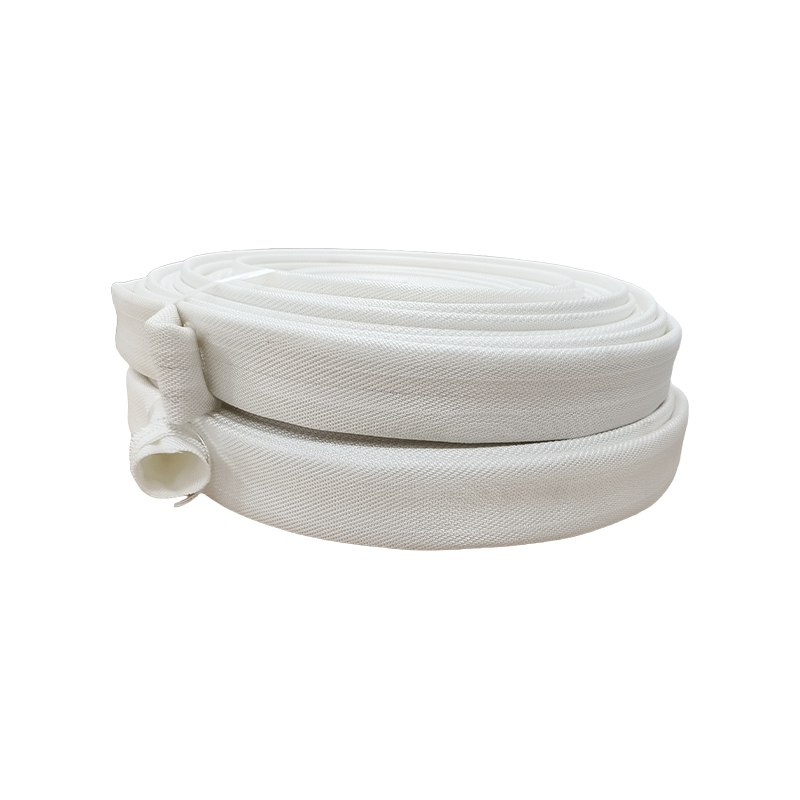
Charge a 2.5-inch (65 mm) attack line to 400 psi and the waterway lining is doing three jobs at once: sealing the jacket so it does not weep, passing hoop load into the polyester warp, and keeping friction loss low enough for the pump to hold nozzle pressure. Change only the lining, PVC to TPU for instance, and the jacket specification does not move, yet the burst margin, abrasion life, and inspection record all do.
That is why lining selection belongs in its own decision, separate from diameter and coupling choice. Buyers who treat the waterway as a commodity line item usually find out where it mattered in one of three places: a service test that fails at year six, a blistered section pulled off a reel, or a friction loss figure that no longer matches the pump curve.
The three properties that decide whether a lining was the right call are pressure resistance, durability, and service life. They are related but not interchangeable, and every lining class trades them differently.
The jacket carries the pressure, the lining decides whether it keeps carrying it
Hoop stress in a charged hose is carried by the reinforcement jacket, not by the lining. The lining's structural job is to transfer that stress into the warp yarns without separating, blistering, or leaking through the weave.
NFPA 1961 sets the design floor. Minimum burst pressure runs at roughly three times the service test pressure, so a 1.5-inch attack hose service tested at 400 psi must survive a burst test at 1,200 psi. No lining material adds meaningfully to that number. What a lining changes is how reliably the hose still reaches it after two years of heat, drag, and pressure cycling.
Delamination is separation of the waterway lining from the reinforcement jacket. It breaks the load path between water and warp yarns, creates internal blisters that restrict flow, and is a condemnation criterion under NFPA 1962 regardless of how the hose performs on a service test.
Adhesion is where linings differ most in practice. Peel strength is measured on a 25 mm strip, and a compound that passes comfortably at 20 C can soften, creep, and release at 80 C. Heat-aged adhesion data is the figure worth requesting; a room-temperature catalogue number says very little about a hose that lives coiled on a reel behind a cab.
Pressure resistance is a jacket property. Pressure reliability is a lining property.
The second failure path is weeping, where water migrates through the weave because the lining is too thin, porous, or pinholed. Weeping shows up as a damp jacket, a slow pressure drop on a static test, and eventually as mildew and rot inside the reinforcement.
How PVC, TPU, EPDM, and rubber compare in service
Four lining families cover most lined fire hose sold today, and each is a different trade between cost, temperature window, and abrasion life. PVC is the cheapest waterway and the narrowest on heat, TPU gives the best abrasion resistance per unit of weight, EPDM holds the widest temperature and ozone range, and natural or synthetic rubber gives the strongest bond on heavy jackets.
| Lining | Pressure behaviour | Abrasion and temperature | Where it fits |
| PVC | Holds rated pressure; adhesion is the weak point after heat ageing | Moderate abrasion, -5 C to 60 C | Standby cabinets, washdown, irrigation transfer |
| TPU (polyurethane) | Holds pressure on a thin wall; resists blistering on hot discharge | High abrasion, -40 C to 80 C | Attack lines, mine dewatering, cold storage |
| EPDM | Stable under sustained pressure when heat-aged adhesion is controlled | Moderate to high abrasion, -40 C to 120 C | Hot water, chemical transfer, ozone and UV exposure |
| Natural rubber | Strong bond on heavy jackets; elastic under pressure surge | Moderate abrasion, -30 C to 70 C | Heavy attack hose, high surge duty |
| Synthetic rubber (SBR, NBR) | Good pressure hold; NBR grades add oil resistance | High abrasion, -30 C to 100 C | Industrial washdown, oily effluent |
Read the table by duty rather than by rank. A PVC-lined hose stored in a cabinet and used twice a year will comfortably outlive its inspection schedule. The same hose left in a hot pump bay and folded on itself will stiffen, take a set, and delaminate at the fold line well before its tenth year.
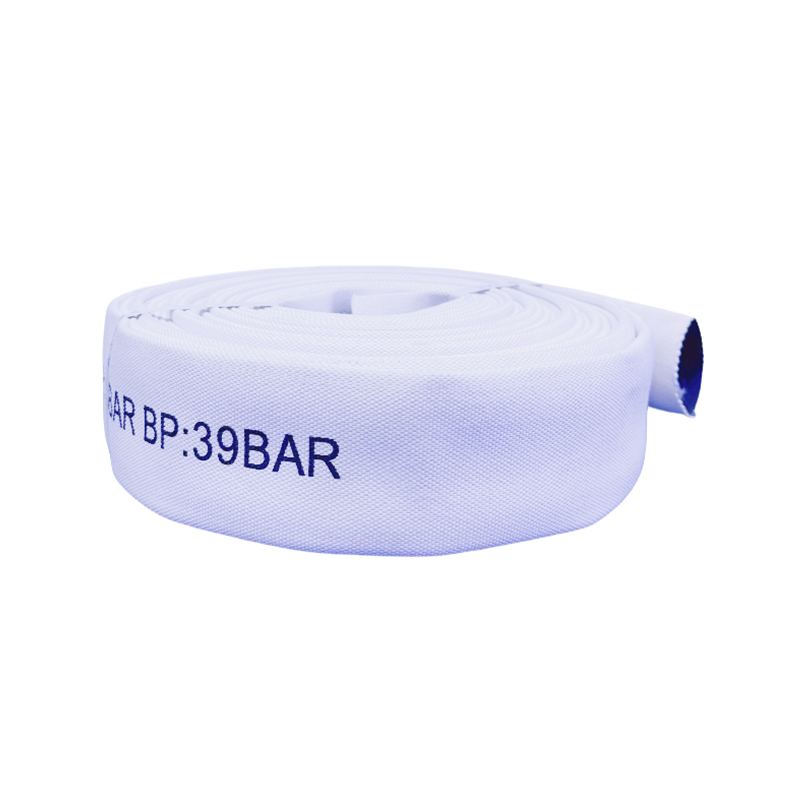
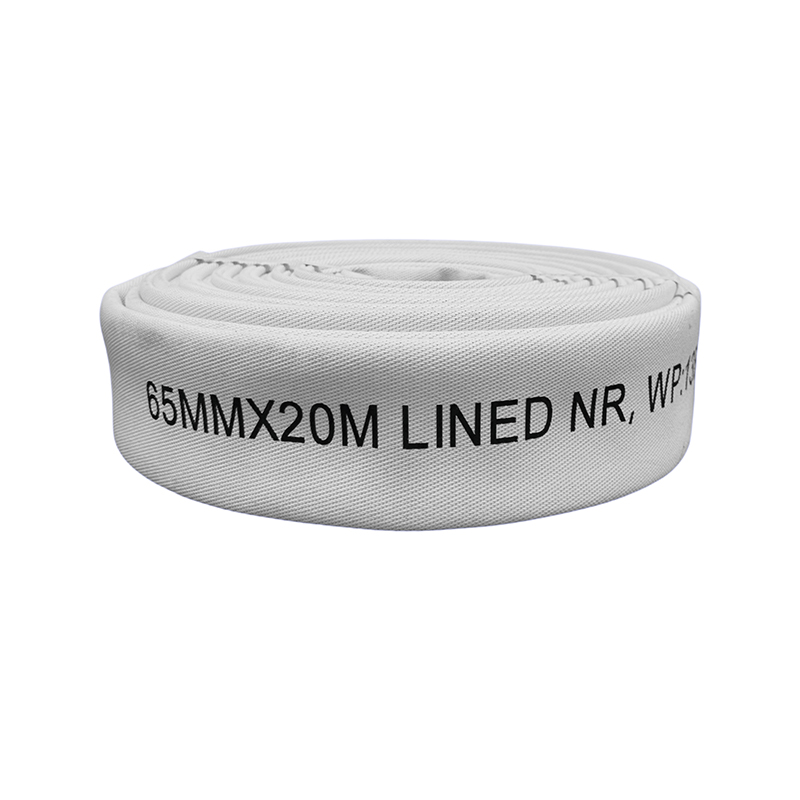
PVC-lined hose remains the reference point for standby cabinets, plant washdown, and agricultural transfer, where the waterway sees ambient water and moderate pressure:
 PVC-Lined Canvas Layflat Hose for Firefighting and IrrigationFor standby cabinets, washdown, and agricultural transfer, this PVC-lined canvas hose offers a smooth bore, UV resistance, and 1–6 inch sizes.View Product →
A lining that passes a peel test at 20 C can still release at 80 C. Ask for heat-aged adhesion, not a room-temperature catalogue figure.
Abrasion and cold flexibility decide the real working life
Abrasion and low-temperature cracking retire more hose than burst events do, and both are lining properties rather than jacket properties. A dragged hose wears from the inside out at the fold, and a hose folded flat at minus 10 C cracks where the lining has lost elongation.
Abrasion resistance is normally compared on DIN 53516 loss volume. TPU and NBR-based synthetic rubber sit at the top of that ranking, with PVC and EPDM in the middle band. For mine dewatering, quarry discharge, and any duty where the hose is dragged over rock or concrete, the gap between a mid-band and a top-band lining is measured in replacement cycles rather than in the purchase order.
Temperature is the other half of the equation. PVC softens and takes a permanent set above roughly 60 C, which matters on a hose left inside a closed vehicle or used on warm discharge. TPU stays flexible to about minus 40 C, and EPDM keeps working past 100 C, which is why EPDM dominates hot water and chemical transfer duties.
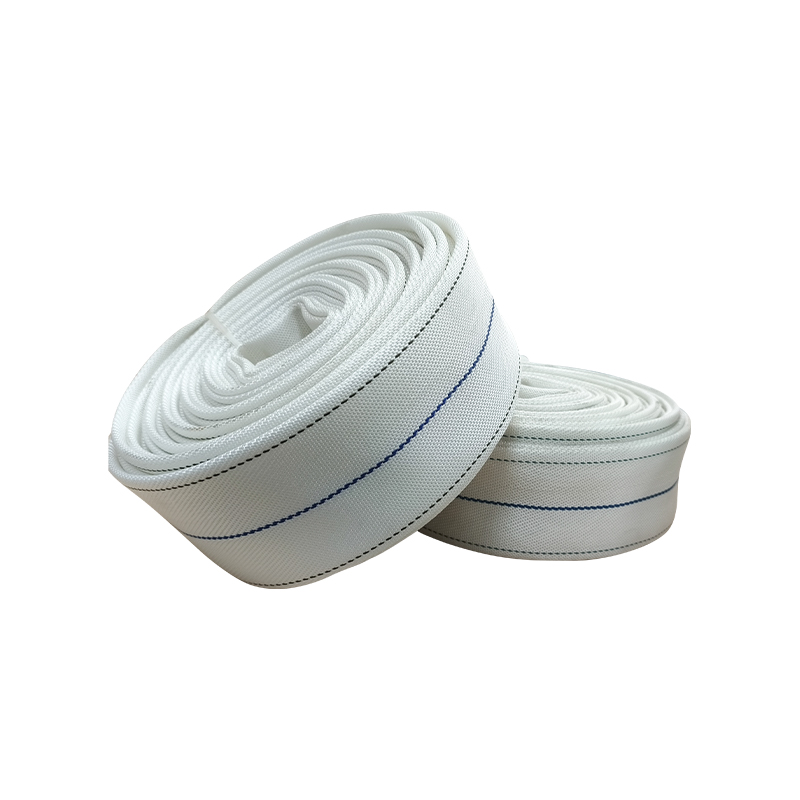
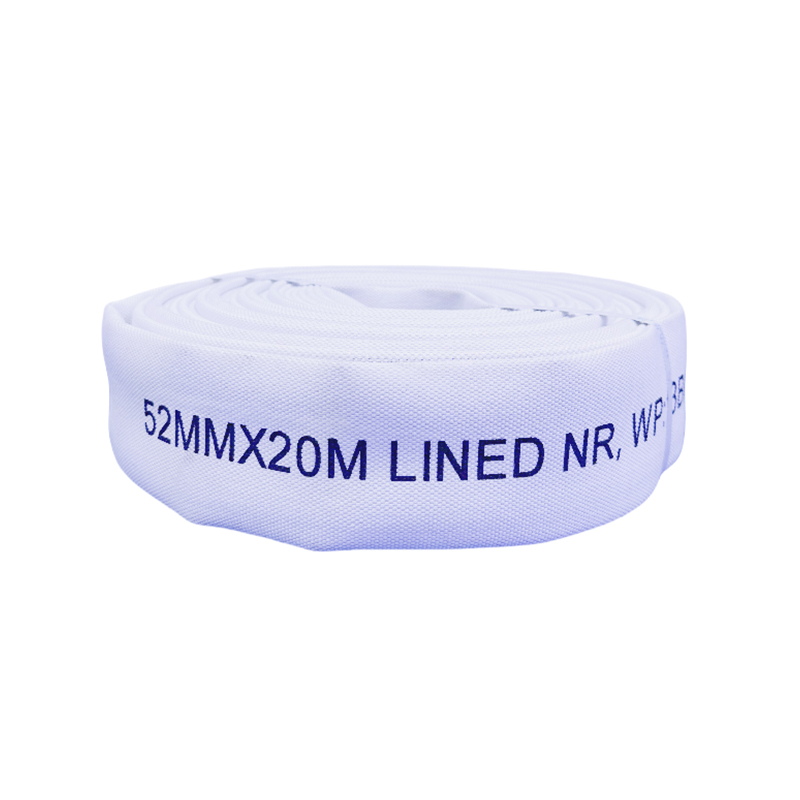
TPU-lined hose is the usual upgrade path when a PVC line keeps failing on abrasion or cold-weather folding:
 Heavy-Duty TPU Layflat Hose for Irrigation and FirefightingAn upgrade for abrasion and cold-weather failures, this lightweight TPU hose handles -40°C to +80°C and irrigation, industrial transfer, and fire suppression.View Product →
- Inspect the coupling end first, where lining separation usually starts.
- Cut a retired section and look for blisters between lining and warp.
- Compare friction loss against the original pump curve, not against memory.
Service life, and the rules that force replacement
NFPA 1962 sets the working rules: hose in service is service tested at least every 12 months and after any repair, and the standard treats 10 years from the date of manufacture as the point to evaluate replacement. Age alone does not condemn a hose. Lining separation, blisters, soft spots, and a failed service test do.
- Visible lining separation or blistering, especially near a coupling
- A service test failure at the pressure specified for that hose class
- Soft spots or bulges that point to broken warp yarns
- Lining cracks at fold lines after cold storage or flat folding
- Coupling pull-off, corrosion, or damage that prevents a pressure-tight seal
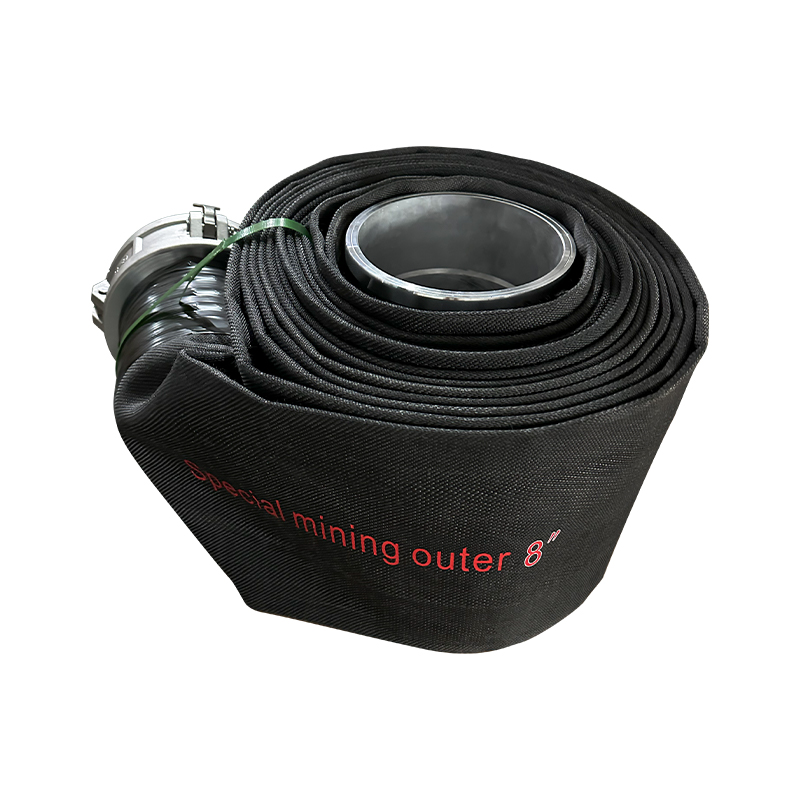
Realistic service windows follow the lining and the duty. A rubber or TPU-lined attack hose kept on an apparatus and tested annually typically reaches 8 to 10 years. Forestry hose, dragged and packed wet, commonly retires at 2 to 4 years. Mine dewatering hose abrades from the outside in and often runs 3 to 6 years before the cover or the lining at the fold gives out.
Lining degradation also costs pressure before it costs a hose. Mineral scale bonds more readily to a roughened waterway, and scale raises friction loss on long lays, which appears as nozzle pressure that no longer matches the pump curve even though the hose still passes its annual test.
Specifying a lined hose without overpaying
Match the lining to the duty cycle, not to the highest specification on the shelf. A 400 psi standby hose does not need an EPDM waterway rated for 120 C, and a mine dewatering line gains nothing from a lightweight PVC core.
- Water is ambient and pressure stays in the moderate range
- Lays are short and the hose is stored dry and indoors
- Replacement cost per metre drives the purchase decision
- The hose is dragged over abrasive ground or rock
- Folding happens below freezing or in unheated storage
- Discharge runs hot, oily, or chemically loaded
Three questions separate a real quotation from a catalogue page: the heat-aged peel figure, the lining wall thickness with its tolerance, and a burst test result for the finished hose rather than for the jacket alone. A supplier who answers all three is quoting a product; one who cannot is quoting a colour.
- Confirm the service test pressure and burst figure against NFPA 1961 or the governing regional standard.
- Ask for lining wall thickness and tolerance, quoted in millimetres with a plus or minus band.
- Request heat-aged adhesion data alongside the room-temperature peel value.
- Check the temperature window against real storage conditions, not only against working conditions.
- Match the coupling pattern, Storz, American, GOST, Italian, or John Morris, to the hydrant system before ordering.
Taizhou Jun'an Fire Technology Co., Ltd. produces PVC, TPU, EPDM, and rubber-lined waterways in-house and couples them to multiple national standards, which makes lining-specific test data a normal request rather than a special order. For a closer material comparison, this breakdown of EPDM versus rubber versus TPU linings sets out where each one fails first.
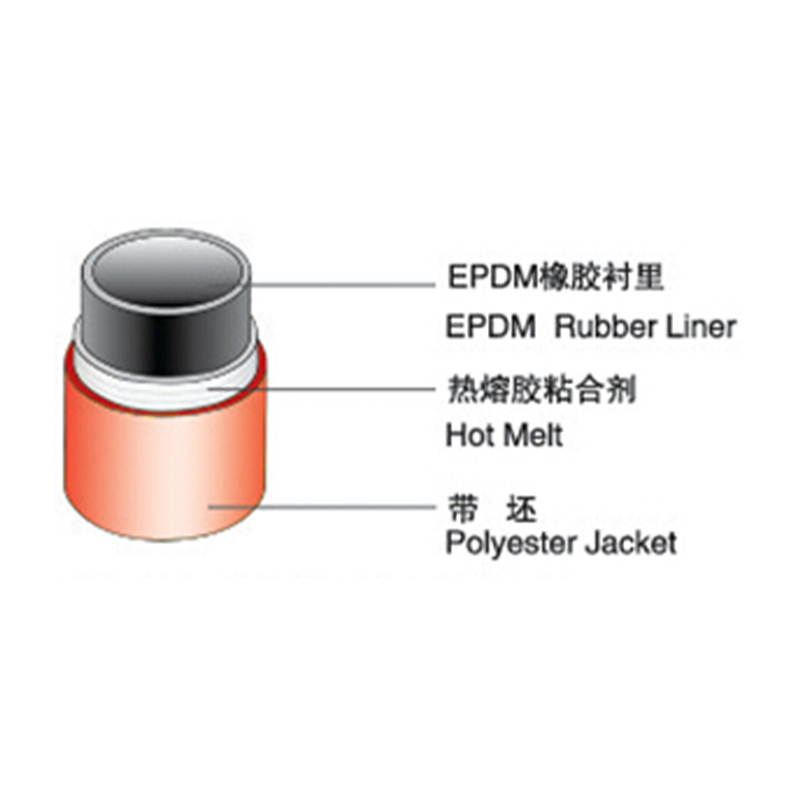
EPDM-lined hose is the right starting point when the water is hot, chemically loaded, or exposed to ozone and UV:
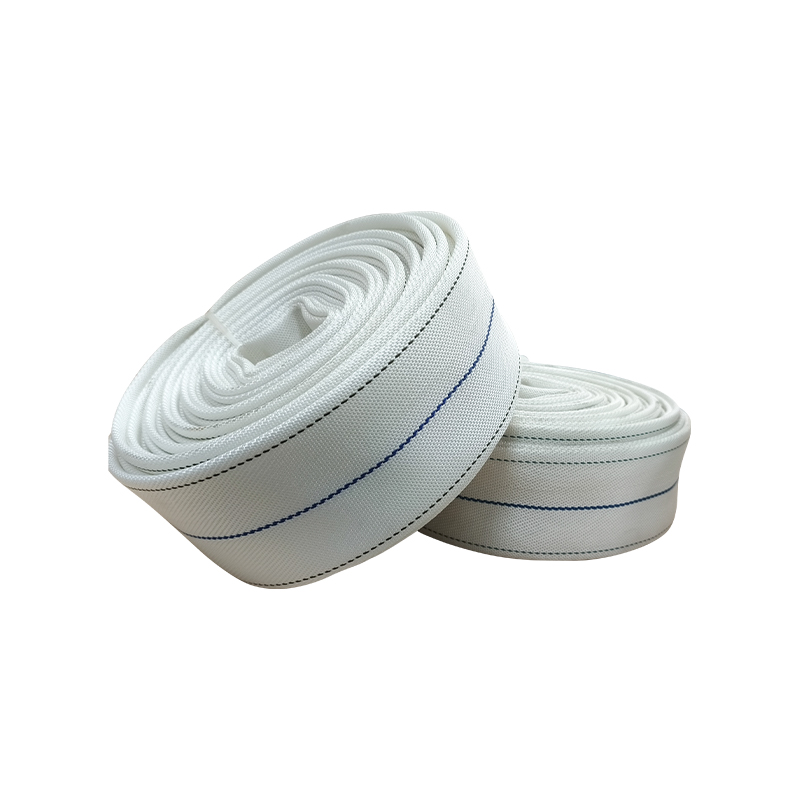 EPDM-Lined Fiber Canvas Fire Hose for Hot and Chemical WaterFor hot, chemical-loaded, or ozone-exposed water, this EPDM-lined canvas hose offers UV resistance, low-temperature flexibility, and 1.5–6 inch sizes.View Product →
Direct answers for specifiers
Does a thicker lining increase burst pressure?
No. Burst pressure comes from the jacket's warp yarns, ply count, and weave density. A thicker lining adds weight, raises friction slightly, and costs more per metre; it improves resistance to weeping and abrasion, not to hoop stress.
Which lining lasts longest in mine dewatering?
TPU. It combines the highest abrasion resistance of the common waterway materials with flexibility to about minus 40 C, and it resists the blistering that ends PVC linings on warm discharge. Expect 3 to 6 years on abrasive ground with proper draining and rolling.
How often must lined fire hose be service tested?
Every 12 months under NFPA 1962, and after any repair or coupling replacement. Hose that fails the test, shows lining separation, or develops soft spots is condemned regardless of age.
Can a delaminated hose be repaired?
No. Field re-bonding of a separated lining is not an accepted repair under NFPA 1962, and a hose that has delaminated at one point usually has adhesion loss along its length. Retire it and inspect the rest of the batch for the same heat exposure.