en
 عربى


Content
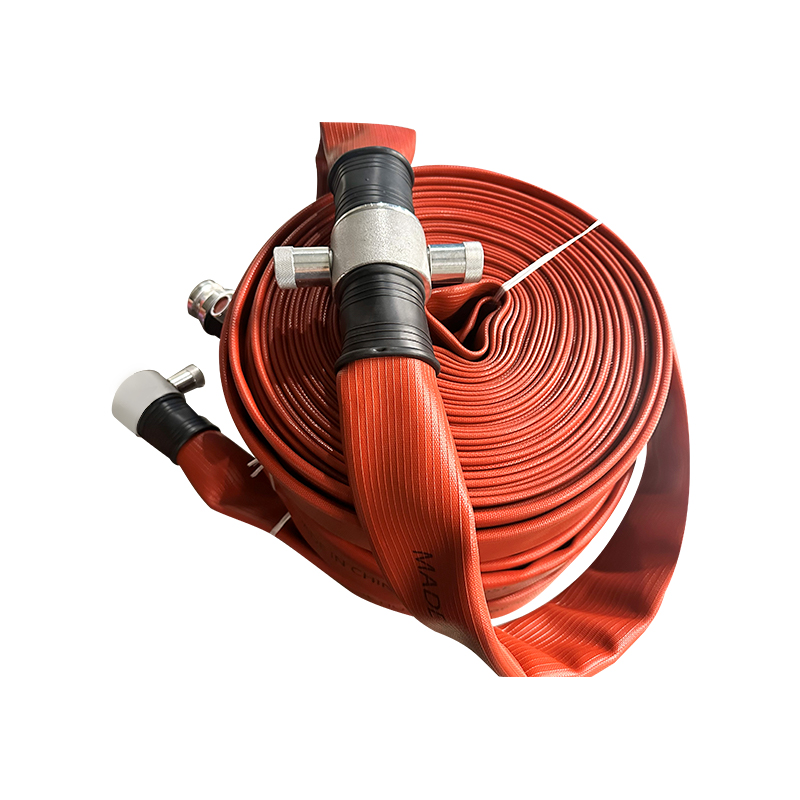
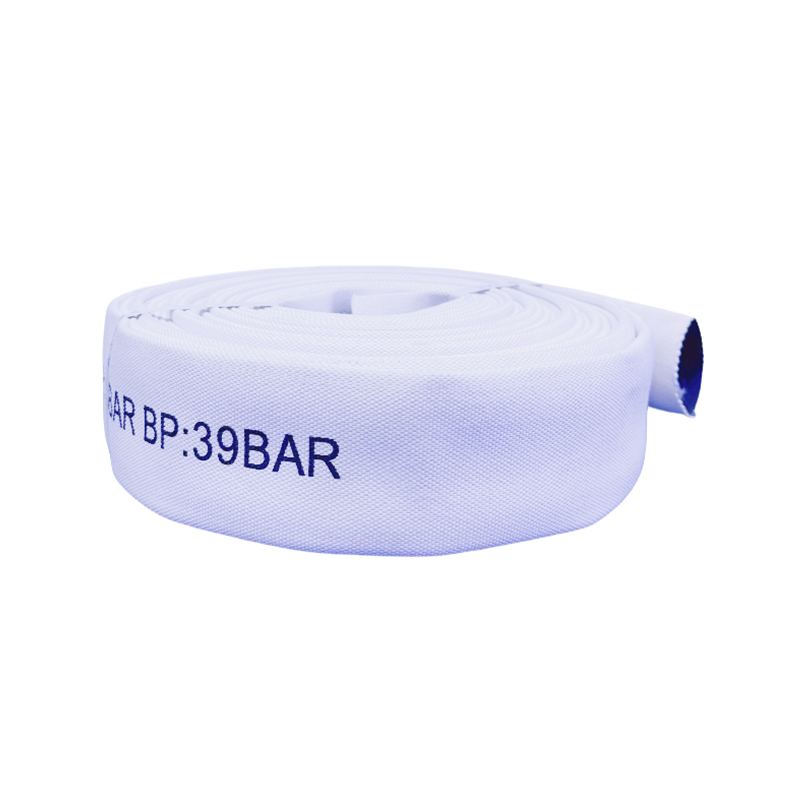
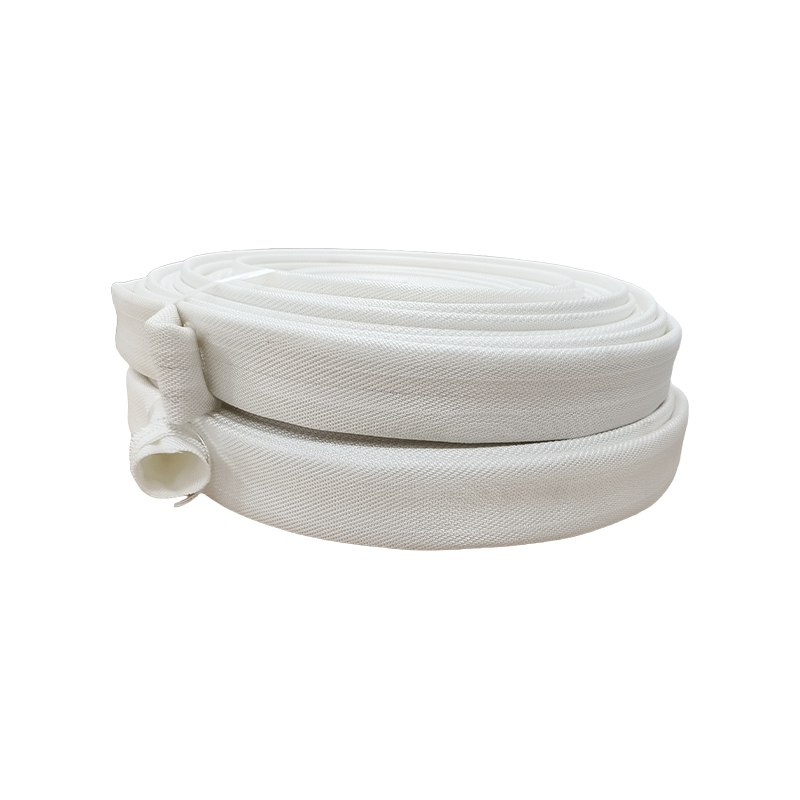
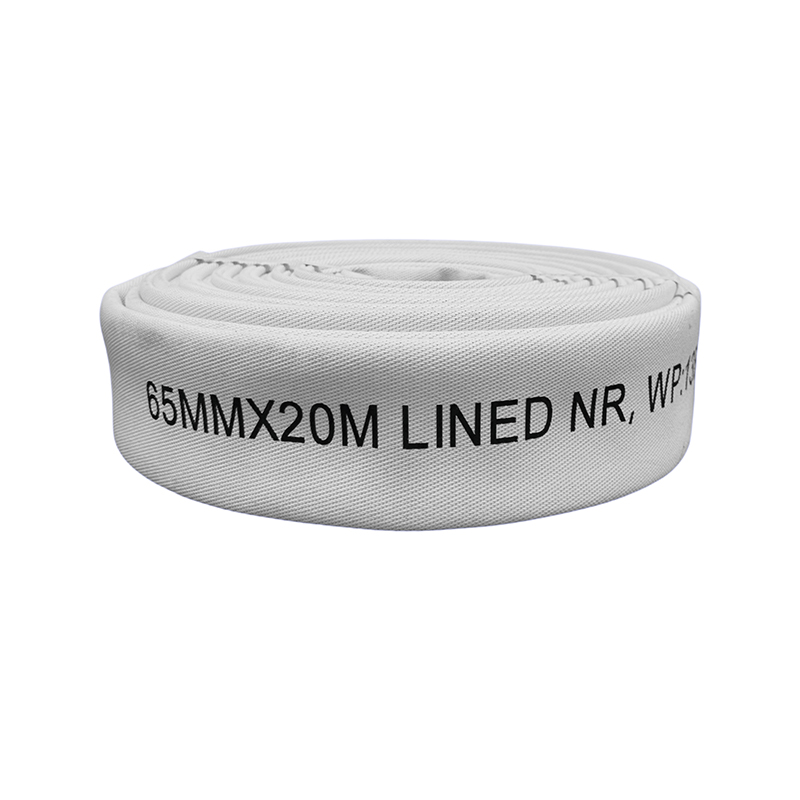
A 30 m coil of 65 mm layflat fire hose is about the size of a car tyre and light enough for one person to carry. The same length of rigid steel pipe needs a rack, a vehicle and two people. That difference in geometry is why fire services, mining operators and disaster-response teams build their water logistics around flat hose, and why storage space, freight cost and deployment time all trace back to the same coiled object.
Layflat hose is not a thinner, weaker version of a rigid main. The wall collapses when the water stops and resists hoop stress when it starts: the woven reinforcement carries the pressure, the lining holds the water, and the outer jacket absorbs abrasion. A manufacturer such as Taizhou Jun'an Fire Technology Co., Ltd. builds the same base construction into firefighting hose, mining dewatering hose and agricultural transfer hose, then changes the lining material and the coupling standard to suit each market.
One calculation explains most of the appeal before any specification is discussed. A 65 mm bore hose with a 4 mm wall presents about 3,300 square millimetres of cross-section when round, and about 800 square millimetres when it lies flat.
What a Layflat Fire Hose Actually Is
A layflat fire hose is a flexible, lined delivery hose that stays flat when empty and takes its full round bore only under internal water pressure. In North America, design and pressure testing are governed by NFPA 1961, and lined hose assemblies are listed to UL 19; European and export markets work to national standards such as BS 6391 or DIN 14811, plus the coupling pattern the receiving service already owns.
Working definition
Layflat fire hose: a reinforced, non-percolating hose whose shape is controlled by internal pressure rather than by a rigid wall, so it can be coiled flat for storage and unrolled along the ground for service.
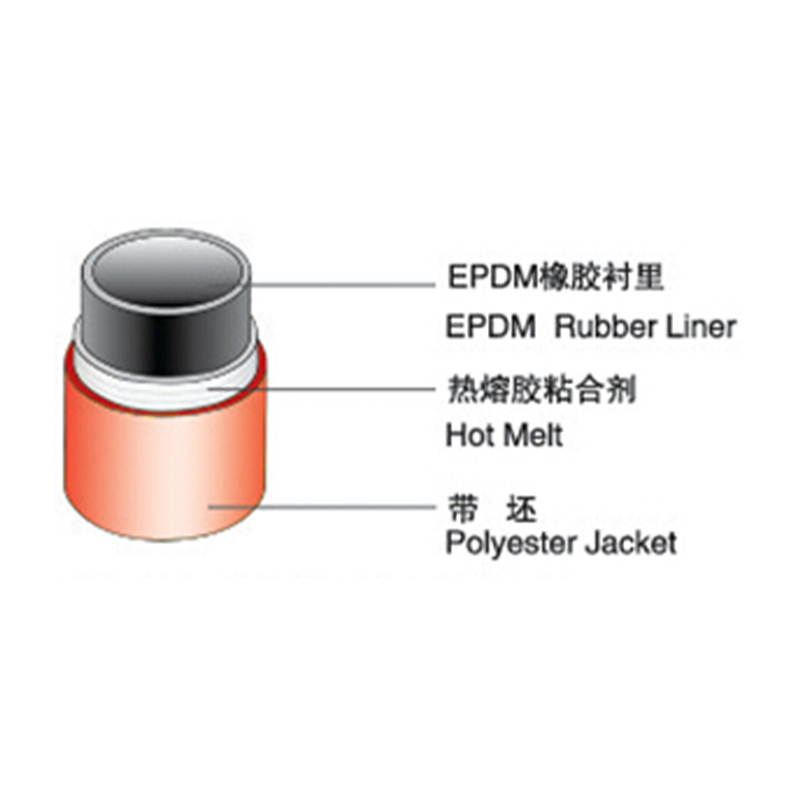
Three components decide how a hose stores, travels and deploys.
- The jacket. Woven polyester or nylon filaments carry the hoop stress. A single jacket covers light duties; a double jacket adds a second woven layer, which raises burst and abrasion performance at the cost of weight and coil diameter.
- The lining. A PVC, TPU, EPDM, natural rubber or synthetic rubber tube bonded to the jacket. Lining density sets coil weight, and lining chemistry sets the usable temperature range and chemical resistance.
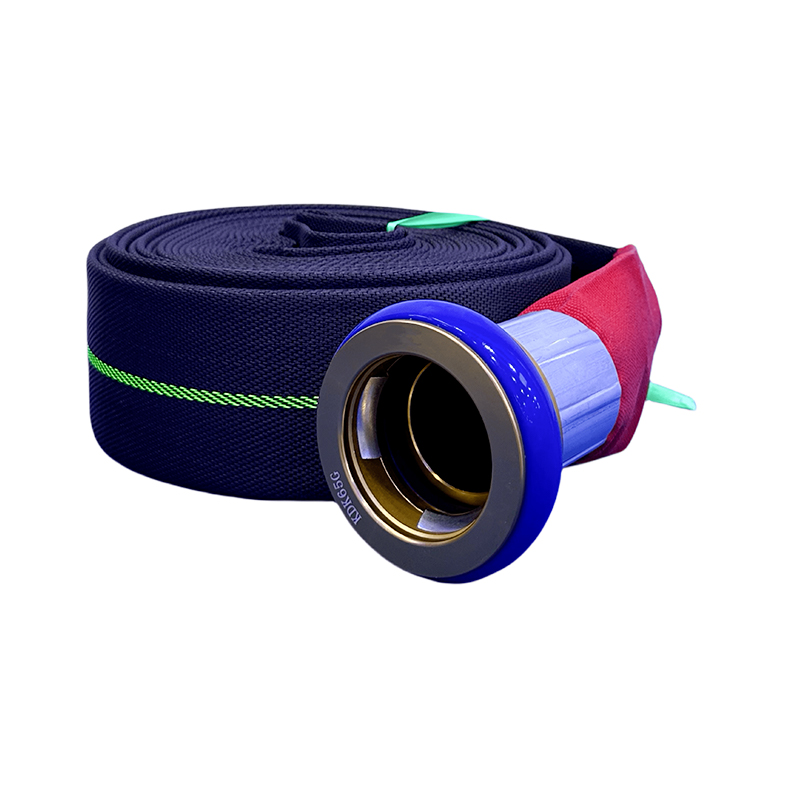
- The coupling. Storz, American, Italian, GOST, Machino, Guillemin and British instantaneous patterns are all common, and the choice is normally fixed by the receiving fire service or project specification rather than by the hose itself.
Storage: Coil Diameter, Rack Fit and Inspection Access
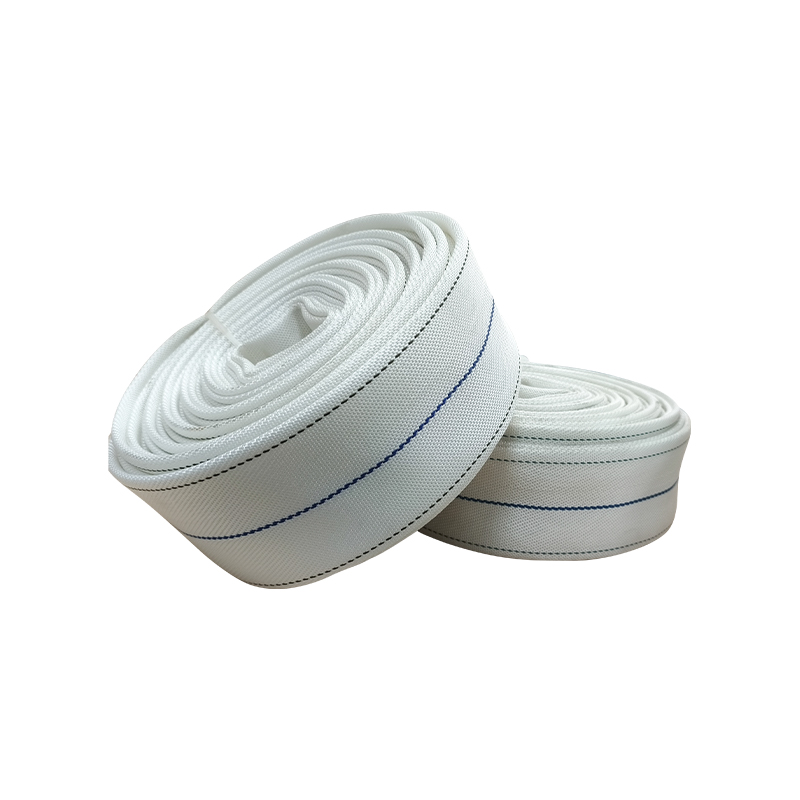
Flat-coiled hose stores in roughly 0.02 cubic metres per 30 m coil, so a one-cubic-metre cabinet holds around 45 coils of 65 mm hose. Keeping that same hose permanently charged on a reel multiplies the footprint several times and turns a simple shelving decision into a vehicle-design decision.
Coil diameter scales with bore size and lining thickness rather than with length alone, which is why rack depths should be checked against the largest hose in the inventory.
Typical empty coil outside diameter, single 30 m coil of layflat hose
Typical dimensions for one empty coil with standard couplings. Jacket build and lining thickness shift the result by 30 to 60 mm either way.
- Store coils off the floor in a dry, ventilated room. Trapped moisture feeds mildew in the jacket fibres, and damp jackets lose tensile strength long before the lining fails.
- Keep hose away from direct sunlight, from ozone sources such as electric motors, and from solvent fumes. UV and ozone attack rubber and EPDM surfaces first.
- Never fold a coil back on itself. The minimum working bend is set by the lining, and a sharp crease leaves a permanent kink that shows up as a pressure drop on the fireground.
- Inspect and service test at least once a year, as NFPA 1962 requires for hose in service, and again after any repair or chemical exposure.
Flat-coiled in a cabinet
- About 0.02 cubic metres per 30 m coil
- Lining dries between uses
- Damage is visible during inspection
- Needs a crew to lift and carry
Charged on a reel
- Footprint several times larger
- Water stays in the bore, causing set and mildew
- Abrasion hides in the inner wraps
- Faster first metre, slower maintenance
For attack lines that are rolled and re-rolled on every shift, jacket construction matters as much as the lining tube.
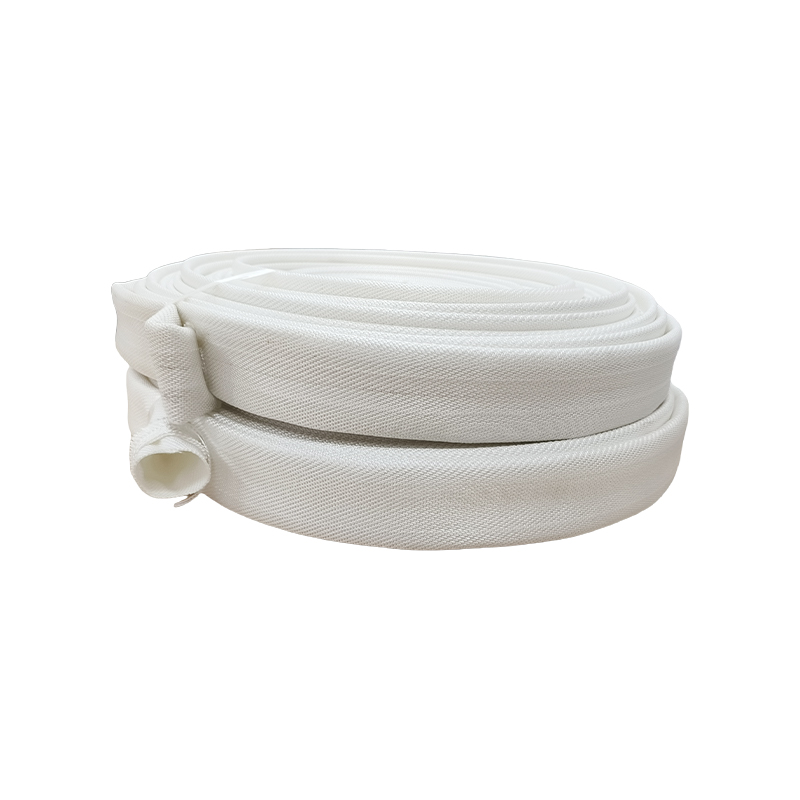 Double Jacket Oil & Chemical Resistant Fire HoseHeavy-duty reinforced hose for attack lines, with oil- and chemical-resistant lining and durable double jacket for repeated rolling and flat packing.View Product →
Transportation: Weight, Container Volume and Cold-Weather Handling
Freight cost follows volume and mass, and flat packing reduces both at once. A 20-foot general-purpose container offers roughly 33 cubic metres of usable space; at an average 0.02 cubic metres per coil and a realistic packing fill, that is well over 1,000 coils per container. The same length of rigid pipe moves on flatbed trailers at a fraction of the payload efficiency.
Weight is where lining choice becomes visible on the invoice. PVC is the lightest lining and the cheapest per metre, which is why it dominates irrigation and general transfer. TPU sits in the middle, holds flexibility down to minus 40 degrees C and resists abrasion better than PVC, which makes it the usual choice for cold-weather firefighting and mine dewatering. EPDM and rubber linings add mass but extend temperature and chemical limits. The interaction between lining, weight and coil size is covered in this guide to fire hose manufacturing, weight, length and usage.
- Load coils on their sides and support the wrap, never the couplings. A dropped coil lands on the hardest part of the assembly.
- Drain and dry before loading. Retained water adds freight weight and expands if the container passes through freezing conditions.
- Limit stack height on pallets so the lining does not take a compression set, and keep coils away from container door openings where sun and rain reach them.
- Cap Storz gaskets and threaded tails. A damaged sealing face is the most common reason a joint weeps under pressure.
 TPU Layflat Hose for Irrigation and Cold-Weather UseLightweight, abrasion-resistant TPU hose retains flexibility to -40°C, resists chemicals, and unloads flat in cold conditions for irrigation and dewatering.View Product →
Cold-climate buyers should note one ordering detail: PVC hose loaded at plus 20 degrees C and unloaded at minus 10 degrees C arrives stiff and kinked, because the plasticiser stops moving below freezing. TPU and rubber linings unload flat and straight in the same conditions.
Rapid Deployment: Packing Method Decides the Clock
Deployment speed is decided before the alarm, by the way the hose is packed and the way the couplings mate. NFPA 1710 sets a 240-second travel target for the first-arriving engine company in its 2023 edition, and every second spent untangling a line or wrestling with a coupling comes out of that budget.
- Pre-connect the first line. A crosslay is a hose bed laid across the pump panel so the crew pulls the line sideways and walks away from the truck instead of around it. A speedlay does the same job at the rear. Both keep the nozzle within reach of the first firefighter off the seat.
- Match the fold to the target. Flat folds unroll cleanly along a straight run; a donut roll can be carried and paid out while walking. Mixed loads create twists, and a twist becomes a kink the moment the line is charged.
- Match the coupling to the crew. Symmetric Storz-type couplings engage at any rotation and lock in less than a quarter turn, in sizes from DN 25 to DN 200. Threaded patterns need correct male and female pairing, and cross-threading risk rises under stress.
- Charge gradually. Opening the valve slowly prevents water hammer, the pressure spike that splits a jacket or blows a joint. Pressure rises until the line reaches its rated working pressure, and the flat coil rounds out on its own.
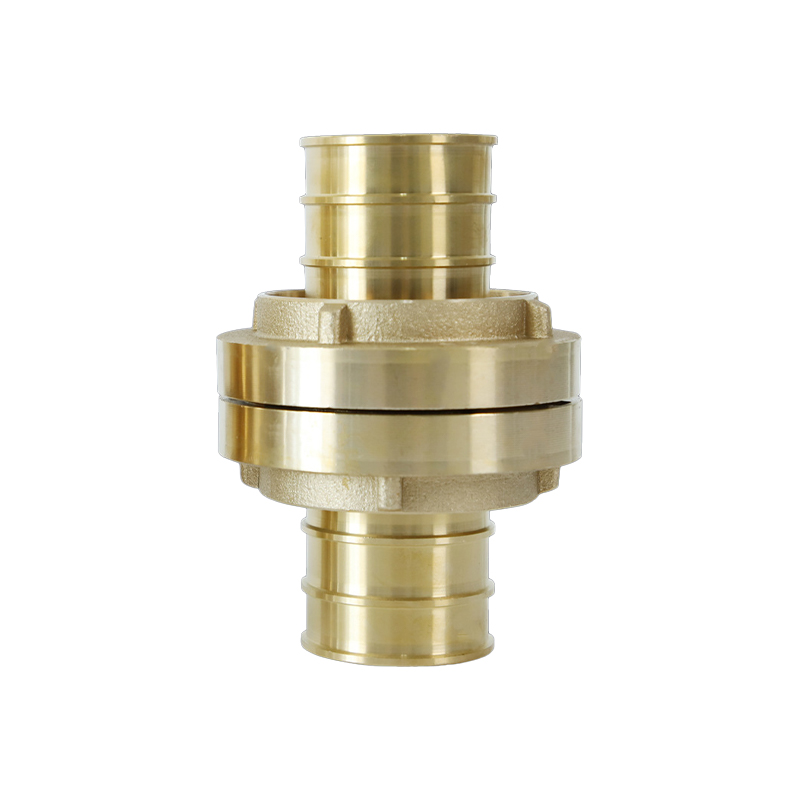 Storz Quick-Release Fire Hose Couplings and Camlock FittingsGenderless quarter-turn couplings lock with an audible click, enabling tool-free hose connections in under five seconds for fire and industrial water transfer.View Product →
The payoff is measurable. The same crew, the same 30 m pre-connect and two different folding methods will produce several seconds of difference between first water and full flow, which is why drills should be timed with a stopwatch rather than judged by feel.
Matching Lining Material to the Job
The lining decides weight, temperature range and chemical tolerance, and no single material wins on all three. PVC is the lightest and cheapest for irrigation and general transfer, TPU balances abrasion resistance with cold flexibility, EPDM handles hot water and aggressive chemistry, and double-jacket synthetic rubber is built for attack lines dragged across asphalt at a 250 psi service test pressure.
| Lining | Weight | Working temperature | Abrasion resistance | Typical duty |
| PVC | Lightest | 0 to 60 degrees C | Moderate | Irrigation, general water transfer |
| TPU | Light to medium | minus 40 to 80 degrees C | High | Cold-weather firefighting, mine dewatering |
| EPDM | Medium | minus 40 to 120 degrees C | High | Hot water, chemical and ozone exposure |
| Synthetic rubber, double jacket | Heaviest | minus 40 to 100 degrees C | Very high | Attack lines, municipal and industrial firefighting |
Two further details change the order rather than the material. Fire service hose is normally specified at a service test pressure that steps down as bore rises, from 300 psi at 1.75 in. to 250 psi at 2.5 in. And the coupling pattern is fixed by the receiving organisation, so a compliant hose with the wrong coupling is unusable on arrival.
Before raising the purchase order
Confirm four numbers: bore in millimetres or inches, working pressure in bar or psi, coil length, and coupling pattern. A fifth number, the service test pressure from NFPA 1961 or the equivalent national standard, belongs on the certificate that travels with the shipment.
Specification Questions That Decide the Order
How much space does 90 m of 2.5-inch layflat hose take?
About 0.06 cubic metres. Three 30 m coils of 65 mm hose with a typical 480 mm outside diameter and 110 mm stack height occupy roughly 0.02 cubic metres each, so 90 m fits into a space smaller than a domestic washing machine.
Can layflat fire hose stay charged permanently?
No. NFPA 1962 expects hose to be drained, dried and re-rolled after service, because water left in the bore causes compression set in the lining and mildew in the jacket. Short-term charged storage during an incident is normal practice; weeks of charged storage shortens service life and hides internal damage from inspection.
What is the difference between layflat hose and semi-rigid hose?
Semi-rigid hose keeps a near-round profile when empty and is carried on a reel or in a tray, which makes it kink-resistant and quick to wind, but bulky to store. Layflat hose collapses flat, stores in about a quarter of the space, and needs a firm surface plus a gradual charge to reach full bore without kinking.
How often must fire hose be service tested?
At least once a year for hose in service, under NFPA 1962, at the pressure NFPA 1961 assigns to that bore: 300 psi for 1.75 in. hose and 250 psi for 2.5 in. hose. Hose is also tested after repair, after chemical exposure, and before it returns to service following a failure on the fireground.
Storage volume, freight weight and deployment time are not three separate problems. They are three consequences of one design decision: a wall that collapses when the water stops. Get the coil diameter right for the rack, the lining right for the temperature, and the coupling right for the receiving crew, and the rest of the logistics follows.
Taizhou Jun'an Fire Technology Co., Ltd. manufactures PVC, TPU, EPDM and rubber-lined layflat hose, mining dewatering hose, Storz and threaded couplings, and nozzles from its own factory in Taizhou, Jiangsu, with OEM and ODM production and an export team that answers working-day enquiries within 12 hours.