en
 عربى

Content
- 1 OEM and ODM Are Two Different Contracts
- 2 Six Variables Locked Before Tooling Is Cut
- 3 Coupling Standards Cause More Site Failures Than Hose Failures
- 4 Sampling, First-Article Approval and the Real Production Clock
- 5 Where an ODM Platform Shortens the Critical Path
- 6 Documents and Marking That Travel With the Container
- 7 Factory-Direct Capacity and Export Logistics
- 8 Questions Project Buyers Ask Before Approving a Sample
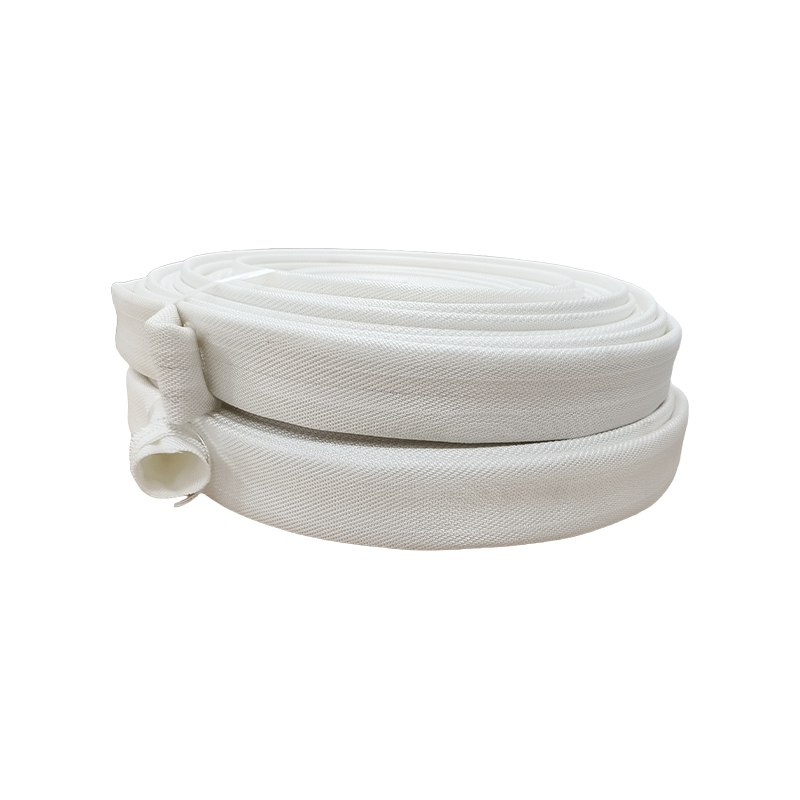
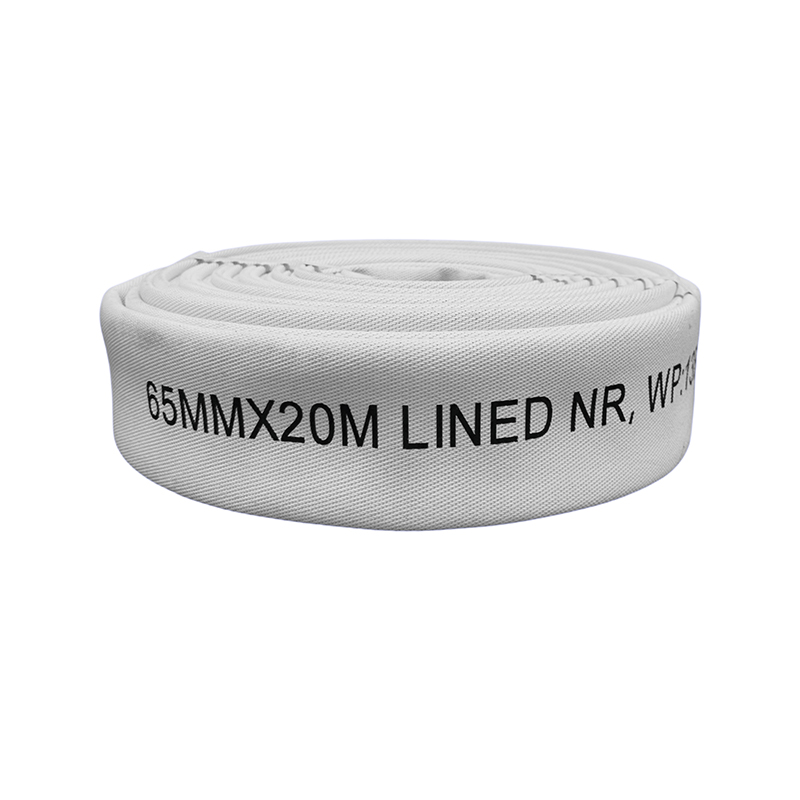
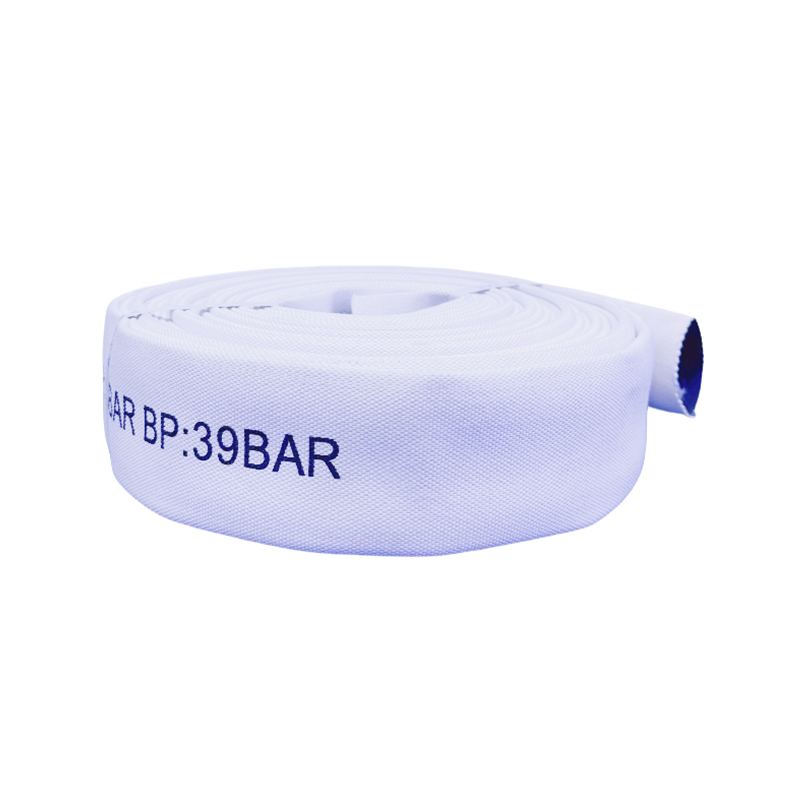
A tender lands on a Monday: 2,000 lengths of 2.5 in (65 mm) EPDM-lined layflat hose, 20 m each, Storz couplings on both ends, burst-tested to a 3:1 ratio, printed with the buyer's own brand, delivered FOB Shanghai in 90 days. Nothing in that brief is exotic. What decides whether the container ships on schedule is how the manufacturer runs the OEM and ODM side of the program.
Taizhou Jun'an Fire Technology Co., Ltd. builds fire hose, hose couplings and mining dewatering hose in Taizhou, a short inland haul from Shanghai, using its own production equipment and an in-house international trade department. The same handful of questions comes up on every custom program, and the answers below are the ones that keep a project on schedule.
OEM and ODM Are Two Different Contracts
OEM means the buyer owns the specification and the factory builds to it; ODM means the factory already owns a tested platform and the buyer applies its own brand. That distinction decides tooling cost, order quantity and which party carries design liability when a coupling leaks on site.
In fire hose the two models rarely sit in separate silos. One 40 ft container often holds OEM lengths printed with a distributor's name alongside ODM platform hose pulled from the factory's standard range, because part of the order has to be exact and part of it has to be fast.
Original equipment manufacturing. Hose produced to a buyer-supplied specification covering liner compound, bore, working pressure, coupling pattern, print layout, coil length and packaging.
Original design manufacturing. A platform that already exists in the factory range, complete with test data, rebranded with the buyer's label and shipped without new tooling.
- Drawing and revision control sits with the buyer.
- New extrusion die or compound is quoted separately when the bore is outside the standard set.
- Sampling cycle: two lengths, 5 to 10 working days.
- Test file issued against the buyer's own specification.
- Typical buyer: brand owner, tender supplier, equipment builder.
- Drawing and revision control stays with the factory.
- No tooling charge, because the die and compound already exist.
- Sampling cycle: stock swatch or 3 to 5 working days.
- Test file: existing platform data plus a batch test on the shipped run.
- Typical buyer: distributor, mining contractor, agricultural supplier.
Six Variables Locked Before Tooling Is Cut
Six parameters decide most of the cost, lead time and certification path of a custom fire hose: liner compound, nominal bore, working pressure, coupling pattern, jacket construction and finished length. Locking all six in writing before sampling removes almost every mid-production change.
| Variable | Typical project range | What it changes |
| Liner compound | PVC, TPU, EPDM, natural rubber, synthetic rubber | Cold flexibility from minus 10 C for PVC to minus 40 C for TPU, chemical resistance, unit price |
| Nominal bore | 25 mm to 200 mm (1 in to 8 in) | Flow rate, coil weight, coupling size, container utilisation |
| Working pressure | 6 bar to 25 bar depending on construction | Jacket weave density, burst ratio, hose weight per metre |
| Coupling pattern | Storz, GOST, BS 336, NH or NST, Guillemin, Machino, Camlock | Whether the hose connects at all in the destination market |
| Jacket construction | Single jacket or double jacket, polyester filament | Abrasion life, kink resistance, repair options |
| Finished length | 15 m, 20 m, 25 m, 30 m, or 50 ft and 100 ft | Pressure loss along the run, crew size needed to handle it |
Rule that saves weeks: a change to liner compound or nominal bore after first-article approval invalidates the pressure test and restarts the sampling clock. Print layout, coil length and packaging artwork are the cheaper places to iterate.
Coupling Standards Cause More Site Failures Than Hose Failures
A hose that arrives with the wrong coupling thread is unusable even when it passes every pressure test. Coupling pattern is a market decision, not a technical afterthought, and it should be confirmed before the first metre of hose is extruded.
| Coupling family | Primary markets | Notes |
| Storz | Germany, Austria, Nordics, mining and dewatering | Symmetric and lugged, DN25 to DN200, connects in seconds with no male or female end |
| GOST | Russia, CIS countries | 50 mm, 65 mm and 80 mm bores dominate project specifications |
| BS 336 and John Morris instantaneous | United Kingdom, Ireland | Widely stocked in municipal and industrial fire brigades |
| NH and NST | United States, Canada | Thread form fixed by NFPA 1963; local thread cutters are mandatory |
| Guillemin DSP | France, Belgium | Common on European municipal tenders |
| Machino | Japan | Specified by Japanese industrial and municipal buyers |
| Camlock | General industry worldwide | A-A-59326 style, used mainly on suction and transfer lines |
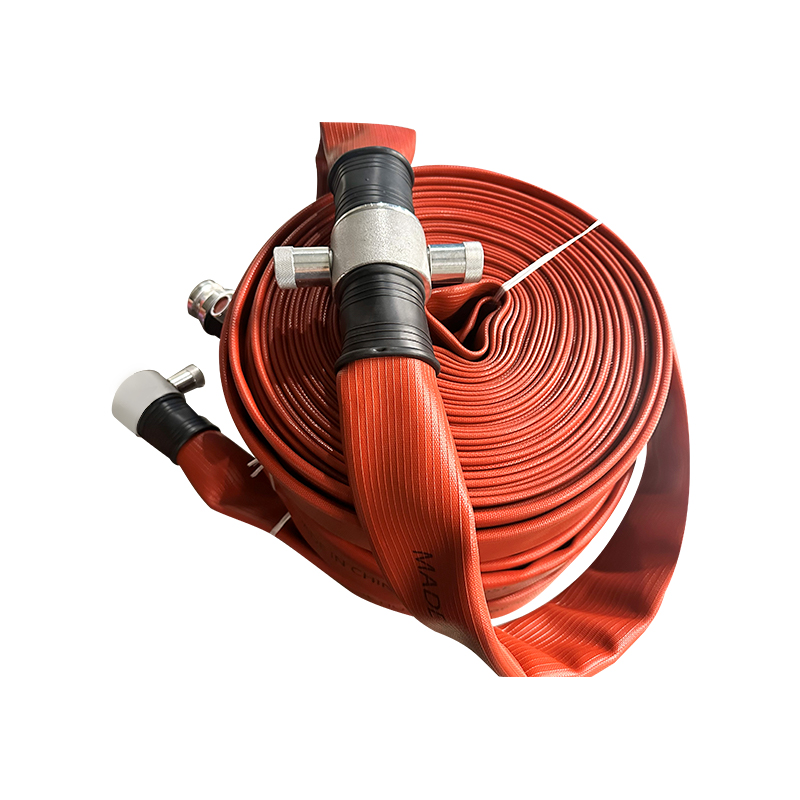
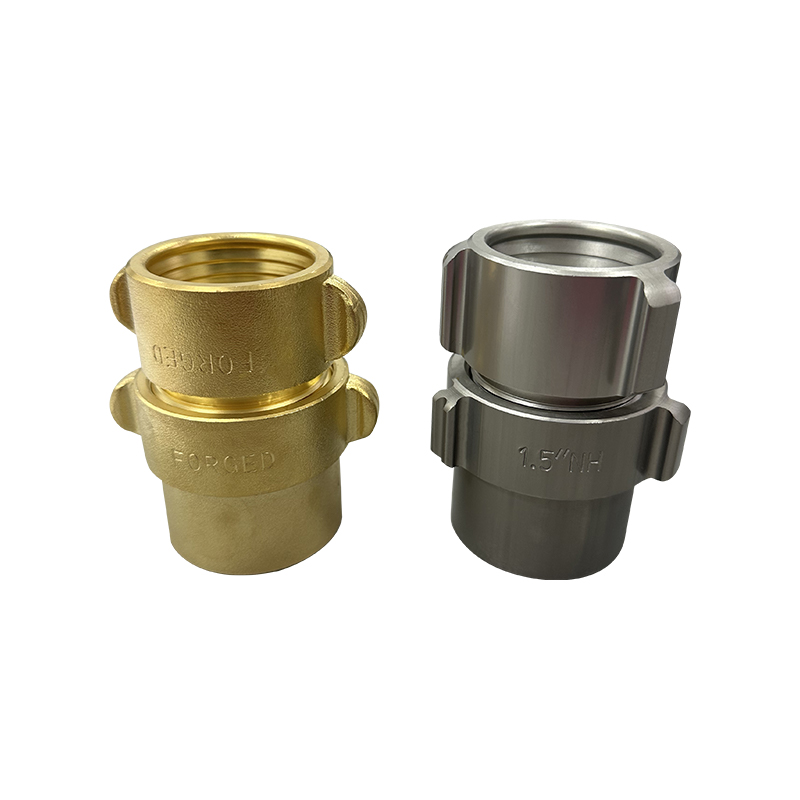
Most custom programs specify one primary coupling and one adaptor as a fallback. A factory that already machines several of these families in house avoids the usual failure mode, which is a correct hose with a coupling imported from a third party that nobody pressure-tested together. The multi-standard coupling range a supplier holds in production tells you more about its export readiness than any brochure page.
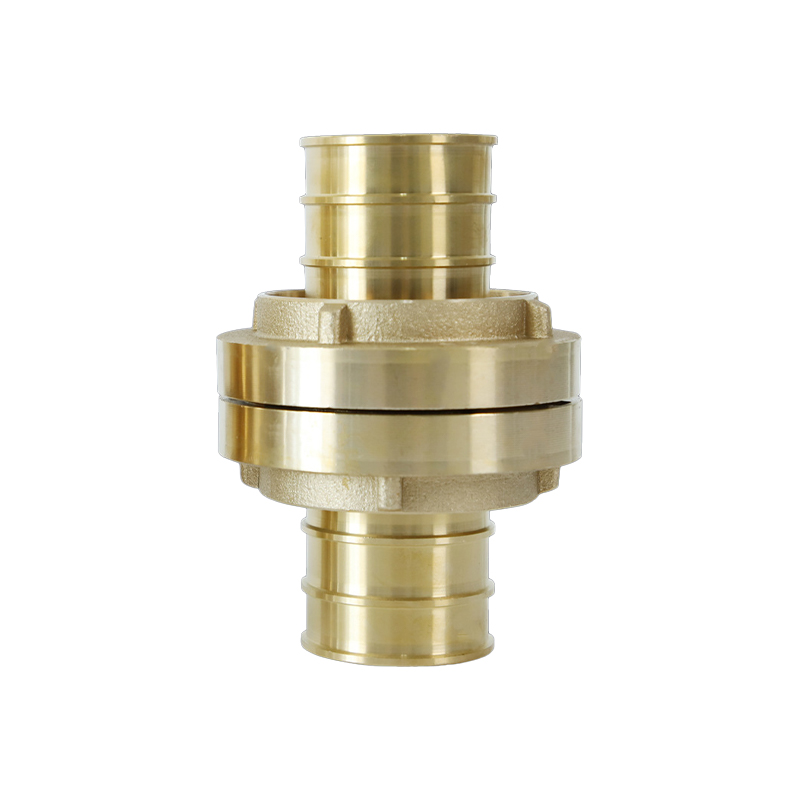 Storz Couplings and Quick-Release Camlock FittingsIndustrial Storz and camlock quick-release couplings in aluminum, stainless steel or brass, 1.5–8 in, DIN/ISO compliant; useful for assessing in-house multi-standard coupling supply.View Product →
Sampling, First-Article Approval and the Real Production Clock
A factory-direct OEM program runs seven stages, and the mass-production window alone takes 25 to 35 days for a 2,000-length order in 20 m lengths. Sampling answers arrive faster than most first-time buyers expect, because two custom lengths do not require a full production run.
Specification review, 24 to 48 hours
Bore, working pressure, coupling pattern, marking text, coil length, packaging and destination port are confirmed in writing, including the standard the hose will be tested against.
Material confirmation, 2 to 3 working days
Liner compound and jacket yarn are selected, then colour, print layout and label artwork are approved as a document rather than a verbal instruction.
Sample production, 5 to 10 working days
Two lengths are built: one ships to the buyer, one stays in the factory file so a later production run can be compared against the approved reference.
First-article testing, 2 to 3 working days
Proof test at 1.5 times working pressure held for 60 seconds, burst test against the 3:1 ratio set by NFPA 1961, and liner-to-jacket adhesion measured under EN 15889 test methods.
Buyer approval and specification lock
Once the test report and sample are signed off, the specification is frozen. Any change after this point returns the project to sample production.
Mass production, 25 to 35 working days
Extrusion, weaving, vulcanising or welding, coupling assembly and continuous print run on a single scheduled line, with batch numbers assigned at the start, not the end.
Pre-shipment inspection and documents
Batch traceability, test certificates, marking proof, packing list and container loading photographs are issued before the truck leaves for Shanghai.
Process detail from compound mixing to final coil packing is documented step by step in the factory's OEM PVC flat hose manufacturing guide, which is the fastest way to see whether a supplier controls its own extrusion and weaving or subcontracts both.
Where an ODM Platform Shortens the Critical Path
Choosing an existing platform instead of a new specification removes the tooling and first-article stages entirely, which typically cuts 10 to 15 working days from the front of a project and removes the sampling fee.
Double jacket construction for high-abrasion duty
A double jacket platform is the standard answer when a hose is dragged over concrete, gravel or rubble. The outer jacket takes the abrasion, the inner jacket holds the pressure, and the result is a hose that keeps a 3:1 burst margin while surviving handling that destroys single jacket products in a single season.
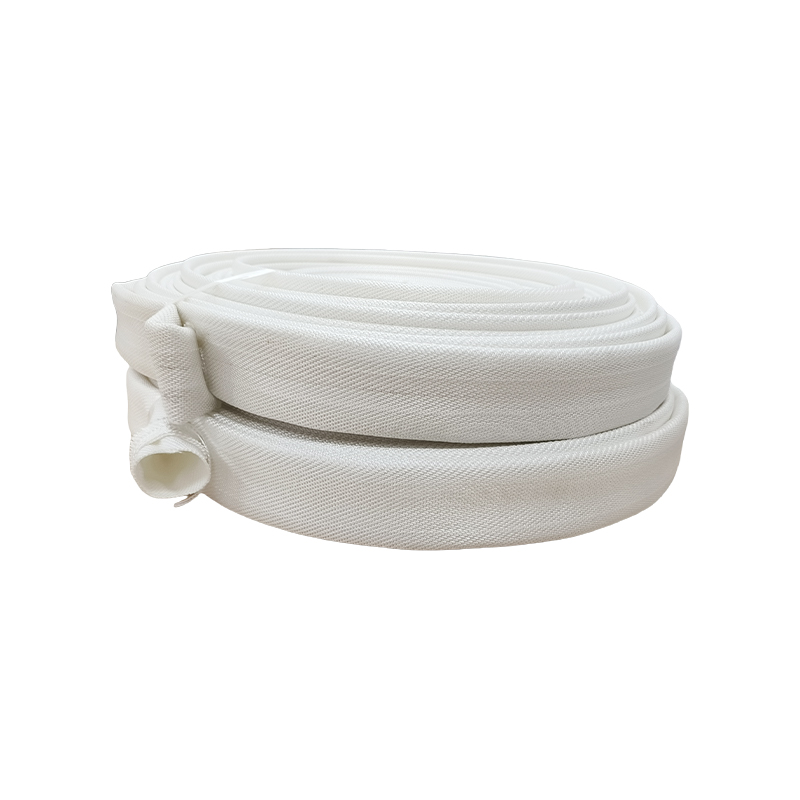 Double Jacket Oil and Chemical Resistant Fire HoseDual-layer reinforced hose with oil/chemical-resistant EPDM/NBR lining and abrasion-resistant jacket, 1.5–6 in, NFPA/EN/ISO compliant; suited to demanding industrial firefighting.View Product →
Mining dewatering platforms in 4, 6 and 8 inch
Mine sites are the clearest case for ODM purchasing. A supplier that already builds 4 in, 6 in and 8 in external dewatering hose with Storz couplings, wear-resistant covers and pressure ratings matched to high-head pumping can quote from existing tooling, which shortens delivery and keeps replacement stock identical year after year.
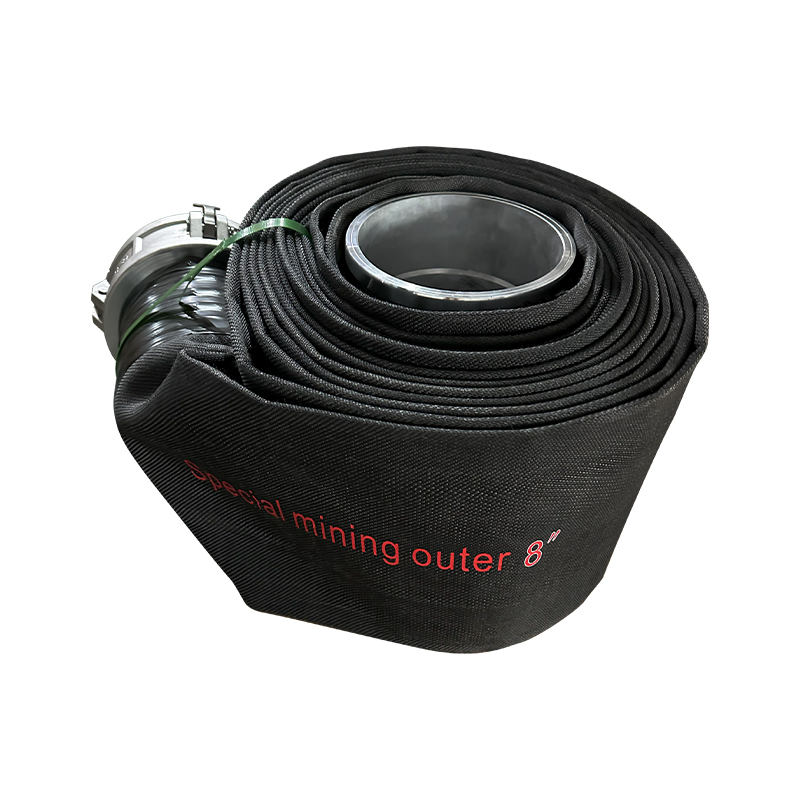 8-Inch Mining Drainage Layflat Hose with Storz ConnectorsHeavy-duty 200 mm layflat hose with DN200 Storz connectors, 10 bar working pressure and abrasion-resistant SBR cover, for high-volume mine dewatering and water transfer.View Product →
Documents and Marking That Travel With the Container
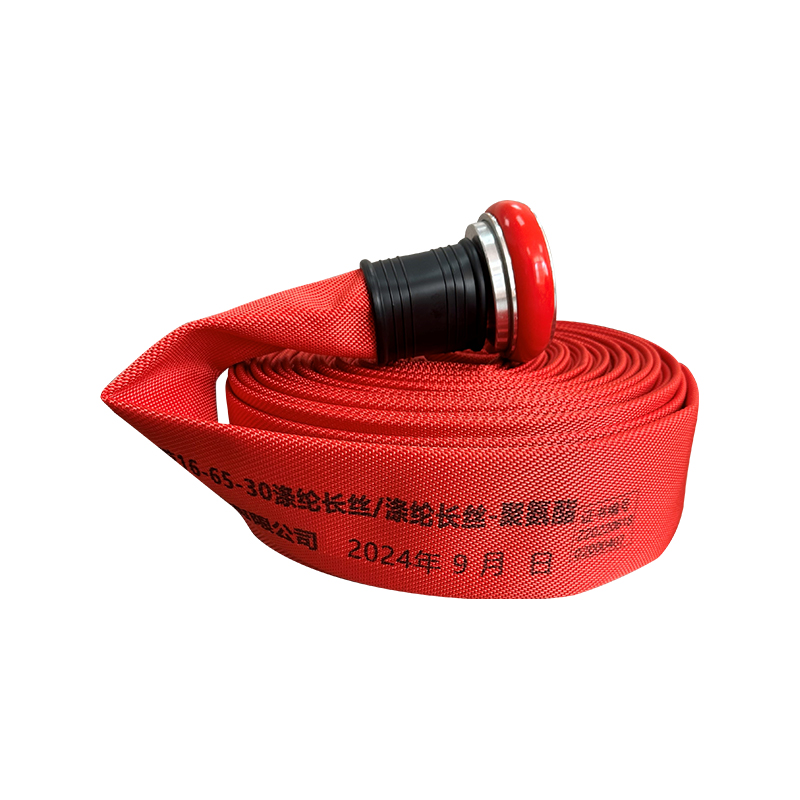
Every shipped length should carry permanent marking with the applicable standard, nominal bore, working pressure, manufacturer name and year of manufacture, and each batch needs a test record that can be traced back to it at destination.
- Batch test report covering the proof test and the burst test, referenced to the batch number printed on the hose.
- Material certificate for the liner compound and the jacket yarn.
- Marking proof and packaging artwork approval signed by the buyer.
- Certificate of origin, commercial invoice and packing list with coil diameter and gross weight per carton.
- Container loading photographs and, where required, an inspection release note.
Marking is a rejection reason, not a formality. Customs and fire authorities in Germany, the United States and Denmark check that the print on the hose matches the test report, and reprinting hose on arrival costs more than the original print ever did.
Factory-Direct Capacity and Export Logistics
A manufacturer with its own extrusion, weaving and assembly lines answers an enquiry within 12 working hours, because the pressure rating and coupling availability are checked inside the plant rather than through a third party.
Direct manufacturing plus an in-house export department means the quotation, the test file and the shipping documents come from the same organisation. Taizhou Jun'an Fire Technology Co., Ltd. exports to Germany, the United States, Denmark and more than ten further European countries, supports an Arabic-language interface for Middle East enquiries, and opens its production floor to visiting buyers, which is the only reliable way to confirm that a factory owns its vulcanising and coupling assembly lines.
Ask for the batch number format and the test report template before you ask for a price. A supplier that answers both in one email usually answers the production questions honestly too.
Questions Project Buyers Ask Before Approving a Sample
Can one supplier run OEM and ODM items in the same container?
Yes, and it is common practice. Mixing an OEM run with 3 to 5 ODM platform sizes in one 40 ft container usually costs less in freight than splitting the order, provided each item keeps its own batch number and test record.
How long does a custom fire hose sample take?
Two custom lengths are normally ready in 5 to 10 working days, with the first-article test report following 2 to 3 working days later. Samples drawn from an existing ODM platform can ship in 3 to 5 working days.
Which coupling standard should a mining project specify?
Storz handles the widest range. It is symmetric, so there is no male or female end to mismatch, and it is available from DN25 up to DN200, which covers 4 in, 6 in and 8 in external dewatering hose installed on the same site.
What pressure rating should a 2.5 in hose carry for a fixed system?
Fixed-system layflat hose built to EN 14540 is normally specified between 6 bar and 16 bar working pressure, with a burst margin of at least 3 to 1 required under NFPA 1961 for lined fire hose. Confirm the proof test pressure, not just the working pressure, in the purchase specification.
Custom fire hose programs fail on the front end far more often than on the production line. A buyer who locks the six specification variables, matches the coupling pattern to the destination market, and asks for batch traceability in the first email will find that OEM and ODM orders ship on the same schedule as catalogue stock.