en
 عربى


Content
- 1 Working Pressure and Burst Ratio: The First Two Numbers to Check
- 2 Bore and Friction Loss: Sizing the Run Before You Buy
- 3 Jacket Weave and Coating Build: What Determines Service Life
- 4 Temperature, UV and Chemical Limits
- 5 Couplings and Joints: Where Irrigation Lines Usually Fail
- 6 PVC Against Rubber and TPU: Matching the Lining to the Duty
- 7 Procurement Checklist: Documents to Request Before Ordering
A grower sizing a 100 m mainline for an 8-hectare vegetable block runs into a decision that a pump curve cannot answer on its own. Moving 30 m³/h through a 2-inch PVC flat hose costs roughly 28 m of head in friction; the same flow through a 3-inch hose costs roughly 4 m. Same water, same distance, about seven times the pumping loss. That is why PVC flat irrigation hose is bought against a specification sheet rather than against a diameter.
This guide works through the specifications that decide whether a PVC layflat hose performs in the field: working pressure and burst ratio, bore and friction loss, jacket weave and coating build, temperature and UV limits, and the coupling that ties the run together.
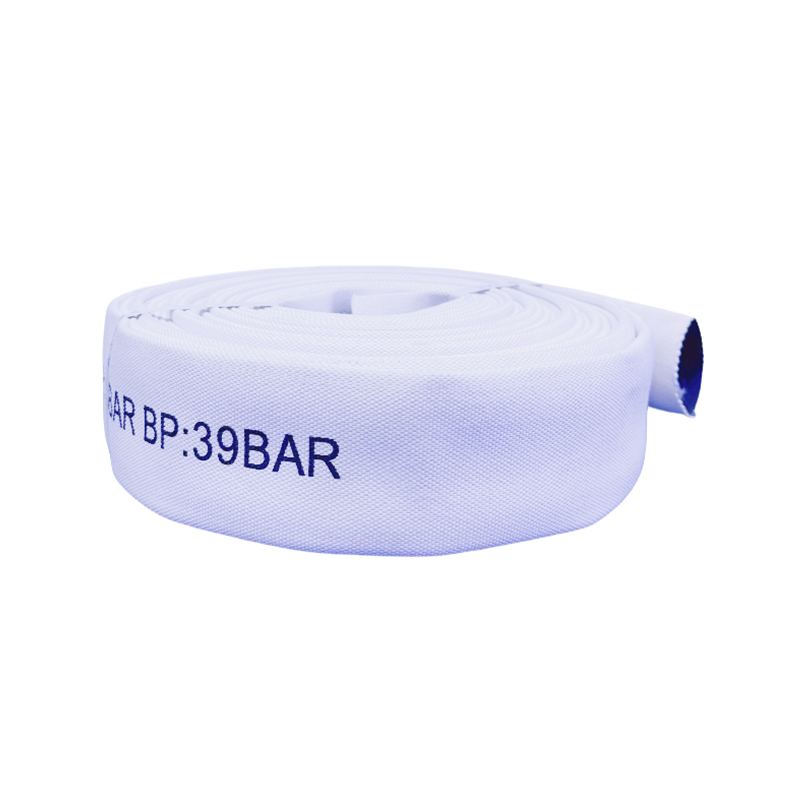
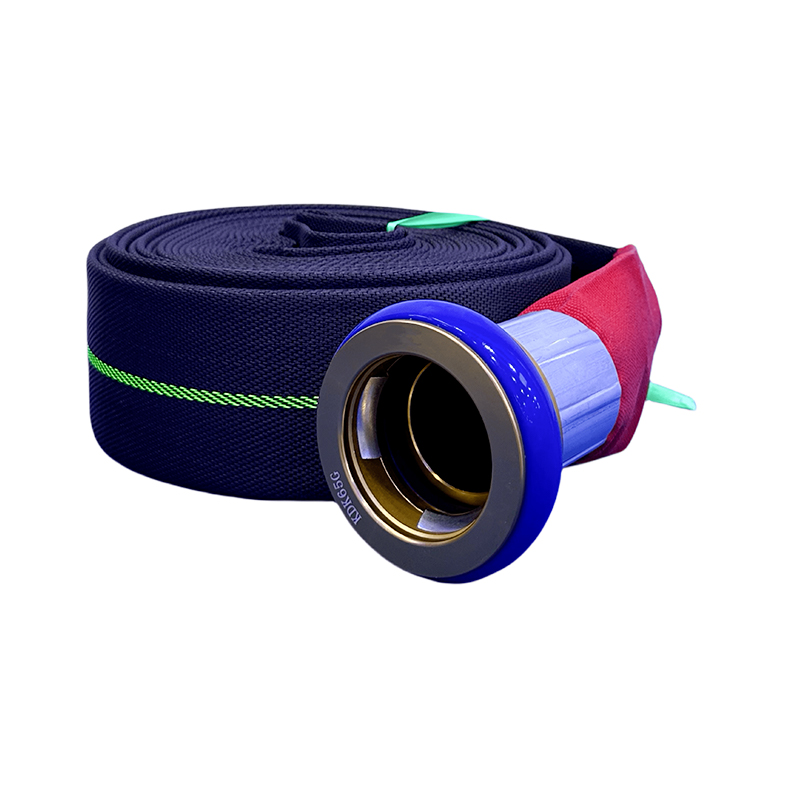
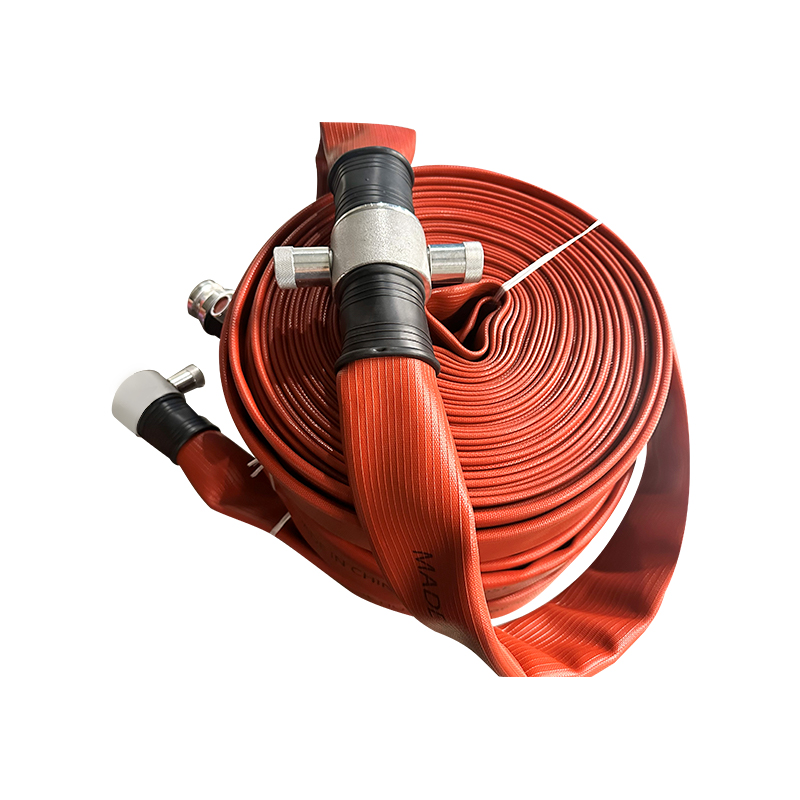
PVC flat irrigation hose, also written PVC layflat hose or PVC flat hose pipe, is a circular-woven polyester jacket coated with flexible polyvinyl chloride and supplied flattened in coils. It carries water at working pressures commonly between 2 bar and 8 bar depending on bore, rolls flat for transport and storage, and connects to pumps, filters and sprinkler lines with mechanical couplings.
Working Pressure and Burst Ratio: The First Two Numbers to Check
A PVC flat irrigation hose should always be ordered with three figures on the datasheet: working pressure, burst pressure, and the temperature at which both were measured. A burst-to-working ratio of at least 3:1 is the normal requirement for a hose that has to survive pump surges.
Working pressure is the highest continuous pressure the hose is designed to see at its rated temperature. Burst pressure is the point at which the woven jacket fails. The gap between them is the safety margin, and it is the number that matters when a pump starts against a closed valve or a hydrant is shut quickly.
Ask which test method produced the figures. ISO 1402, the standard for hydrostatic testing of rubber and plastics hose and hose assemblies, requires a defined test pressure to be held for a defined period while the assembly is checked for leakage, deformation and failure. A datasheet that quotes a burst pressure without naming the standard, the hold time and the sample length is quoting a marketing figure rather than a test result.
Temperature is the part most buyers skip. Pressure ratings are referenced to a baseline temperature, commonly 20 °C or 23 °C, and flexible PVC softens as it warms. Above roughly 40 °C the working pressure has to be derated, so request the derating table instead of assuming a straight-line fall.
Surge pressure eats the margin
Applying the Joukowsky relation with a wave speed of about 100 m/s in a flexible hose and a 2 m/s change in flow velocity gives a surge of roughly 2 bar. That single event consumes half the margin on a 4 bar hose. This is an illustrative estimate for sizing purposes, not a field measurement, but it explains why 3:1 is a floor rather than a target.
Bore and Friction Loss: Sizing the Run Before You Buy
Sizing starts from the required flow rate and an acceptable velocity, not from the pump outlet thread. For agricultural transfer lines, holding velocity between 1.5 m/s and 3 m/s keeps friction loss, surge pressure and abrasion within reason.
Head loss in a smooth hose falls roughly with bore raised to the power of 4.87 under the Hazen-Williams relation. That exponent is why one step up in diameter changes the economics of a run far more than one step up in pressure rating does.
Illustrative calculation100 m of 2-inch PVC flat hose, Hazen-Williams C = 150, flow 30 m³/h (0.0083 m³/s): head loss is about 28 m, or 2.8 bar, at a velocity of 4.1 m/s. The same flow through 3-inch hose gives about 4 m, or 0.4 bar, at 1.8 m/s. The calculation ignores fittings, elevation change and the diameter change as the hose expands under pressure, so treat it as a sizing illustration rather than a field measurement.
| Nominal bore | Typical working pressure band | Typical coil length | Typical duty |
| 1 inch / 25 mm | 6-8 bar | 50-100 m | Drip laterals, nursery lines, spray booms |
| 1.5 inch / 38 mm | 5-8 bar | 50-100 m | Sprinkler lines, short runs |
| 2 inch / 51 mm | 4-6 bar | 50-100 m | Medium mainline |
| 3 inch / 76 mm | 3-6 bar | 30-50 m | Pump discharge, field mainline |
| 4 inch / 102 mm | 2-4 bar | 30-50 m | High-volume transfer |
| 6 inch / 152 mm | 2-3 bar | 20-30 m | Bulk transfer, dewatering |
Bore also fixes the coupling size, the weight of a full coil, and how many joints a run needs. A diameter and sizing walkthrough works through the arithmetic for multi-outlet layouts where laterals branch off a single mainline.
Jacket Weave and Coating Build: What Determines Service Life
Burst strength comes from the woven jacket; service life comes from the coating. Two hoses with the same bore and the same printed pressure rating can differ widely in abrasion life depending on yarn denier, weave density and coating thickness, and none of those three numbers appear in a catalogue headline.
- Yarn denier. The linear density of the polyester yarn in warp and weft. Heavier yarn builds a denser fabric and raises the burst ceiling at a given bore.
- Weave density. Expressed as picks and ends per unit length. A tighter weave carries more load per unit of jacket area and resists abrasion longer than a loose one.
- Coating build. Jackets where PVC is embedded into the weave on both faces seal better and wear longer than surface-coated jackets at the same nominal wall thickness.
- Adhesion. The bond between coating and fabric. Poor adhesion shows up as blistering and edge delamination long before the jacket itself fails.
- Abrasion reporting. Results are quoted from a DIN abrader (ISO 4649) or a Taber abrader (ASTM D4060). The two methods are not interchangeable, so compare like with like before treating one figure as proof of superiority.
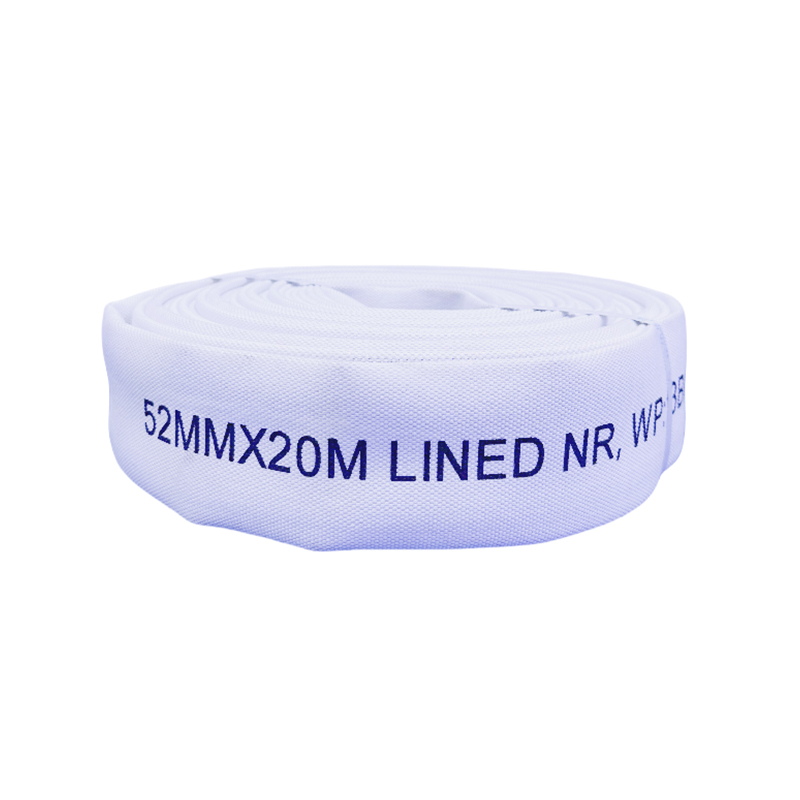 PVC-Lined Canvas Layflat Hose for Fire and IrrigationReview woven jacket construction, bonded PVC lining, 1–6 inch sizes, and pressure and temperature ratings when comparing abrasion life and service conditions.View Product →
Temperature, UV and Chemical Limits
Flexible PVC layflat hose is generally rated for continuous service between about -5 °C and +60 °C. The failures that reach a service desk happen at the ends of that band rather than in the middle of it.
- Cold. Below 0 °C the compound stiffens. Unrolling a cold hose forces the coating to flex beyond its elongation limit, and cracks start at the fold lines.
- Heat. Above roughly 40 °C the working pressure has to come down. Irrigation water drawn from a shallow pond in full sun can sit in that range.
- UV. Unstabilised PVC embrittles under sunlight. Accelerated weathering to ISO 4892-2, which exposes samples to xenon-arc light, is the usual method for comparing formulations.
- Chemicals. PVC handles most fertiliser solutions and neutral irrigation water, but concentrated acids, ketones, esters and aromatic solvents attack it. Ask for a compatibility statement for the specific product being dosed.
Cold-weather handling rule
Move a PVC flat hose to a heated space, or at least above 5 °C, for 24 hours before unrolling it in freezing conditions. Store coils flat or on a pallet, away from direct sun, and pressure-test the assembly at its working pressure before the first use of the season.
Couplings and Joints: Where Irrigation Lines Usually Fail
The hose body is rarely the first component to fail. The joint between hose and coupling is the most common leak point in field service, and it is also the easiest item to specify correctly at the ordering stage.
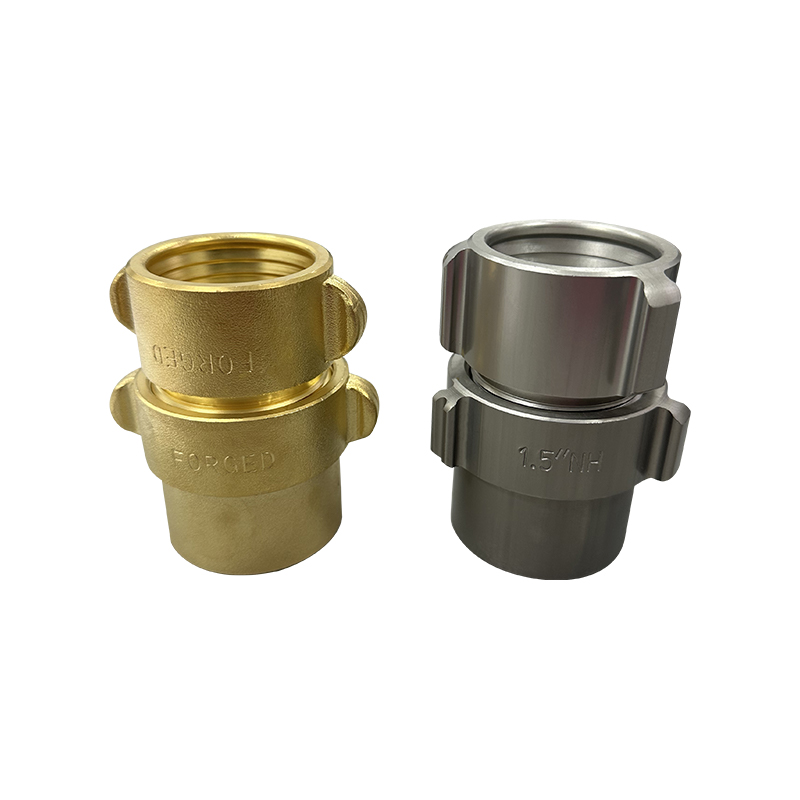
Coupling patterns are regional, and the wrong pattern is a delivery problem rather than a performance problem. Camlock fittings in A to F configurations dominate general industrial transfer in North America and the Middle East. BS instantaneous (John Morris) patterns are standard in the United Kingdom, Machino in Japan, GOST in Russia and the CIS, and Guillemin DSP and Italian patterns in France, Italy and North Africa.
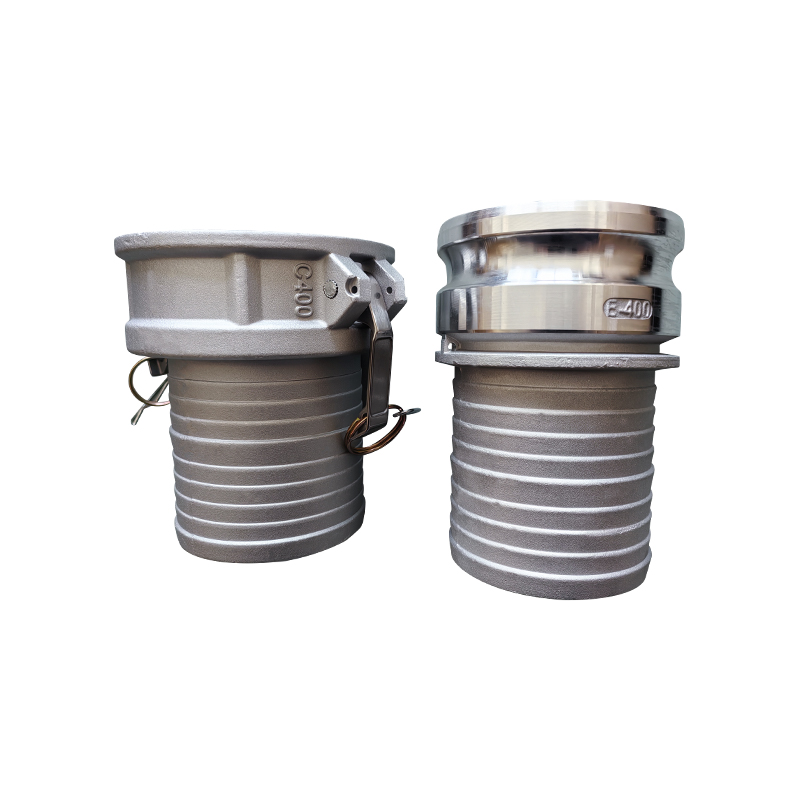 Camlock Quick-Connect Couplings for Industrial HoseCompare A–F camlock types, aluminum, brass, stainless steel, and polypropylene bodies, thread options, seals, and sizes for hose connections.View Product →
On larger mainlines, quarter-turn connections change how a crew works. Storz-pattern couplings are common on European and high-volume runs because a single operator can connect a 6-inch line in one movement without threading or tightening a clamp.
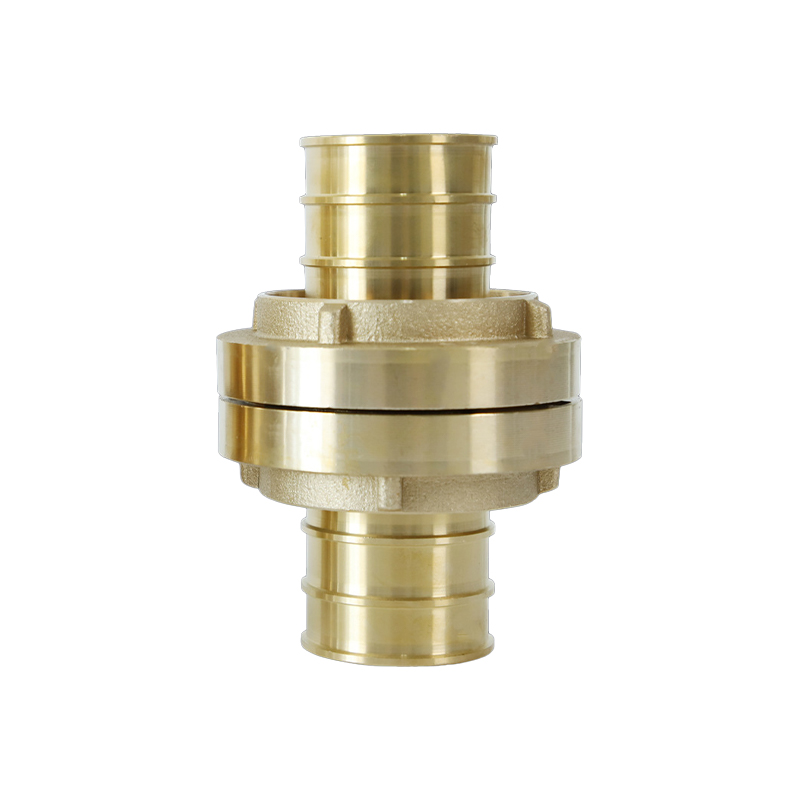 Storz Quick-Release Couplings and Camlock FittingsReview genderless Storz sizes, quarter-turn locking, gasket options, and Camlock fittings when matching assembly pressure ratings and connection patterns.View Product →
Specify the pressure rating of the assembly, which is the lower of the hose rating and the coupling rating. A 6 bar hose fitted with a 4 bar coupling is a 4 bar assembly, whatever the hose label says. Gasket material matters too: NBR is the usual choice for water, while EPDM is preferred where ozone and weathering are a factor.
PVC Against Rubber and TPU: Matching the Lining to the Duty
PVC is the default lining for agricultural water transfer because it is the lowest-cost material that still gives a smooth bore, a light coil and an adequate pressure rating. Rubber and TPU hoses cost more and earn their price only under specific conditions.
PVC
- Lowest cost per metre of the three linings
- Lightest coil for a given bore
- Smooth bore, high flow coefficient
- Limited flexibility below 0 °C
- Best for standard irrigation mains and general transfer
Rubber
- Highest abrasion resistance
- Widest service temperature range
- Heaviest coil, higher freight cost
- Highest cost per metre
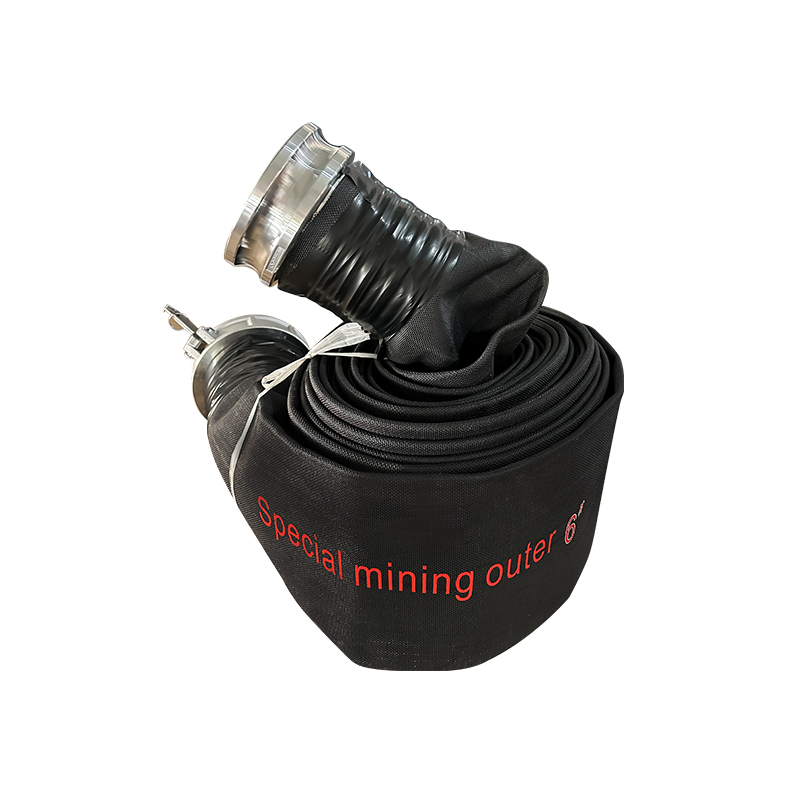
- Best for heavy-duty, mining and high-wear duty
TPU
- Good abrasion resistance at moderate weight
- Retains flexibility at low temperature
- Resists oils and fuels better than PVC
- Higher cost than PVC
- Best for cold climates and repeated handling
The decision usually comes down to two questions: how abrasive is the ground the hose will be dragged across, and how cold does the site get in the working season. If the answer to both is mild, PVC delivers the lowest total cost per hectare irrigated.
Procurement Checklist: Documents to Request Before Ordering
Six documents separate a specification from a claim. Request them with the quotation, not after the container is loaded.
- Hydrostatic test certificate citing ISO 1402, with test pressure, hold time and sample length.
- Burst pressure result and the calculated burst-to-working ratio for the exact bore being ordered.
- Material datasheet listing yarn denier, weave density, coating thickness and adhesion value.
- Temperature derating table, with the baseline temperature stated.
- Coupling drawing with assembly pressure rating, gasket material and fixing method.
- Coil length and weight tolerance, plus the nominal bore tolerance.
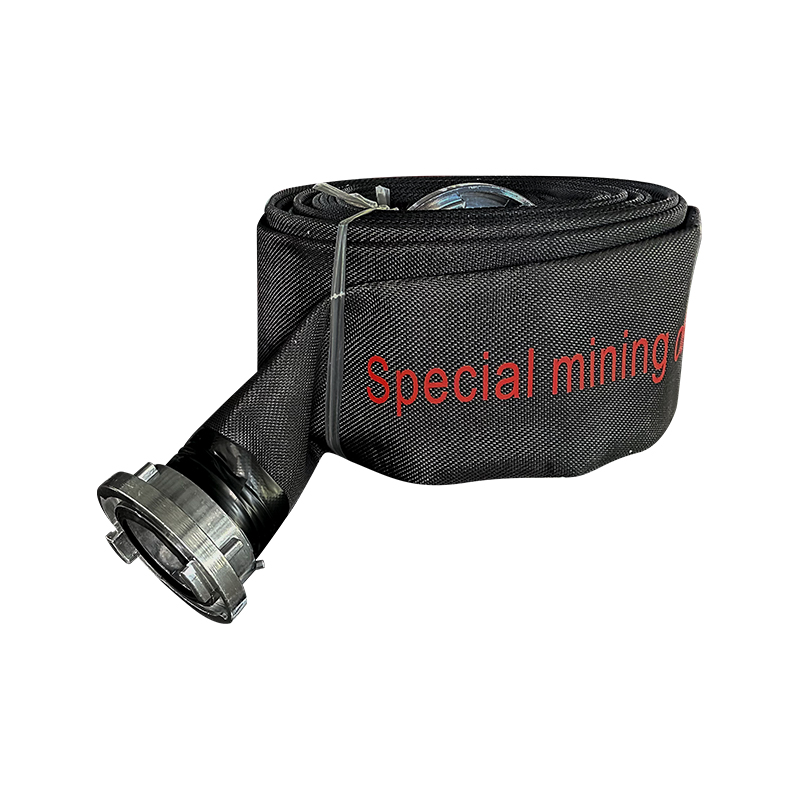
For orders where bore, pressure class and coupling pattern have to arrive matched, Taizhou Jun'an Fire Technology Co., Ltd. manufactures PVC-lined layflat hose, mining dewatering hose and multi-standard couplings in its own plant and exports directly rather than through a trading intermediary. The company states a 12-hour response to enquiries on working days and offers OEM and ODM production for buyers who supply their own sample or drawing. The full product range by bore and coupling standard is listed on the company site.
Specification discipline pays back over the life of a hose, not at the point of purchase. A hose bought on bore alone and re-bought every second season costs more than one bought against a verified pressure class, a stated weave, and a coupling that matches the rest of the system.
What working pressure should a PVC flat irrigation hose be rated for?
Match the rating to the highest pressure the hose sees in normal operation, then add margin. A pump discharge line running at 3 bar should use a hose rated at 4 bar or higher, and the burst-to-working ratio should still be at least 3:1, so a 4 bar hose should not burst below 12 bar. Agricultural PVC flat hose is sold in working pressure classes from roughly 2 bar to 8 bar, and smaller bores generally reach the higher classes at a given wall build.
How far can a PVC layflat hose run before friction loss becomes a problem?
Friction loss becomes a design problem once velocity passes about 3 m/s. In the illustrative calculation above, 100 m of 2-inch hose at 30 m³/h runs at 4.1 m/s and loses about 28 m of head, while 3-inch hose at the same flow runs at 1.8 m/s and loses about 4 m. Scaled linearly, a 300 m run of 3-inch hose loses roughly 12 m of head, which remains within the reach of a typical agricultural pump.
Is PVC layflat hose suitable for fertigation?
Yes, provided the compatibility of the specific fertiliser is confirmed. PVC handles neutral salt solutions, urea and common NPK blends, but concentrated acids used for line cleaning and some chelated micronutrient formulations attack it. Ask for a compatibility statement covering the exact products being dosed, and flush the line with clean water after each fertigation cycle.
How should PVC flat hose be stored between seasons?
Drain it, coil it without sharp bends, and store it out of direct sunlight at above 5 °C. UV exposure and plasticiser loss are the two mechanisms that age a stored PVC hose. Before the first use of the next season, inspect the jacket for cracks along the fold lines and pressure-test the assembly at its rated working pressure.