en
 عربى


Content
- 1 The Quality Pillars That Decide a PVC Flat Hose’s Real Performance
- 2 Raw Material Consistency Drives Every Other Property
- 3 Dimensional Tolerances Decide Compatibility and Coupling Fit
- 4 Liner-to-Jacket Adhesion and Reinforcement Quality
- 5 Pressure, Burst Margin, and Hydrostatic Testing
- 6 Temperature, UV, and Chemical Resistance Are Part of the Standard
- 7 What to Ask a Manufacturer Before You Confirm an Order
Two batches of PVC flat hose can look identical on the outside and behave like completely different products once water flows through them. One holds pressure on a farm irrigation line for years; the other kinks at the coupling, stiffens in winter, and delaminates after a single hot season. The difference is not appearance, branding, or packaging. It is the manufacturing quality standard applied on the production line, and in many cases, that standard was never documented at all.
For buyers, the rule is simple: never evaluate PVC layflat hose by price or appearance alone. The specification, the test method, and the acceptance limit for a handful of measurable properties tell you far more than any product photo. This article explains the quality standards that matter in PVC flat hose pipe manufacturing and how to verify them before you commit to a supplier.
The Quality Pillars That Decide a PVC Flat Hose’s Real Performance
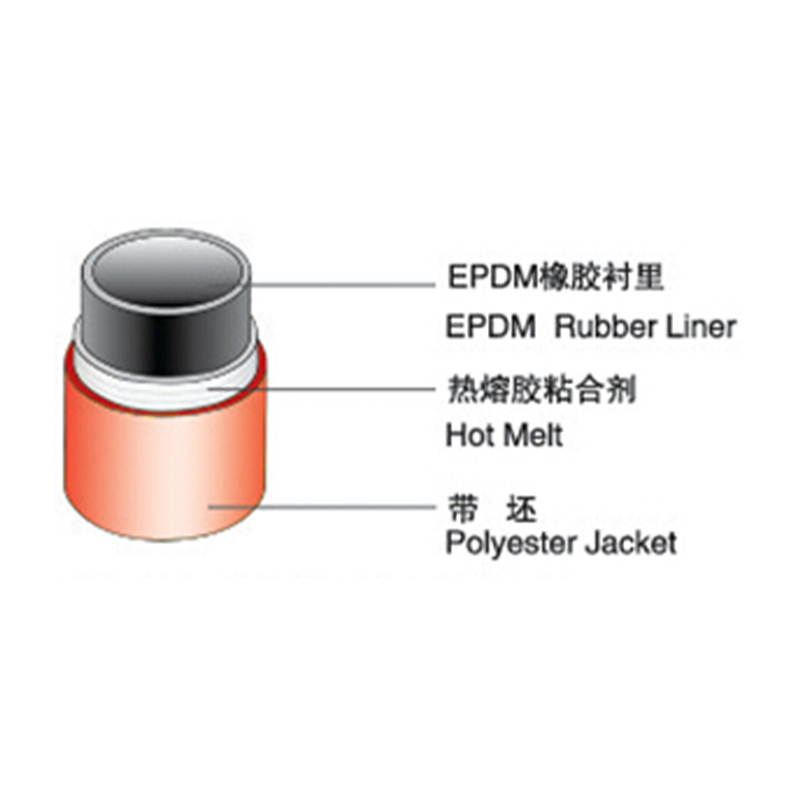
A reliable PVC flat hose is a composite structure: a PVC inner liner, a polyester reinforcing jacket, and an outer PVC layer fused into a single body. Manufacturing quality therefore reduces to four measurable areas: material consistency, dimensional accuracy, bond integrity, and pressure behaviour. Each one can be checked at the factory gate and again in your own warehouse.
| Check | Typical acceptance criterion | Why it matters |
|---|---|---|
| Wall thickness uniformity | Within +/-10% of the nominal value around the circumference | Thin spots fail first under surge pressure |
| Layflat width tolerance | Within +/-2% of the nominal flat width | Oversize or undersize hose creates poor coupling fit |
| Liner-to-jacket adhesion | Peel force above the manufacturer’s stated minimum | Prevents delamination under flexing and heat |
| Burst pressure | At least 3 times the rated working pressure | Provides a safety margin for surges and blockages |
| Hydrostatic hold | No leakage or visible bulging at 1.5 times working pressure | Confirms the full structure is sound |
| Low-temperature flexibility | No cracking after a 180-degree bend at rated low temperature | Prevents winter field failures |
The values above are typical acceptance targets used by industrial buyers rather than a single published global standard. What matters is that the manufacturer can name a target for each property, describe the test method, and show production records from recent batches.
Raw Material Consistency Drives Every Other Property
A PVC hose is only as stable as the compound that goes into the extruder. The resin, plasticizer, stabilizer, UV protection, and filler ratios determine flexibility, ageing behaviour, and resistance to cracking. Manufacturers who switch between virgin and recycled resin, or adjust plasticizer levels to save cost, produce hoses that look correct at the factory but soften in summer heat, stiffen in cold weather, or exude an oily film onto the surface after a few months of service.
- Request the material safety data sheet and the formulation data for each batch.
- Ask whether the compound formulation is fixed or subject to cost-driven changes.
- Check density and shore hardness values on the incoming resin and on finished hose samples.
- Confirm that batch numbers allow the finished hose to be traced back to the compound used.
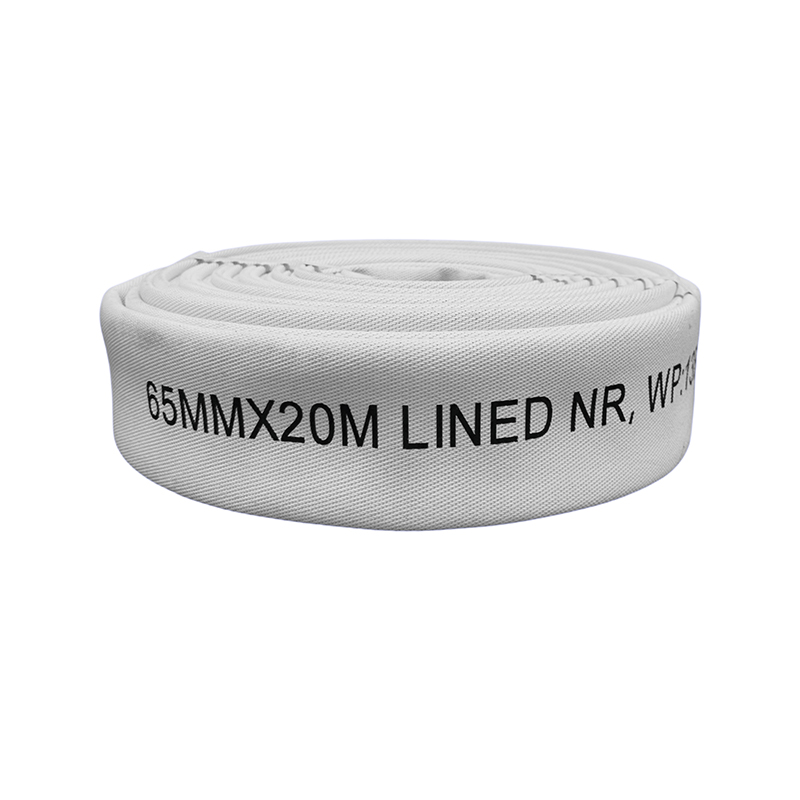
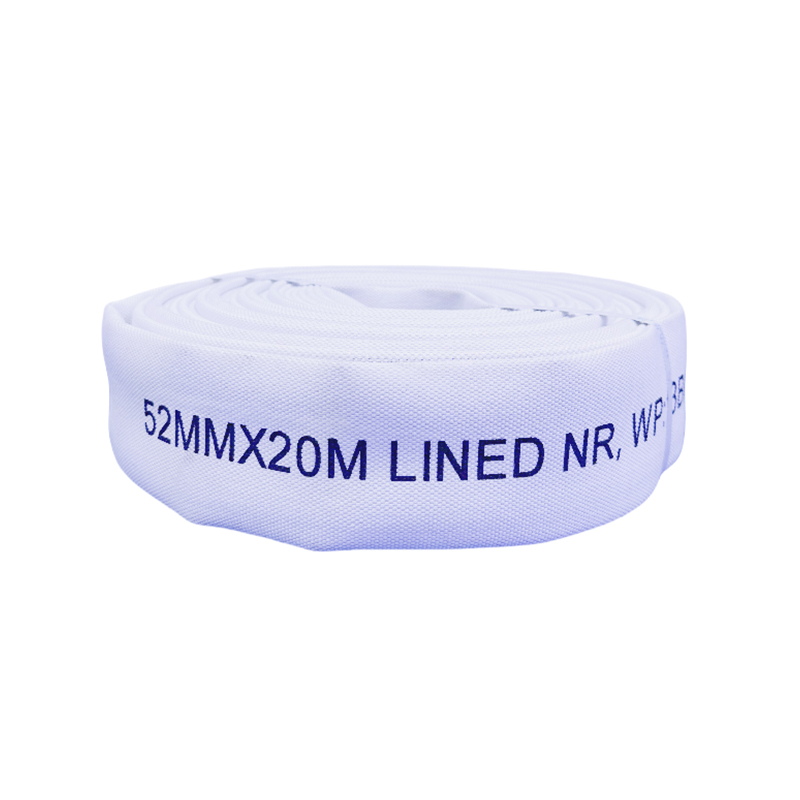
A disciplined manufacturer keeps the compound recipe fixed and tests hardness, tensile strength, and cold flexibility before extrusion begins. The payoff is consistent feel, colour, and performance across every reel. If you want to see a product built on this kind of control, inspect the construction of a PVC-lined layflat hose from a production-backed supplier.
 Wholesale Canvas Hose For Fire Extinguishing/Agricultural IrrigationTaizhou Jun'an Fire Technology Co., Ltd. Is China Wholesale Canvas Hose Suppliers, Exporter, Our Canvas Hose Is Mainly Used For Fire Figh...View Product →
Dimensional Tolerances Decide Compatibility and Coupling Fit
The most common field complaint about PVC flat hoses is not a burst failure. It is a coupling that will not fit, an irregular layflat width, or a wall that is visibly thinner on one side. These are dimensional tolerance problems, and they are also quality standard problems. A hose that passes a pressure test can still fail in service because a clamp cannot seal evenly around an oval or uneven end.
Two dimensions deserve special attention. The first is wall thickness uniformity: samples taken from the same circumference should stay within roughly +/-10% of the nominal value. The second is layflat width: the measured flat width should match the stated size closely, typically within +/-2%, so that the hose reaches its expected internal diameter when filled. A hose that is significantly wider or narrower than specified changes the flow rate and puts irregular stress on the reinforcing jacket.
Measure both with simple tools before unloading a delivery, and match the measured width to the flow and coupling size before ordering. A PVC layflat hose sizing guide explains how the flat width relates to the working diameter and helps you avoid the most common specification errors.
Liner-to-Jacket Adhesion and Reinforcement Quality
Delamination, where the liner peels away from the polyester jacket, is the clearest visible sign of a quality failure. It occurs when bonding temperatures are wrong, the liner compound is incompatible with the jacket, or the jacket weave is too loose to give the PVC a surface to grip. Once air gets between the layers, the hose bulges locally, kinks permanently, and can burst at a pressure far below its rated value.
Manufacturers evaluate bond strength with a peel test, measuring the force required to separate liner from jacket over a defined width. A typical minimum for a reinforced layflat hose is in the range of 25 to 50 N per 25 mm of width, although the exact value depends on the wall thickness and construction. Ask for the peel test result from the latest batch, and ask for a photo of the failure surface. A clean separation indicates poor bonding; a rough tear with fibres attached indicates that the bond is stronger than the surrounding material.
Also examine the reinforcing jacket itself. Polyester yarn count and weave density control burst pressure, kink resistance, and dimensional stability. A quality hose shows a tight, even weave with full contact between liner and jacket and no air pockets at the cut end.
Pressure, Burst Margin, and Hydrostatic Testing
Working pressure is a marketing figure. Burst pressure and the safety factor behind it are engineering facts. For a PVC flat hose used in water transfer and irrigation, a burst pressure of at least three times the rated working pressure is common commercial practice. That ratio should be stated in the datasheet, not assumed.
- Hold the hose at working pressure and inspect for leakage at the wall and at the couplings.
- Raise the pressure to 1.5 times working pressure and hold it while measuring any bulging or elongation.
- Continue to burst the hose on a test stand and record both the burst value and the failure location.
- Compare the result with the documented minimum and with previous batches from the same line.
Buyers should request the actual burst value from the latest batch, not just the datasheet. A hose rated at 6 bar that bursts at 12 bar has a much thinner safety margin than one that bursts at 20 bar, even when both pass the working-pressure test. If you want to understand how pressure ratings interact with capacity and ageing, the practical guidance in this article on how to choose PVC layflat hoses by pressure, capacity, and durability provides a useful selection framework.
When the application adds heavy abrasion or chemical exposure, PVC may no longer be the right liner. For pumping abrasive slurry or fluids outside PVC’s comfortable temperature range, a TPU-lined layflat hose is a more durable alternative with a different, but equally strict, quality checklist.
 Wholesale TPU Layflat Hose - Heavy Duty, Lightweight, Durable Water Hose for IrrTaizhou Jun an Fire Technology Co., Ltd Is Wholesale TPU Layflat Hose - Heavy Duty, Lightweight, Durable Water Hose for Irrigation Suppli...View Product →
Temperature, UV, and Chemical Resistance Are Part of the Standard
A PVC flat hose that sits in direct sunlight all summer will show its true quality within a season. UV stabilizers in the compound make the difference between a hose that stays flexible and one that becomes brittle and surface-cracked under the same conditions. The manufacturer should state the minimum and maximum operating temperatures for continuous service, with a typical PVC range of roughly -5 to +60 degrees Celsius, and identify the stabilizer system used.
Low-temperature flexibility is a separate test. The hose should bend 180 degrees without cracking at the rated minimum temperature, and the liner should not separate from the jacket after repeated flexing in the cold. This matters for winter construction sites, mine dewatering lines, and agricultural systems that must continue running during cold nights.
Chemical resistance should also be defined. Dilute acids, fertilizers, and common irrigation chemicals are within PVC’s normal capability, but strong solvents, hot oils, and fuels can extract plasticizer and ruin the hose. State the fluids the hose will carry, and ask the manufacturer to confirm that the compound was selected for them rather than assumed to be safe.
What to Ask a Manufacturer Before You Confirm an Order
Documentation to request
- Compound formulation data and material safety data sheet.
- Dimensional inspection records from the last three production batches.
- Hydrostatic test reports and burst pressure records.
- Liner-to-jacket adhesion peel test results.
- Batch traceability system linking finished reels to raw material lots.
- Statement of the test methods used for each claimed property.
How to verify the claims
Ask for sample lengths cut from the actual production batch, not pre-production samples made in advance. Run your own quick checks on width, wall thickness, and cut-end quality, and if the application is critical, test the hose at 1.5 times working pressure with your own couplings. If the manufacturer has a factory tour programme, use it to look at the extrusion line, the bonding process, and the test equipment. The questions above become much easier to answer when you can see the process.
Once the hose is in service, the maintenance routine matters as much as the original specification. Follow the inspection and storage rules in the PVC layflat hose uses and maintenance guide to keep a correctly made hose well within its design limits for years.
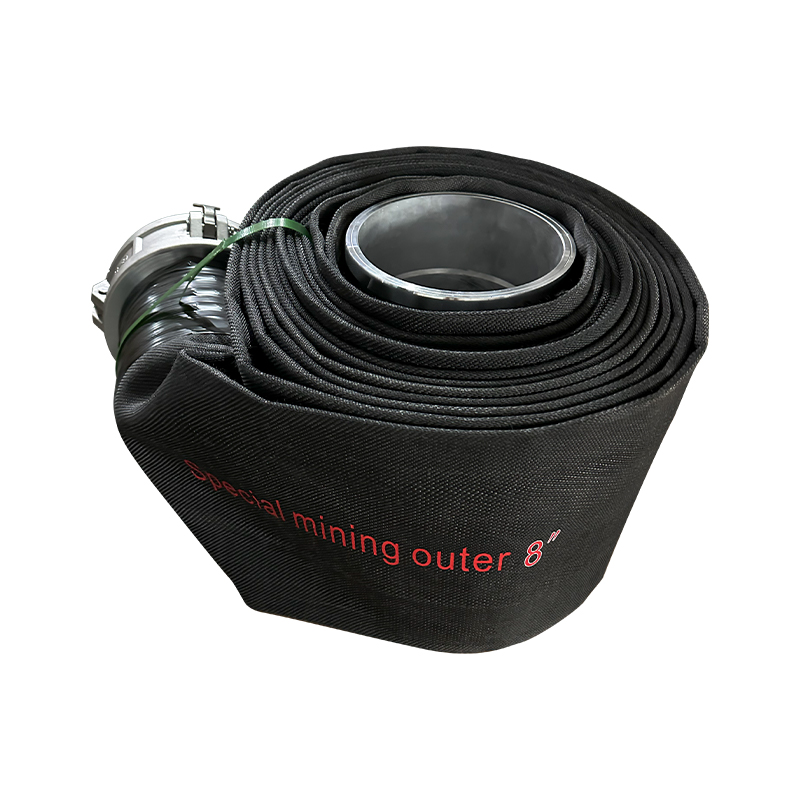
A manufacturer that can write down these standards, test against them, and show the records is a supplier worth paying for. Start your evaluation there, then compare actual products: review the full PVC layflat hose range to see how a production-backed manufacturer presents its specification from resin to finished reel.
 Custom PVC Layflat Hose Manufacturers, FactoryTaizhou Jun an Fire Technology Co., Ltd Is China PVC Layflat Hose Manufacturers and PVC Layflat Hose Factory, We Offer Custom PVC Layflat...View Product →