en
en
 عربى
عربى

Content
Two flat hoses can look identical on a warehouse shelf and perform completely differently on a job site. One rolls out flat, holds a steady 8 bar, and survives years of seasonal use on a farm. The other develops a blister near a fitting, splits along a fold line, or fails a pressure test within months. The difference is rarely the PVC resin itself. It is the manufacturing process: how the compound is prepared, how the reinforcement is applied, and how the layers are bonded together. This article explains the PVC flat hose pipe manufacturing process step by step, and it highlights the steps that decide real-world performance.
What a PVC Flat Hose Pipe Is Made Of
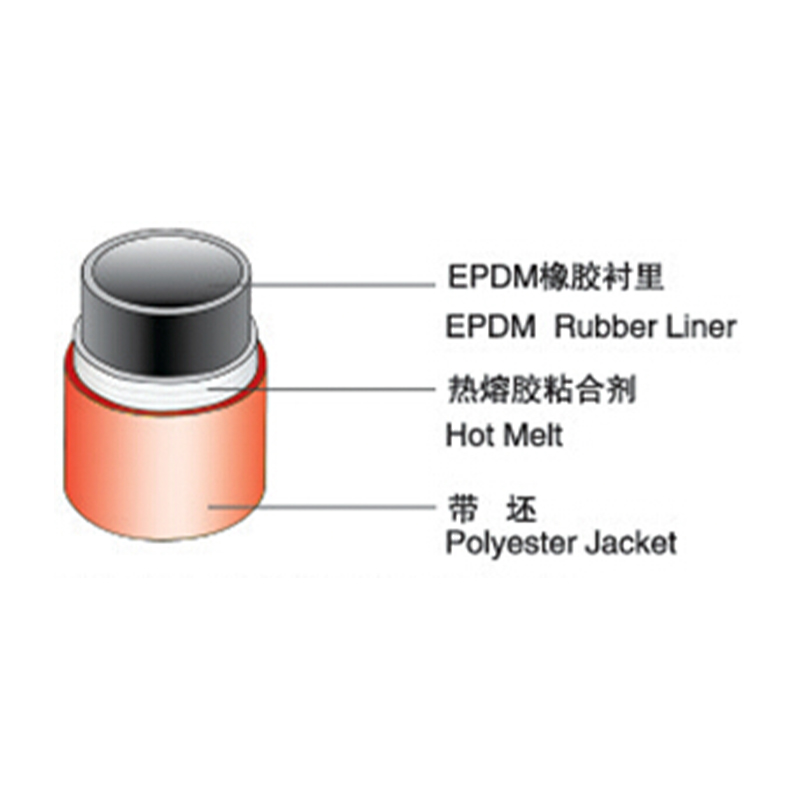
Before looking at the process, it helps to understand the construction. A PVC flat hose pipe is not a single extruded tube. It is a composite structure with three functional layers:
| Layer | Material | Function |
|---|---|---|
| Inner tube | PVC compound | Carries the fluid, provides a smooth bore and chemical resistance |
| Reinforcement | High-tenacity polyester yarn | Carries the pressure load and limits expansion |
| Outer cover | PVC compound | Protects the reinforcement from abrasion, UV, and weather |
The reinforcement layer is what separates a flat hose from an ordinary PVC tube. Under pressure, the polyester yarn carries the hoop stress and keeps the hose from ballooning. When the hose is empty, there is no rigid spiral wire, so it collapses flat and can be rolled, folded, and stored efficiently. The manufacturing process has to create a continuous, reliable bond between those layers; if any layer fails, the whole hose fails.
How PVC Flat Hose Pipes Are Manufactured
The production line runs continuously: compounded raw material goes in at one end, and finished hose comes out at the other. Each processing step controls a specific set of properties in the final product.
Raw Material Preparation and Compounding
PVC resin arrives as a dry powder. It cannot be extruded into a flexible hose on its own, so the manufacturer blends it with plasticizers, heat stabilizers, lubricants, UV stabilizers, and pigments. The blend is mixed in a high-speed mixer until it reaches a defined temperature, then cooled into a dry blend that is fed to the extruder.
The compound formulation is not just a recipe; it is a set of trade-offs. More plasticizer improves low-temperature flexibility but reduces resistance to hot water. The stabilizer system affects long-term heat aging and color stability. A lean, cost-optimized compound may lower the selling price, but the hose will harden in sunlight, age faster, and become brittle in cold weather. Buyers who plan to use the hose outdoors or in cold climates should ask whether the compound includes adequate UV and low-temperature stabilization.
Inner Tube Extrusion
The dry blend is melted in a single-screw extruder and forced through an annular die to form the inner tube. Extrusion temperature typically sits in the range of 160 to 180°C, depending on the formulation. Wall thickness is controlled by the die gap, screw speed, and line speed.
Two defects matter most at this stage: pinholes and uneven wall thickness. A pinhole may not leak immediately, but it creates a weak point that can burst under pressure. Uneven wall thickness produces thin zones that fatigue faster than the rest of the hose. A controlled production line monitors wall thickness continuously and rejects out-of-tolerance material before it becomes a finished product.
Reinforcement Weaving
The inner tube then passes through a circular knitting or weaving machine that wraps high-tenacity polyester yarn around it. Yarn count, tension, and stitch or weave density determine the burst pressure and flexibility of the finished hose. This is the most important structural step in the process.
Uneven yarn tension creates weak spots where the reinforcement carries less load. A hose can pass visual inspection and still fail early if the yarn was laid inconsistently. That is why the weaving step demands the same level of control as extrusion itself.
Outer Cover Extrusion
A second extruder applies the outer PVC layer over the reinforced inner tube. The outer melt is forced through the gaps in the yarn mesh and fuses with the inner layer, encapsulating the reinforcement in a single composite wall.
Layer adhesion is decided at this station. If the outer compound is too cold, or its formulation is not compatible with the inner layer, the cover will separate from the reinforcement under flexing or pressure. Delamination is one of the most common field failures in low-cost PVC flat hoses, and it is typically a defect built in when the outer cover was applied.
Cooling, Printing, and Cutting
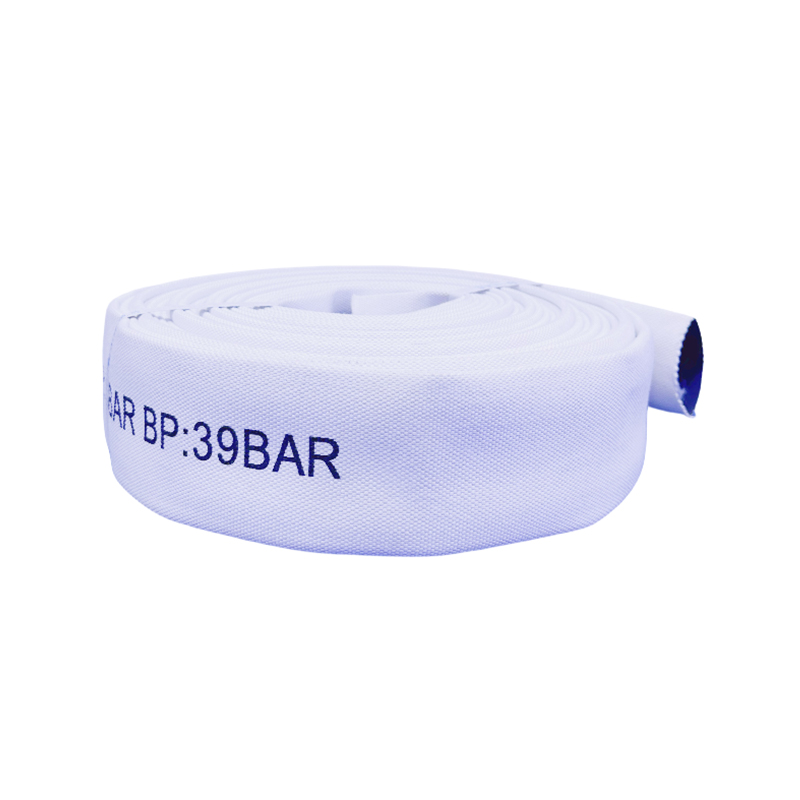
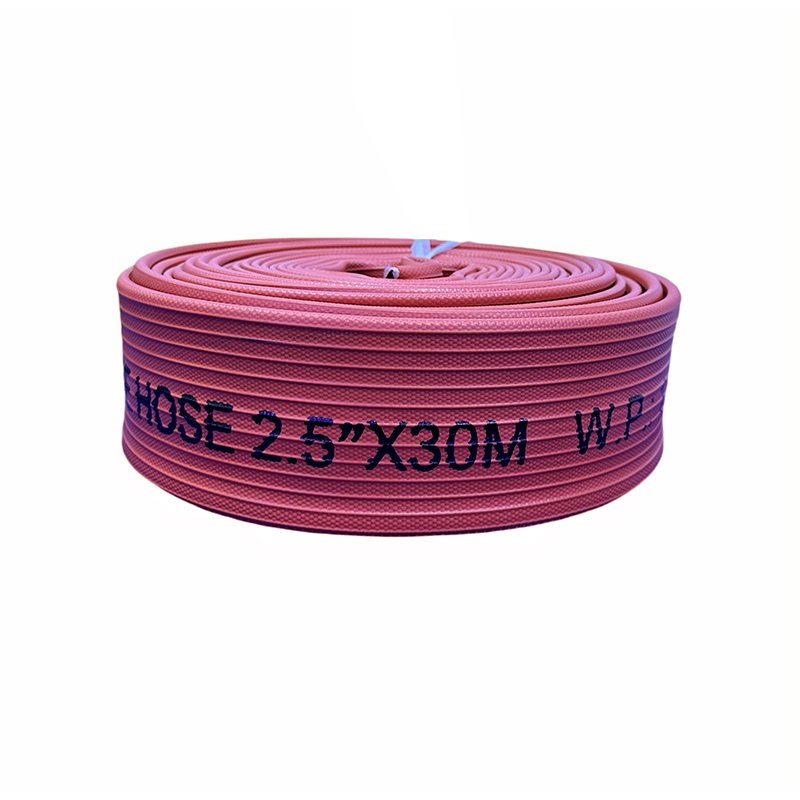
Once the outer cover is applied, the continuous hose passes through water baths that cool it and lock in the final dimensions. Marking is applied by inkjet or printing rollers, usually showing nominal diameter, working pressure, test pressure, standard, and production date. Automatic cutting and coiling systems then trim the hose into standard lengths, typically 20, 50, or 100 meters, and pack it for shipment.
Marking quality matters more than it appears. It is the buyer's quick reference on site for whether a hose is rated for the intended pressure. A manufacturer that applies clear, durable, accurate markings is also more likely to maintain traceability throughout the process.
Coupling and End-Fitting Assembly
Many PVC flat hose pipes are supplied with couplings, and this station is where a large share of field failures originate. The hose is pushed over the tailpiece of the coupling, and a collar is crimped, swaged, or clamped into place. If the crimp diameter is too small, the reinforcement is cut; if it is too large, the coupling pulls off under pressure.
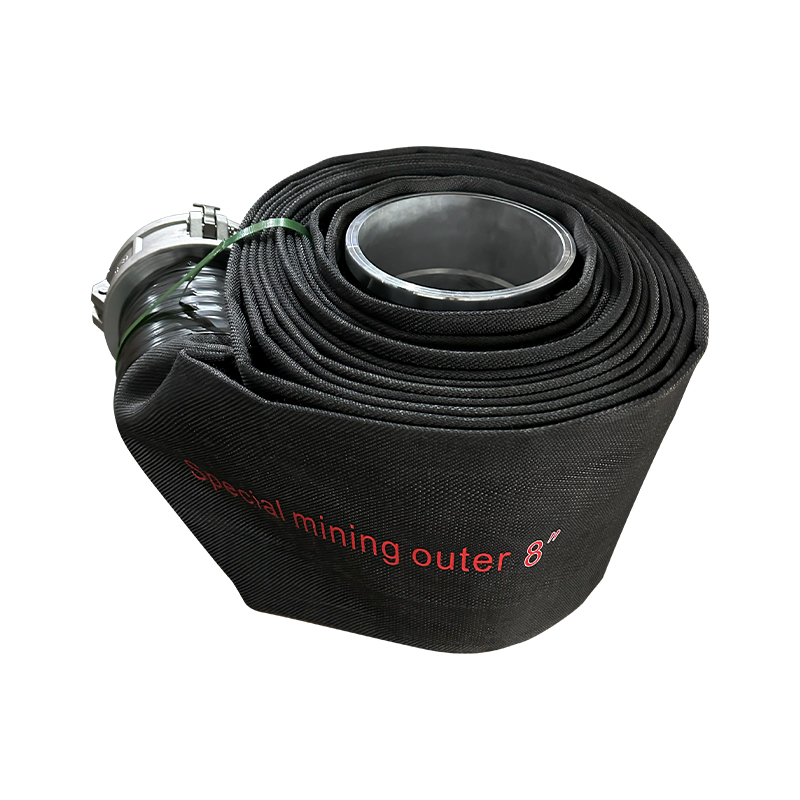
The process has to match the fitting to the hose construction. Storz couplings are common in fire service and industrial water transfer, while camlock and threaded types appear in agricultural and construction work. In mining service, where the hose is repeatedly connected and disconnected on site, the fitting spec is even more critical; that is why our mining-grade flat hoses with Storz connectors are built with a matched crimp specification and tested as complete assemblies.
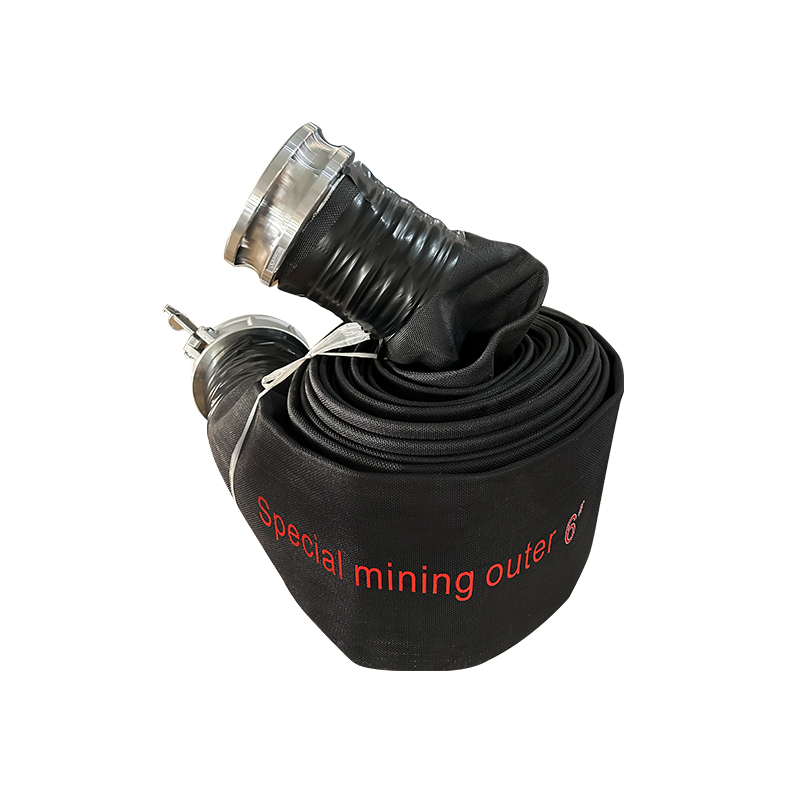 Wholesale 6-Inch Wear-Resistant Flat Hose With Storz Connector For Mining-Grade Taizhou Jun an Fire Technology Co., Ltd Is Wholesale 6-Inch Wear-Resistant Flat Hose With Storz Connector For Mining-Grade External Drain...View Product →
Quality Control and Testing
Finished PVC flat hose pipes should not leave the factory without verification. In-process checks cover wall thickness, diameter, and appearance, while final tests simulate the conditions that cause field failures. The table below lists the tests that a competent manufacturer runs on production batches.
| Test | What it verifies | Typical expectation |
|---|---|---|
| Dimensional inspection | Internal diameter, wall thickness, flat width | Values within declared tolerance |
| Hydrostatic proof test | Leak-tightness under pressure | Held at 1.5x working pressure without leakage |
| Burst pressure test | Maximum pressure before failure | Burst at about 3-4x rated working pressure |
| Adhesion test | Bond strength between layers | No separation at the specified peel force |
| Visual and UV check | Surface quality, color uniformity, UV resistance | No blisters, cracks, or uneven color |
These tests are not optional paperwork. When a supplier can share actual test reports, they are demonstrating that the process is stable. When they cannot, the hose is a black box: the buyer will only find out what is inside after the hose is in service. For a practical overview of how these test results translate into daily performance, see our guide to PVC layflat hose uses, comparisons, and maintenance.
What the Manufacturing Process Means for Buyers
The manufacturing process is also a purchasing criterion. Two hoses can have the same printed working pressure and very different service lives, because one process is controlled and the other is not. When evaluating a supplier, focus on the variables that the process controls:
- Compounding control. In-house compounding gives you traceability and the ability to adjust the formulation for OEM and ODM projects. A supplier that buys ready-made compound cannot answer detailed material questions.
- Reinforcement consistency. Ask for an actual burst test report rather than a brochure value. Yarn density and tension decide whether the rated pressure is real.
- Layer adhesion evidence. Delamination is the most common field failure in flat hoses. A peel or adhesion test result tells you whether the layers are actually bonded.
- Coupling quality. Most leak claims start at the fitting. Check whether assembled hoses are proof-tested before shipment.
- Factory ownership. A direct manufacturer can answer process questions and make changes much faster than a trading company that relabels imported goods.
For standard irrigation and general water transfer, a well-made PVC flat hose remains the most cost-effective option. If you are sourcing a dependable hose for general duty, a properly built PVC lined layflat hose will handle years of service at a fraction of the cost of specialty materials.
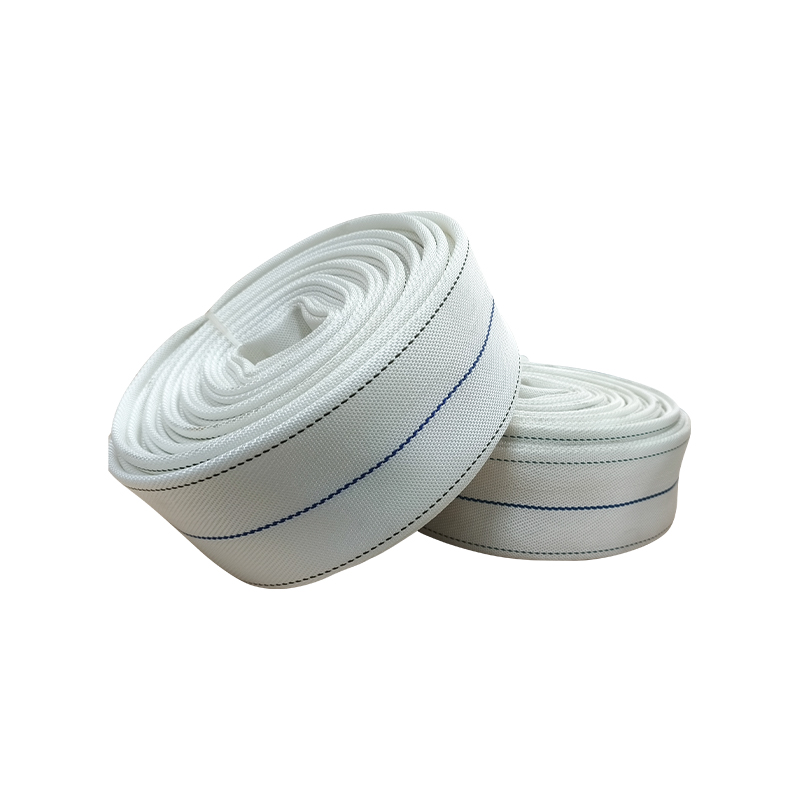
 Wholesale Canvas Hose For Fire Extinguishing/Agricultural IrrigationTaizhou Jun'an Fire Technology Co., Ltd. Is China Wholesale Canvas Hose Suppliers, Exporter, Our Canvas Hose Is Mainly Used For Fire Figh...View Product →
| Parameter | PVC flat hose | TPU flat hose |
|---|---|---|
| Base material | PVC resin with plasticizers and stabilizers | Thermoplastic polyurethane |
| Extrusion temperature | Approx. 160-180°C | Approx. 180-220°C |
| Low-temperature flexibility | Moderate | Better |
| Abrasion resistance | Good | High |
| Typical applications | Irrigation, general water transfer, fire hoses | Mining, industrial transfer, high-wear service |
When the application involves sharp rocks, constant dragging, or cold weather, a TPU lined layflat hose is usually worth the higher cost. The reinforcement and bonding steps follow the same logic in both materials; only the compound and processing window change.
 Wholesale TPU Layflat Hose - Heavy Duty, Lightweight, Durable Water Hose for IrrTaizhou Jun an Fire Technology Co., Ltd Is Wholesale TPU Layflat Hose - Heavy Duty, Lightweight, Durable Water Hose for Irrigation Suppli...View Product →
Choosing the right diameter matters as much as the material. An oversized hose is unnecessarily heavy and expensive, while an undersized one causes excessive pressure loss. Use our PVC layflat hose sizing guide to match the bore to your flow rate and pump output.
Finally, look at the application from a maintenance perspective. A hose that is easy to inspect, store flat, and reconnect season after season will lower total operating cost. This is the main reason layflat hoses are widely used in agricultural irrigation and in temporary water transfer: the same manufacturing process that makes them strong under pressure also makes them compact when not in use. Understanding how the hose is built gives you a practical basis for comparing suppliers, judging test reports, and avoiding the failures that show up only after the hose is in the field.