en
en
 عربى
عربى

Content
- 1 Why PVC Flat Hose Pipe Fixes a Real Flow Problem
- 2 What Makes a PVC Flat Hose Pipe Different
- 3 How Flow Efficiency Is Measured and Lost
- 4 Design Details That Improve Water Flow
- 5 Field Performance in Firefighting, Irrigation, and Dewatering
- 6 How to Select a PVC Flat Hose Pipe for Maximum Flow Efficiency
- 7 Conclusion
Why PVC Flat Hose Pipe Fixes a Real Flow Problem
An irrigation pump discharges through a 100-meter run of traditional round hose. The pump is rated for 500 liters per minute, yet the sprinklers at the far end barely produce a working stream. The cause is often not a weak pump, but the hose itself: internal friction, sagging loops, and sharp bends all consume pressure. PVC flat hose pipe solves this problem in a straightforward way.
By design, PVC flat hose pipe improves water flow efficiency because it maintains a smooth, round internal bore when under pressure, reduces frictional resistance, and eliminates kink points that create turbulence. These three characteristics are what make it a standard choice for firefighting, irrigation, and dewatering.
What Makes a PVC Flat Hose Pipe Different
Flat Storage, Round Flow Path
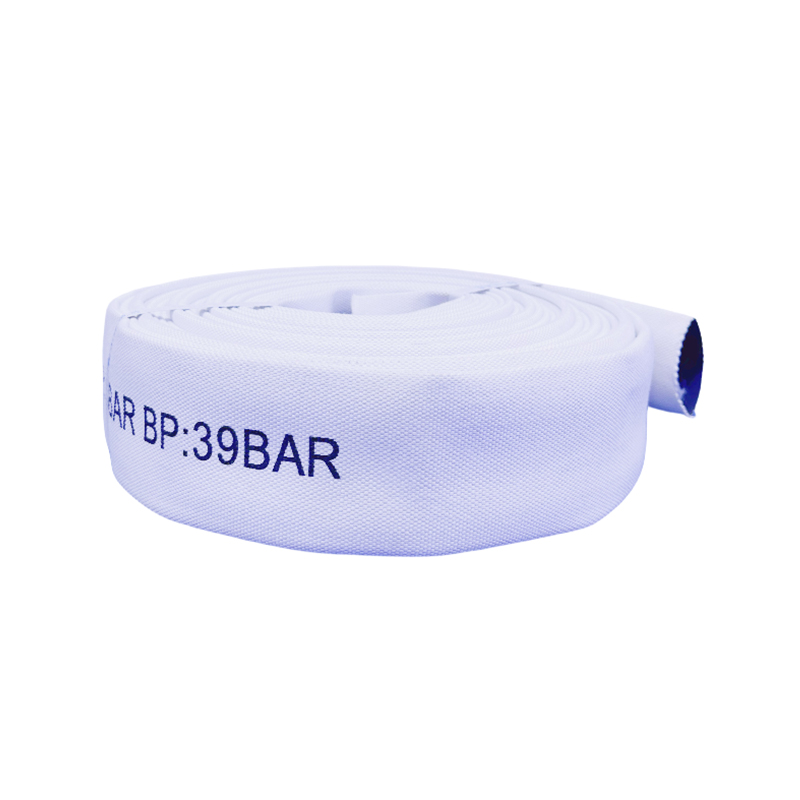
A layflat hose is manufactured with a flat profile and expands to a circular cross-section only when water enters it. This gives it a decisive advantage over conventional rubber hose: it stores in a compact roll, deploys quickly, and does not maintain a fixed circular shape that can flatten under its own weight. The change from flat to round is not cosmetic; it means that under normal operating pressure, the hose will hold a full bore rather than an oval or collapsed shape.
Smooth Inner Wall and Reinforced Body
Most PVC flat hoses are built with a smooth polyester or fiber reinforcement sandwiched between layers of PVC. The smooth inner wall directly lowers the friction factor in the hydraulic equation. Less surface roughness means lower frictional resistance, which translates to a higher flow rate at the same pump pressure or a lower energy requirement for the same flow. When you select the PVC-lined layflat hose, you get an inner liner that remains smooth even after repeated coiling and uncoiling.
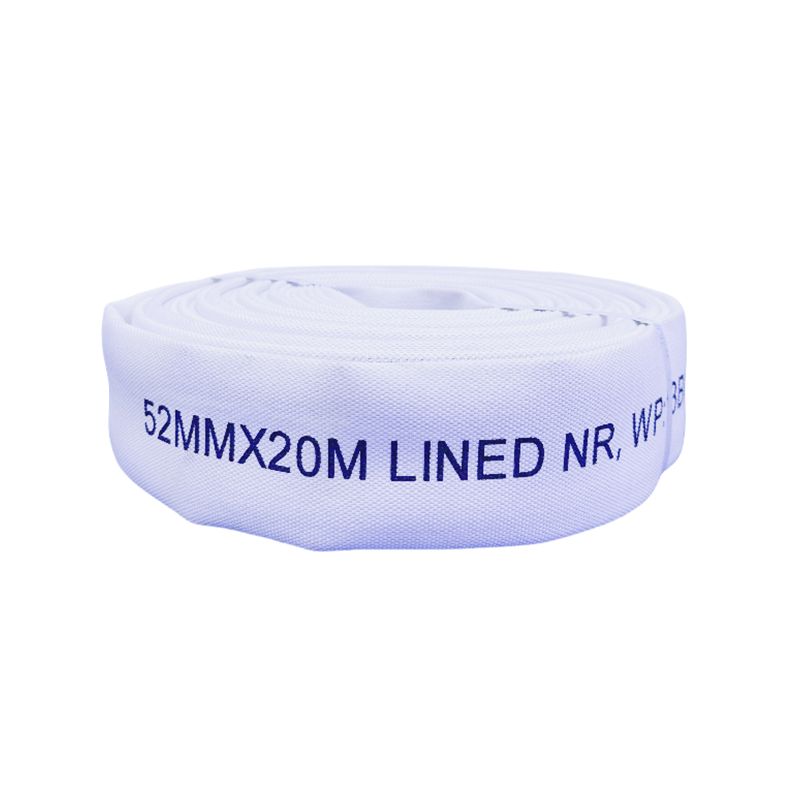 Wholesale Canvas Hose For Fire Extinguishing/Agricultural IrrigationTaizhou Jun'an Fire Technology Co., Ltd. Is China Wholesale Canvas Hose Suppliers, Exporter, Our Canvas Hose Is Mainly Used For Fire Figh...View Product →
How Flow Efficiency Is Measured and Lost
Flow efficiency in any pipe is controlled by pressure loss, which is the energy taken away from the water as it travels. In a hose, pressure loss comes from three main sources: friction against the inner wall, local turbulence at fittings and bends, and the energy needed to lift or accelerate the water. A pressure drop reduces the usable flow at the discharge point.
Friction Loss in a Hose
Friction loss is directly influenced by the inner surface condition and the hose diameter. A rough liner creates higher friction, while a smooth PVC surface keeps the boundary layer thin. The hose bore diameter is even more important because flow area scales with the square of the diameter. For example, moving from a 2-inch hose to a 3-inch hose more than doubles the cross-sectional area. In practice, upsizing an undersized layflat hose often restores the flow that a pump should deliver.
The Impact of Diameter and Fittings
Reducing the diameter at a coupling, or using a fitting with a narrow internal bore, acts like a choke. The water accelerates locally, creates swirls, and loses pressure. This is why matching the full inner diameter of the hose to the pump outlet and to the discharge fitting matters as much as the hose itself. Even a small step down in diameter can produce a measurable flow reduction over long discharge lines.
| Factor | Effect on flow efficiency | Practical recommendation |
|---|---|---|
| Inner wall smoothness | Smooth PVC reduces friction loss | Select a hose with a non-porous inner liner |
| Bore diameter | Larger bore raises flow capacity | Match or exceed the pump discharge diameter |
| Kink resistance | Kinks create turbulence and block flow | Use a reinforced layflat hose and avoid sharp bends |
| Couplings and fittings | Reduced bore at fittings causes local pressure loss | Use full-bore couplings that match the hose ID |
Design Details That Improve Water Flow
Choose the Correct Inner Diameter
Do not downsize the hose to save cost. At a fixed pump pressure, flow capacity drops sharply as diameter decreases. The rule of thumb in field operations is to keep the layflat hose one size larger than the pump discharge when the discharge line is long. This keeps the velocity lower, which reduces friction loss and leaves more pressure at the nozzle.
Match Couplings to the Full Bore
Couplings are a common source of hidden flow loss. Many standard fittings have internal collars or recesses that reduce the effective bore. A full-bore coupling, such as Storz couplings, allows water to pass through the same internal diameter as the hose itself. Storz connections are widely used in fire and industrial applications because their large, smooth internal profile does not restrict flow and their lug design allows quick, secure connection without tools.
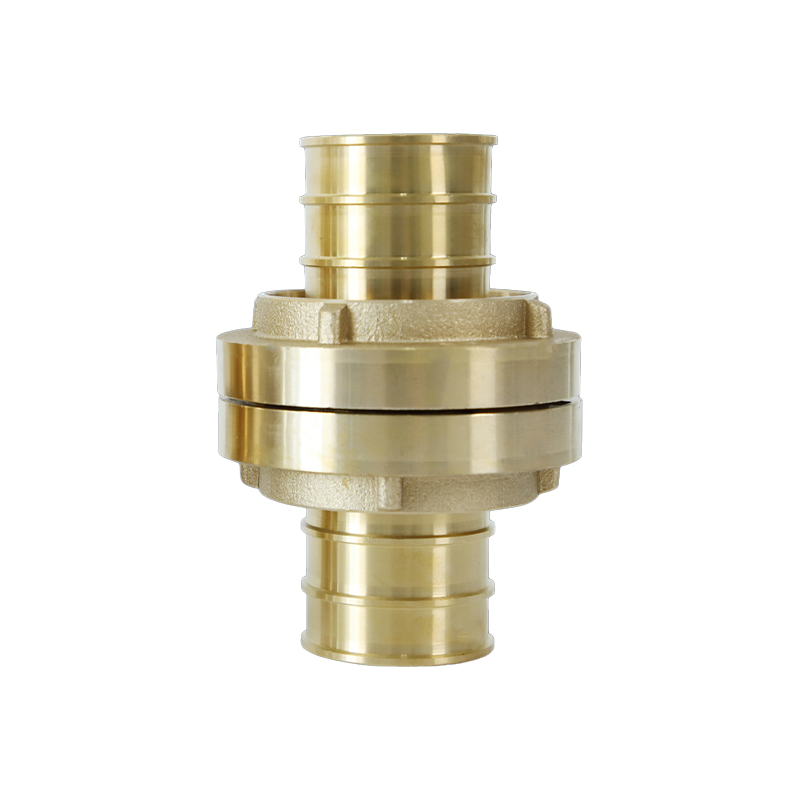 Wholesale Storz Couplings Fire Hose Connector Quick Release Camlock Fittings IndTaizhou Jun an Fire Technology Co., Ltd Is Wholesale Storz Couplings Fire Hose Connector Quick Release Camlock Fittings Industrial Suppli...View Product →
Avoid Sharp Bends
When laying out a PVC flat hose, avoid dragging it over sharp edges. Use a transition sleeve or hose ramp where the line crosses a road. A gradual bend radius of at least ten times the hose diameter prevents the inner wall from collapsing at the bend. The exact radius depends on pressure and construction, but the principle is simple: any bend that forces the hose into an oval shape reduces the effective bore and increases turbulence. In long runs, support the hose on a flat surface and avoid suspending it in a way that creates weight stresses on couplings.
Field Performance in Firefighting, Irrigation, and Dewatering
Irrigation: Consistent Delivery Without Overhead
For row crops and greenhouse irrigation, PVC layflat hose is often supplied from a centrifugal pump or a distant water source. The hose's light weight makes it easy to reposition between fields, and the low friction inner wall allows an even supply along the full length. When laid flat and drained, the hose does not trap water, which reduces the risk of algae growth and damage from freezing in colder months.
Firefighting and Emergency Response
Fire crews value PVC layflat hose because it deploys quickly from a shoulder load or reel. A smooth bore and stable diameter maintain nozzle pressure over a long stretch. The lack of kinking is not a convenience feature; a kink in a fire line can cut flow by more than half and makes the nozzle almost impossible to operate safely. The same principle applies to municipal and industrial fire suppression work. For more context on how layflat hoses behave under pressure, see this layflat water hose pressure and durability guide.
Mine Dewatering and Construction
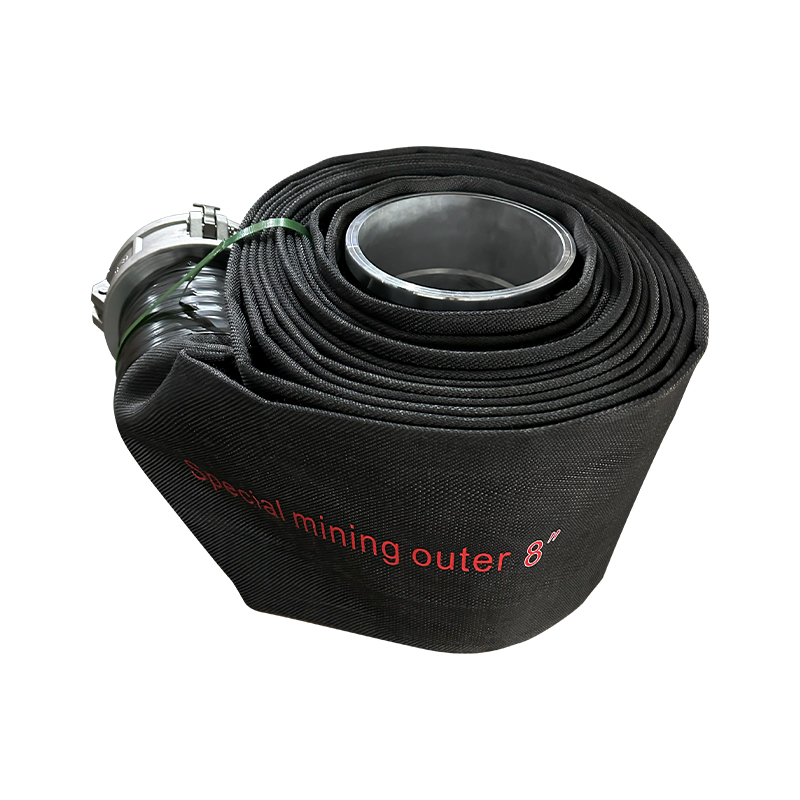
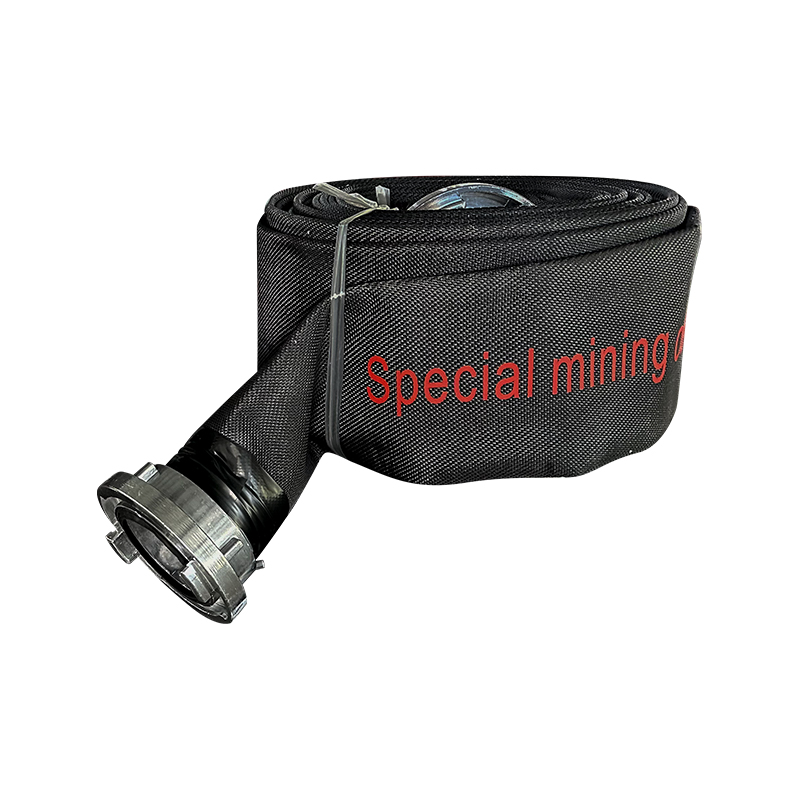
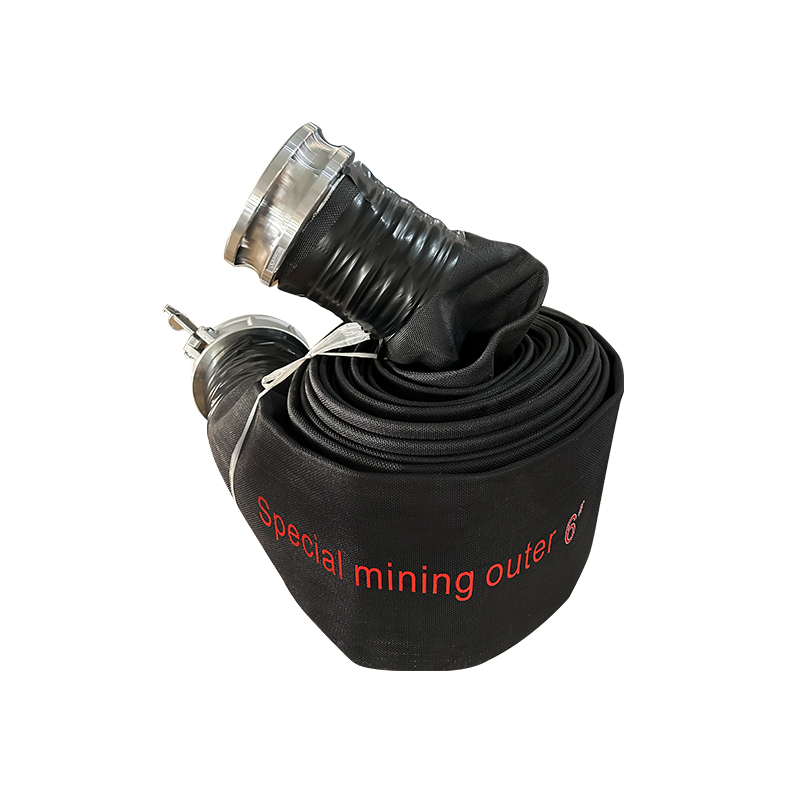
On mine sites and construction dewatering jobs, the combination of high flow and durability is critical. PVC flat hose pipe is often used for temporary transfer lines because it is easy to lay out, splice, and remove. The smooth liner also reduces the chance of solids accumulating on the wall, which is an advantage when pumping slightly turbid water. That said, for abrasive slurries, a heavier-duty hose or a different liner material is better.
How to Select a PVC Flat Hose Pipe for Maximum Flow Efficiency
Diameter and Pressure Rating
Choose a diameter that gives you an acceptable flow velocity. A typical aim is a velocity below 2.5 meters per second in long transfer lines; above that, friction loss rises steeply. Also match the working pressure to the pump deadhead pressure, not just the normal running pressure. If a system is likely to see pressure surges, select a hose with a burst pressure at least two to three times the working pressure.
Check the Inner Tube Wall
The inner liner should be continuous and free of pinholes. A thin or uneven PVC layer can blister or absorb water, which increases roughness over time. It is worth reviewing the specifications for reinforcement and material before buying. For a more complete overview, read how to choose a PVC layflat hose by pressure and durability, and check the PVC layflat hose sizing guide when matching hoses to pumps.
Conclusion
PVC flat hose pipe improves water flow efficiency through three simple mechanisms: it keeps the internal bore open and round under pressure, it presents a smooth surface that reduces friction, and it resists kinks that cause dangerous pressure losses. The practical effect is that a correctly selected PVC layflat hose allows a pump to deliver more usable water at the end of the line, with less fuel consumed and faster deployment. The most important purchasing step is to choose a hose with the right diameter, a smooth liner, and couplings that do not shrink the carrying bore.