en
 عربى


Content
- 1 Heat Lowers Pressure Ratings; Cold Reduces Flexibility
- 2 How Heat Reduces the Working Pressure of PVC Flat Hose
- 3 Thermal Expansion and Contraction: Stress on Fittings and Layouts
- 4 Cold Weather and Low-Temperature Handling
- 5 Heat, Sunlight, and Long-Term Aging
- 6 Practical Selection and Installation Guidelines
Heat Lowers Pressure Ratings; Cold Reduces Flexibility
Imagine a 2-inch PVC flat hose pipe rated at 200 psi at 70°F. Transfer water at 120°F on a hot worksite, and that same hose can behave like a much weaker product—its effective pressure rating may fall by nearly half. That is not a speculative warning; it is a practical derating reality for PVC layflat hoses.
The conclusion is straightforward: temperature should be one of the first questions in any PVC flat hose pipe specification. Heat softens the PVC and accelerates aging. Cold stiffens it and increases the risk of cracking. In both cases, the rated performance changes enough to affect pump sizing, fitting selection, and service life.
Unlike a rigid PVC pipe, a flat hose pipe has to flex, roll, and bend. Temperature therefore affects not only strength but also handling. A hose that is too stiff cannot be deployed quickly; a hose that is too soft may not hold a straight layflat shape under pressure.
PVC is a thermoplastic, so it does not fail at a single temperature. Instead, properties shift gradually. A well-constructed PVC-lined flat hose is reliable within its intended temperature band; the critical step is knowing where that band ends for both the fluid and the surrounding environment.
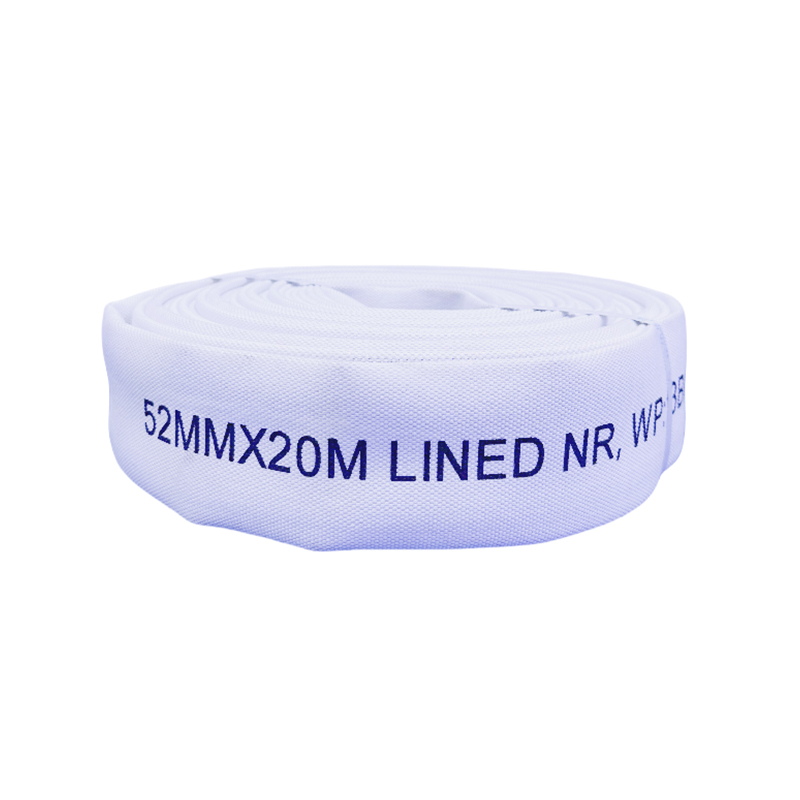 Wholesale Canvas Hose For Fire Extinguishing/Agricultural IrrigationTaizhou Jun'an Fire Technology Co., Ltd. Is China Wholesale Canvas Hose Suppliers, Exporter, Our Canvas Hose Is Mainly Used For Fire Figh...View Product →
How Heat Reduces the Working Pressure of PVC Flat Hose
Many hose and piping systems use 73.4°F (23°C) as the reference temperature for pressure ratings. Above that point, PVC becomes softer and less able to hold its original rated pressure. This is not unique to PVC pipe; it applies to flexible PVC flat hose as well.
The example below is typical of a standard PVC layflat hose. Actual values depend on wall thickness, fabric reinforcement, and the manufacturer's own derating chart.
| Temperature | Approx. Pressure Capacity | Observed Service Effect |
|---|---|---|
| 70°F (21°C) | 100% of rated value | Normal operation with full rated pressure |
| 100°F (38°C) | 80-85% of rated value | Hose feels softer under hand pressure; fittings and clamped ends work harder |
| 120°F (49°C) | As low as 50% of rated value | Visible surface softening; higher risk of failure at couplings and kinks |
This derating matters most when pressure peaks occur. A pump set to the cold-water rating can push a hot hose past its safe limit, especially at clamped ends. If you are working with a fire pump, irrigation pump, or mining dewatering pump, make the temperature check part of the setup procedure.
One common mistake is to calculate derating only from the water temperature. In outdoor applications, the hose wall can absorb heat from the sun and run hotter than the water inside. For that reason, use the higher of the two temperatures: the fluid temperature or the expected surface temperature. Our guide to choosing PVC layflat hoses covers pressure capacity and durability in more detail.
Thermal Expansion and Contraction: Stress on Fittings and Layouts
PVC flat hose expands and contracts with temperature more than many installers expect. When a line lies in direct sun, the surface temperature can climb well above air temperature. The hose lengthens, develops a snake-like layout, or pushes against fittings. When the water cools or the sun drops, it shortens and pulls on clamps.
For a 100-foot line, even a small percentage of thermal expansion creates measurable movement at the end connections. In a rigid pipe system, supports guide the movement. In a layflat hose system, there are no supports, so the movement appears as shifting coils, bends, and tension on the ends.
Where the risk is highest
The risk concentrates at fixed points: pump outlets, valves, and rigid couplings. Long unsupported runs amplify the movement. Metal camlock or Storz couplings do not stretch, so the stress transfers into the hose wall near the connection. Repeated cycles can loosen clamps or create localized fatigue.
How to allow for movement
Leave slack at the connection points instead of pulling the line taut. Use curved routing rather than sharp right angles. Re-tighten clamps after a significant temperature swing. In mining dewatering layouts, where hoses are often connected in long series with metal couplings, this detail can prevent field failures.
Cold Weather and Low-Temperature Handling
Cold does not lower the pressure rating the way heat does, but it changes the hose's handling. Below about 40°F (4°C), standard PVC becomes noticeably stiffer. It unrolls with more resistance, refuses to bend around tight corners, and can develop micro-cracks if flexed sharply at low temperature. Those micro-cracks may not leak immediately, but they become failure points later.
The practical consequence is slower deployment. In firefighting or emergency water transfer, a stiff hose takes longer to lay out and to roll up, which affects response time. In agriculture, a stiff hose is harder to move between field positions.
Freeze damage is a separate risk
If a PVC flat hose pipe is stored full of water in freezing conditions, ice formation is the more immediate danger. Ice can deform the hose and damage the lining even if the PVC does not visibly crack. Drain hoses before storage whenever freeze is possible.
Alternatives for winter service
For repeated cold-weather use, a TPU-lined flat hose is a stronger choice because it retains flexibility at lower temperatures. Our TPU low-temperature flexibility and cracking guide explains the specific failure modes in more detail.
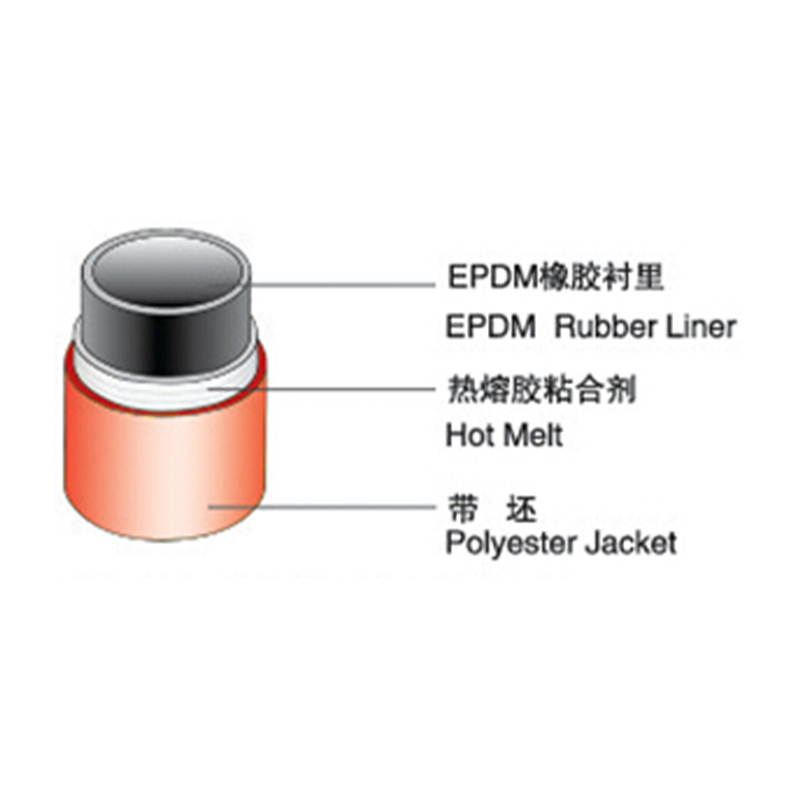 Wholesale TPU Layflat Hose - Heavy Duty, Lightweight, Durable Water Hose for IrrTaizhou Jun an Fire Technology Co., Ltd Is Wholesale TPU Layflat Hose - Heavy Duty, Lightweight, Durable Water Hose for Irrigation Suppli...View Product →
Heat, Sunlight, and Long-Term Aging
Heat and UV light work together. Ultraviolet radiation attacks the PVC surface and consumes plasticizers; heat accelerates that process. A hose stored on a rooftop, truck bed, or open reel in strong sunlight will age faster than a shaded line, even if it never carries hot water.
Surface hardening and plasticizer loss
Plasticizer loss makes the hose harder and more brittle. Chalking, surface cracks, and color fading are early visible signs. Once the surface hardens, the pressure rating is no longer a reliable number.
Chemical resistance changes with heat
Higher temperatures increase the rate of chemical attack. A PVC flat hose that is compatible with a diluted chemical at 70°F can degrade far faster at 110°F. For hot industrial water or aggressive fluids, an EPDM-lined flat hose handles sustained heat better and resists many industrial chemicals.
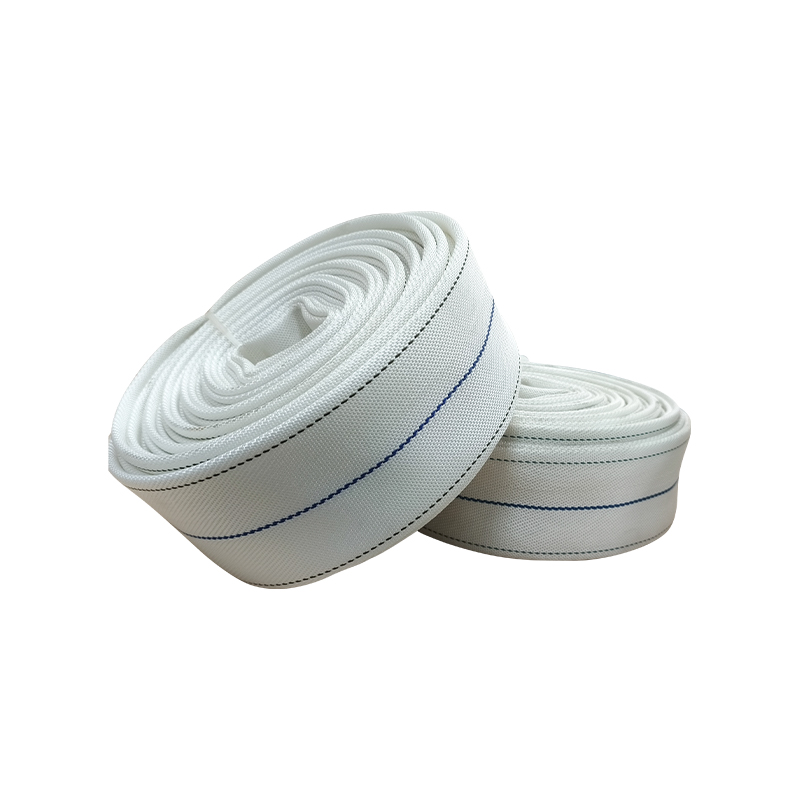 Wholesale Canvas Fire Hose, Extinguishing Flat Hose SuppliersWe Are China Canvas Fire Hose, Extinguishing Flat Hose Suppliers, Exporter, Taizhou Jun'an Fire Technology Co., Ltd. Wholesale Fiber Canv...View Product →
Storage rotation also matters. If you keep spare hoses on a rack, rotate them so the same section is not always exposed to sunlight. A simple cover or shaded storage area is cheap insurance against premature aging.
Practical Selection and Installation Guidelines
Temperature performance is not just a number on a datasheet. It becomes visible in how the hose sits on the ground, how the couplings stay tight, and how long the hose survives in service. Follow these guidelines:
- Confirm the actual fluid and ambient temperature range, including sun exposure and night shutdowns, not just the average daytime temperature.
- Use the manufacturer's derating chart whenever fluid or ambient temperature exceeds 73°F (23°C).
- Leave slack in the layout so thermal expansion does not strain fittings.
- Drain hoses and store them away from direct sunlight between uses.
- Inspect the first 12 inches after every coupling; heat, flexing, and clamp pressure concentrate there.
- If the application regularly exceeds 120°F (49°C) or drops below freezing, choose a lining material designed for that range.
These steps apply to fire hose, agricultural layflat, and mining dewatering lines. To compare how different linings handle temperature and pressure, browse our full range of flat hose products.